



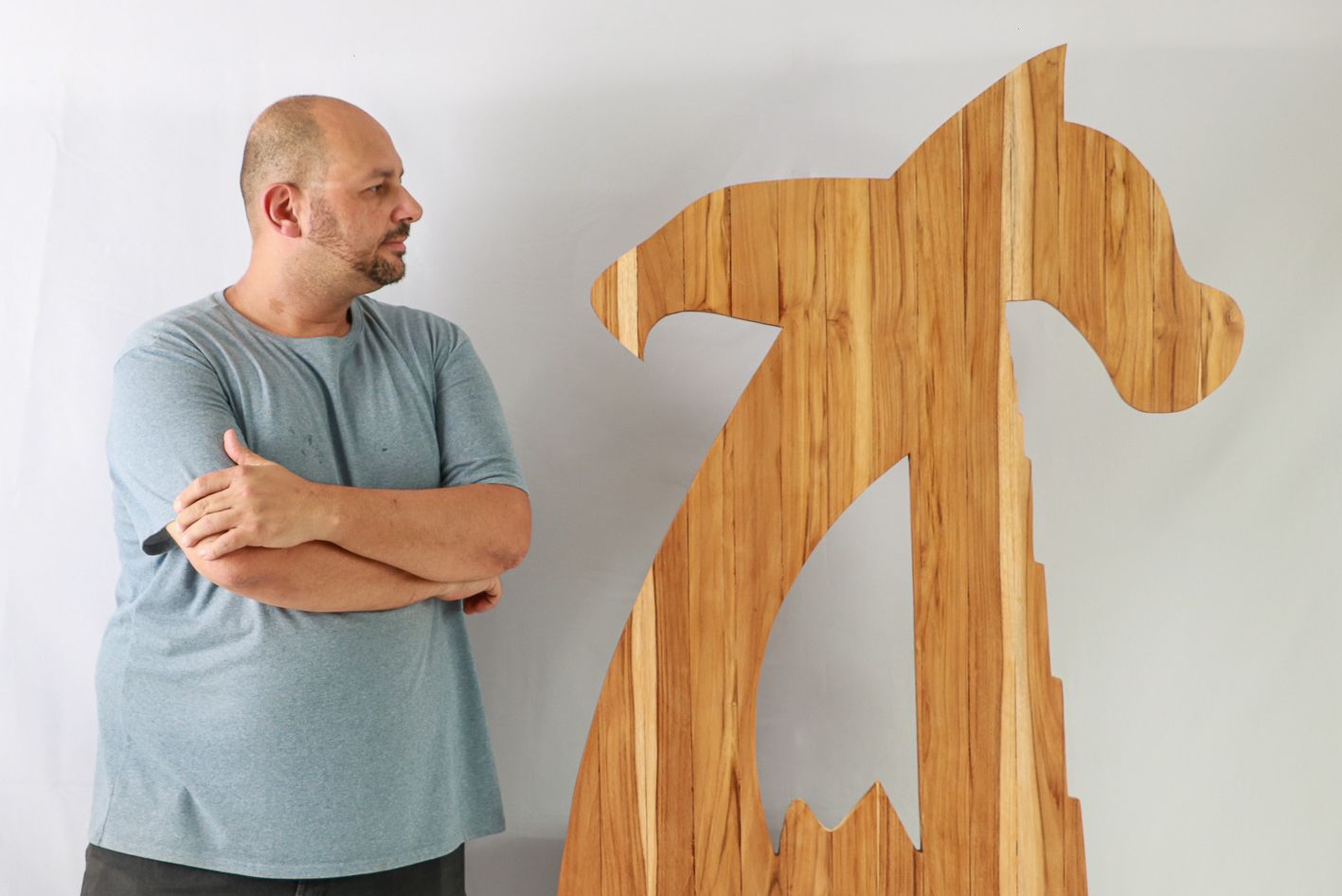
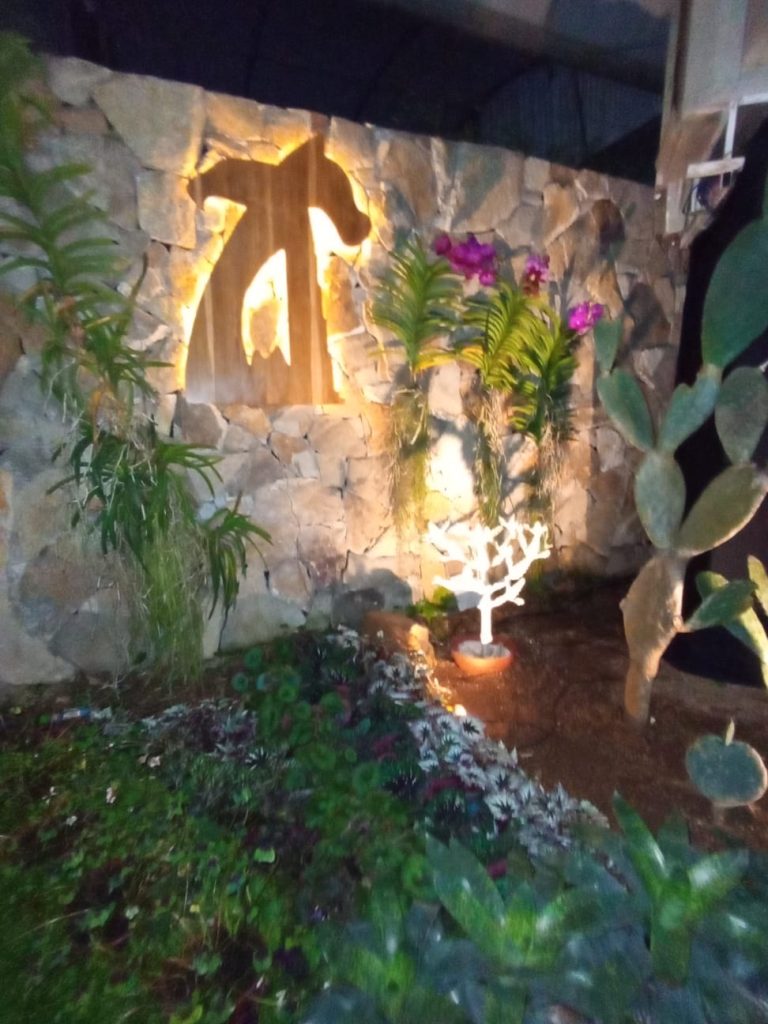
São Paulo — At the Garden of a Thousand and One Flowers, one of 18 spaces created for the latest Expoflora, a traditional event held in Holambra, visitors could walk around, take photos with large wooden wings in the background, enjoy the scent of aromatic plants, get lost among flower-made flying carpets and admire wooden sculptures such as “Wonders of Dubai.” Created especially for the exhibition, the piece brings together references to desert dunes, the Arabian horse, the falcon, the Burj Al Arab and the Burj Khalifa. The oasis, featuring a thousand and one plants—including anthuriums, bromeliads, orchids, calatheas, ferns and palm trees—and inspired by the United Arab Emirates, was created by visual artist Francisco Suelo.
Born in an apartment in Campinas, Suelo now lives in a rural area of Jaguariúna, where his studio is surrounded by wildlife and vegetation that provide a constant source of inspiration. For more than 20 years, he worked in the corporate world, in the beverages, pharmaceuticals and chemicals industries. At the height of his stress, feeling that his work brought no positive results, he was advised by his psychologist to exercise more and take up a hobby.
“I was already into photography and motorcycles, but those weren’t quite it. Somewhat randomly, I decided to try woodworking,” he says.
He started with small items such as ashtrays and wooden boards. Most importantly, he did it to relieve stress. The hobby grew more sophisticated, and he began investing time and money in better tools. When he felt ready, he approached a local store to offer his pieces. He received the following advice: “Your pieces are good and well-finished, but you have no name recognition. Take part in exhibitions and fairs.” So he did. He even hired a consultant. He devoted more energy to his work; if he wasn’t happy with a piece, he would redesign it or, in more drastic cases, burn it. He began working late into the night in pursuit of the perfect piece.
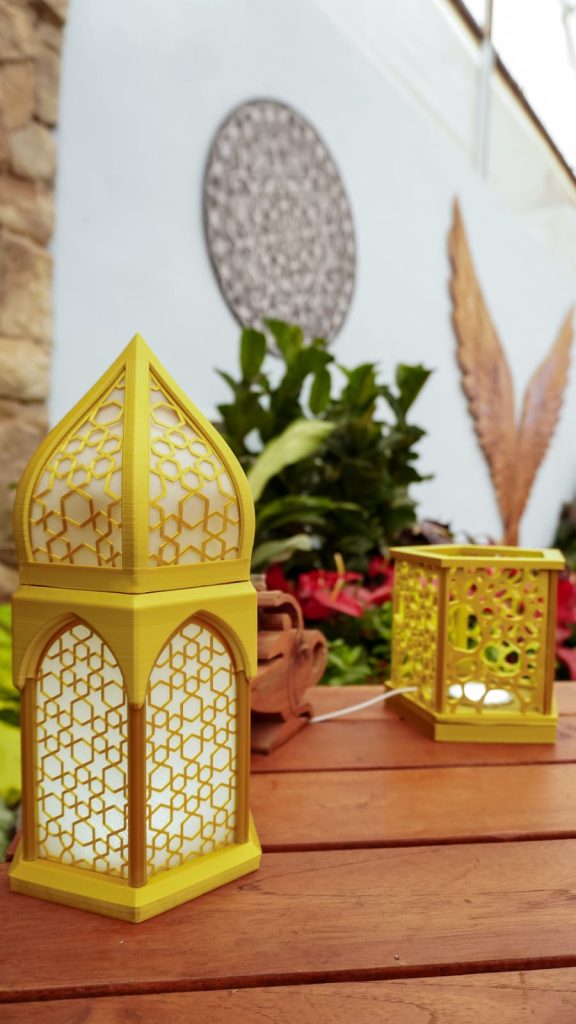
He expanded his portfolio to include tables, lamps and wall sculptures, began selling his work in home decor stores and partnered with architects. Four years ago, he quit his job, turning what had been a hobby into his main profession. The big turning point came when he took part in Expoflora for the first time, in 2024. There, he discovered that he could be a landscape designer as well as a woodworker and artist. Just as he had taught himself woodworking, he found he also had a knack for plants. Inventive and versatile, he makes his own tools whenever he cannot find the right ones.
The son of a building contractor, he may have inherited a knack for creating spaces and working with tools. He also discovered, in a conversation with his mother, that woodworking ran in the family. His paternal grandfather, whom he never met, was a lumberman who felled trees in the São José do Rio Pardo region, also in the state’s countryside, and transported the logs on horseback.
“Maybe choosing wood wasn’t so random after all,” he muses.
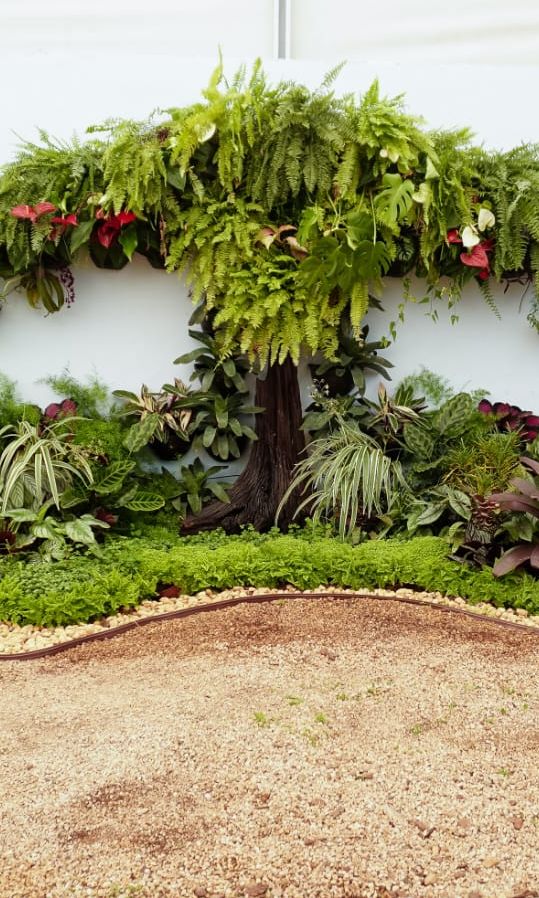
Expoflora put him on the map, giving him the name recognition that the first store owner had advised him to seek. From there, he went on to Design Week and Casa Cor. At this year’s Expoflora, his pieces appeared in 12 of the 18 spaces. Seeing people enjoy the spaces he designed and take photos with the wings, sculptures and three-meter-tall, six-meter-wide Tree of Life gives him the kind of fulfillment he had dreamed of but never found in the corporate world.
Today, his work ranges from reproducible pieces to one-of-a-kind creations, making it accessible to a wide audience: from wooden garden birds costing BRL 15 (USD 3) to custom-made sculptures priced at BRL 15,000 (USD 3,000). He also takes on deeply personal commissions, such as that of a woman who was required by her condominium association, for safety reasons, to cut down a tree she had planted with her father as a child. She asked Suelo to turn it into a table in memory of her late father. His only requirement is that clients respect the time the process takes, which can sometimes stretch over several months.
“I use a lot of fine hardwoods, such as angico, Brazilian ironwood and ipê, which I purchase legally from the city government, with receipts. I then create something new from what I have on hand. The shape of the wood inspires the piece,” says the artist, who is preparing to visit the UAE in 2027 and return with even more inspiration.
Now, even when he spends an entire night searching for the perfect piece, work-related stress is no longer a problem.
“I earned good money in the corporate world, but I spent it on medication and therapy.”
His Instagram motto, where he has thousands of followers, is “I bring wood back to life.” In a way, wood brought Suelo back to life.
Visit Suelo’s Instagram!
Rea also:
Ana Ferrari debuts installation in Egypt
Report by Débora Rubin, in collaboration with ANBA.
Translated by Guilherme Miranda
