



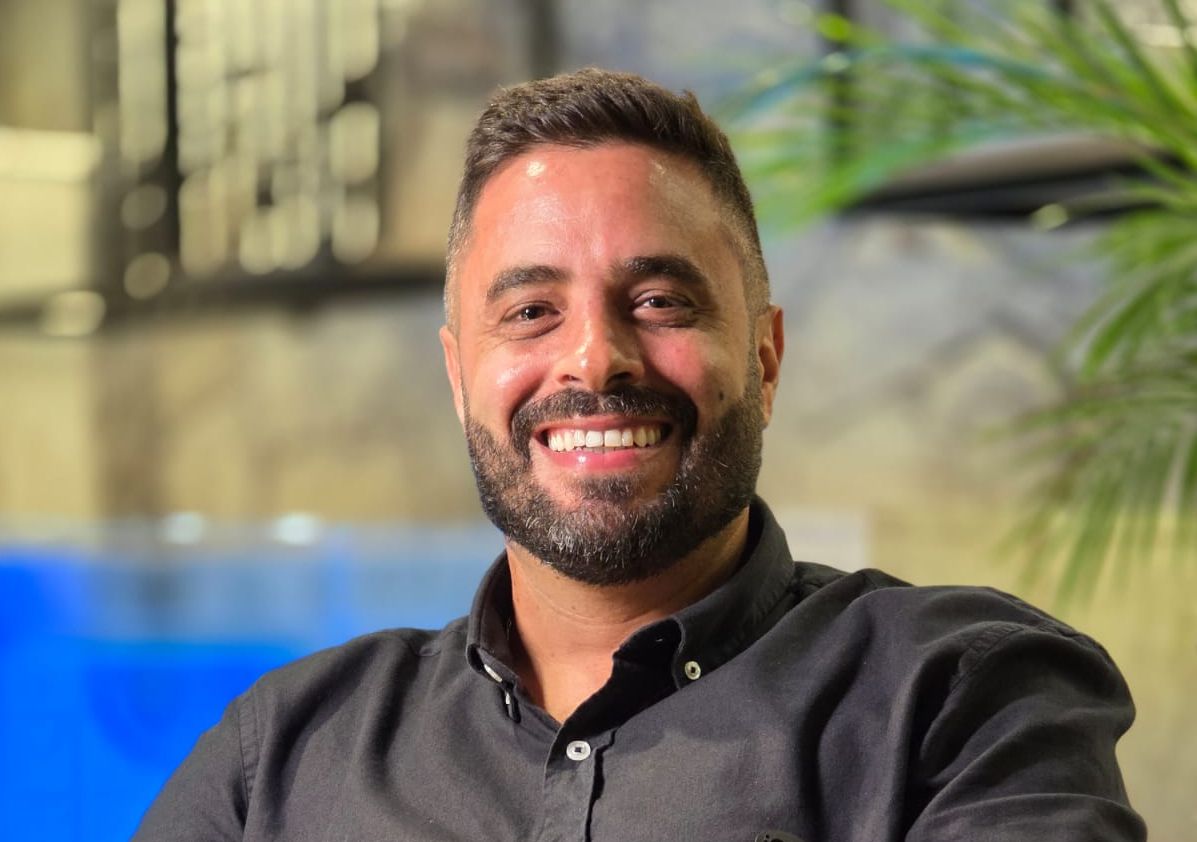
São Paulo – When he was just 22 years old, Omar Hassan El Eis opened a swimming pool store in Rio de Janeiro. The opportunity arose thanks to his older brother, Alexandre, who already owned an iGUi franchise in Rio’s Itaboraí. Omar first worked for his brother, from whom he learned everything about the business, and then seized the chance to become a fiberglass pool franchisee himself.
Nearly twenty years later, he is a multi-franchise owner with three units of the brand: iGUi CasaShopping, the largest swimming pool store in Rio; Splash Avenida Brasil, at the same location where he opened his first store; and TRATABEM Barra da Tijuca, a unit dedicated to after-sales, cleaning, and pool maintenance. His team now has 18 people, in addition to service providers.
Born in Dourados, Mato Grosso do Sul state, Omar grew up in the countryside of Rio Grande do Sul state, where he took his first professional steps at his mother’s travel agency, before moving once again to another state to work with his brother. The youngest of four children, his parents have always run their own businesses. His father came from Palestine in 1966, invited by his brother, who was already established in Toledo, Paraná state.
There, he began working door-to-door, selling all kinds of things. The Arab community was spread out, and at a wedding in Rio Grande do Sul, my father met my mother, also the daughter of a Palestinian from his same hometown, Kobar,” the entrepreneur says. The couple married in 1977 and then moved to Dourados, where they had four children.
In 1985, the same year Omar was born, the family moved to Rio Grande do Sul, where other relatives from both his mother’s and father’s sides lived. To this day, at 78 years old, his father still keeps the routine of going to the household goods store he owns in Parobé, Rio Grande do Sul.
Destiny and future
Working with swimming pools early on was an opportunity that came by chance, but one he quickly embraced. He soon understood the market and grew along with it. “I’ve always had the ambition to grow professionally and financially. I think I caught a very good period, full of opportunities, and I saw great possibilities for growth for my company while the franchisor was also expanding,” he explains.
With nearly two decades in the field and at the same company, he continues to refine his skills and expand the business—from the traditional iGUi model with fiberglass pools to this new era of high-end pools. “We’re aligning the entire team with the high-end market, specializing both in technical aspects and installations, to reinforce our reputation as a benchmark in this segment,” he says. “iGUi has been introducing innovations to the pool sector, and in this regard, we’ve participated in many architecture fairs, as well as organized small professional committees for factory visits. Everything is aimed at promoting our product in the architecture market.”
Founded in 1995 in Gravataí, Rio Grande do Sul, iGUi is the largest producer of prefabricated swimming pools in the world, present in over 50 countries, including in the Middle East. In 2008, the brand became a franchiser, and its headquarters were moved to Cedral, in the São José do Rio Preto region, São Paulo state. With 30 years in the market, the network has more than 1,200 units worldwide, including factories, distribution centers, and iGUi stores, as well as Splash and TRATABEM franchises and stores in Brazil. There are 40 factories and distribution centers across Brazil, Argentina, Paraguay, Mexico, Portugal, and the United States.
Past and legacy
Having lived in Brazil for 60 years, the family patriarch observes Ramadan, uses Arabic expressions, and keeps some Palestinian customs. His children join him in some of these traditions. However, within his own home, with his 14- and 7-year-old children, customs have taken a bit of a backseat. “To be honest, we don’t have Arab traditions in our daily home life. They know a lot about their grandfather’s history, and when they’re with him, they experience it a bit more,” he says. “And the family’s favorite restaurant is Arab, of course.”
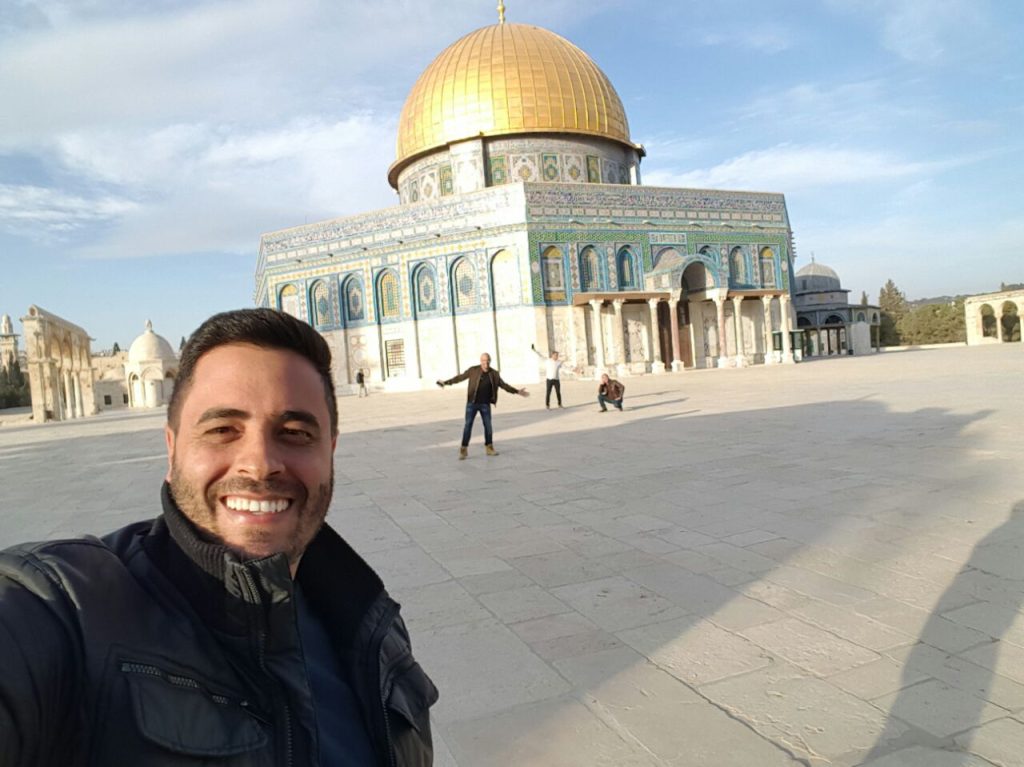
After all, it’s the food—and the knack for business—that often endures across generations of Brazilian Arabs. “Maclub, hummus, tabbouleh, and labneh are some of the dishes I really enjoy. When we visited relatives in Palestine in 2016, the food was always abundant—meals are true family events. It was very special to try everything there.”
Read more:
From Lebanese roots to Brazilian ballet
Report by Débora Rubin in collaboration with ANBA.
