


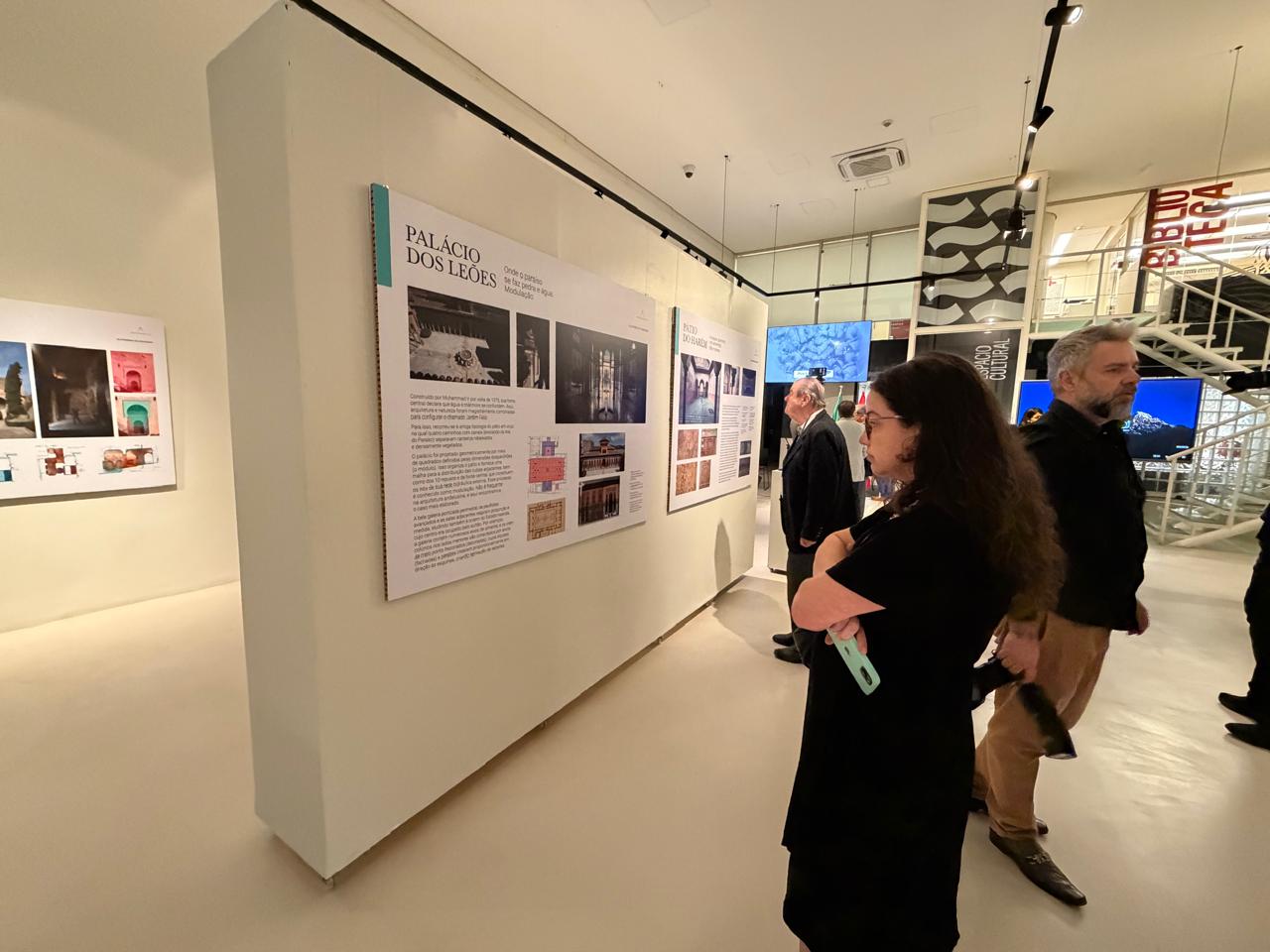
São Paulo – The exhibit “Passeio matemático por al-Ândalus” (A mathematical tour of Al-Andalus) opened with a vernissage on Tuesday (14) evening at Cervantes Institute in São Paulo. A partnership between the institute, Fundación Descubre, and the Institute of Arab Culture (Icarabe), the exhibit explores yet another piece of heritage from nearly eight centuries of Muslim administration in Andalusia: mathematics. Cosponsors include the Arab-Brazilian Chamber of Commerce, the Federation of Muslim Associations in Brazil (Fambras), the International Halal Academy, and the law firm Nasser Advogados.
Admission is free, and the exhibit will continue until May 30. It features multiple panels interspersing the history of Andalusia with that of Muslim presence there, which ran from 711 to 1492, and the mathematical calculations that enabled the spaces, palaces, and residences in the region. Concepts such as symmetry, proportion, hierarchy, knots, arches, and curves are on display. Created in partnership with Spanish universities, the show had runs in several countries and cities across Europe and North Africa. São Paulo is its first stop in the American continent.
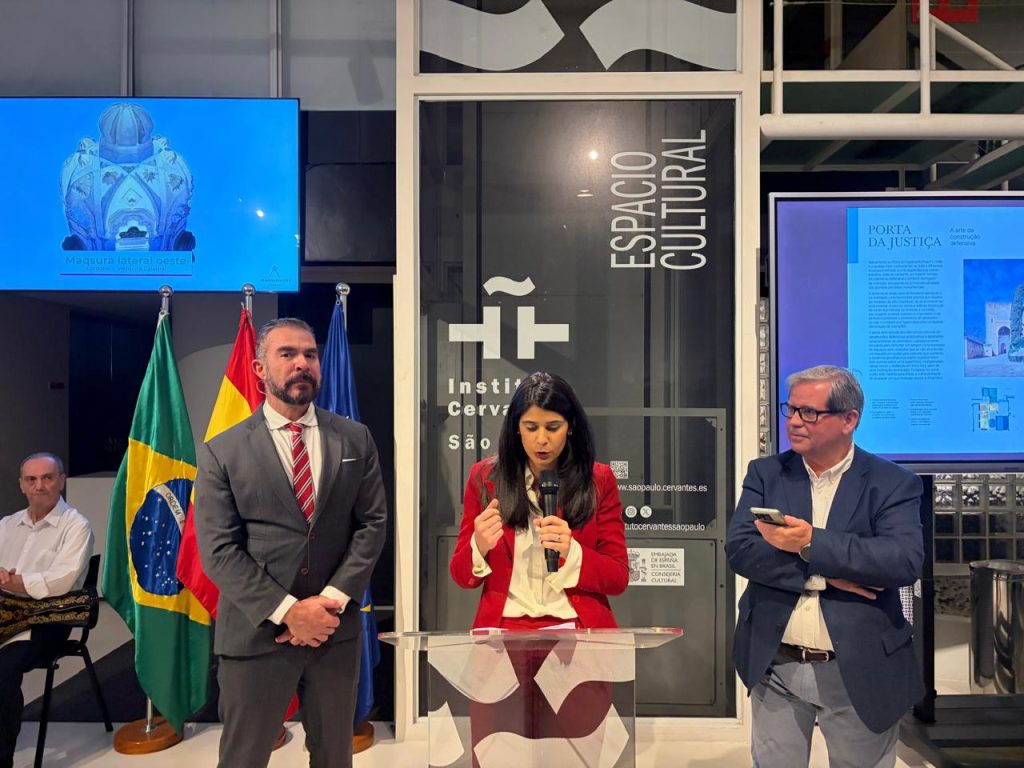
Cervantes Institute director Daniel Gallego Arcas said the exhibit fulfils the institute’s own mission to spread the culture and scientific knowledge of its country, Spain. “The exhibit we are opening today invites us to revisit Andalusian legacy, a historic, singular space that was a major hub of production, tradition, and knowledge promotion for centuries. In keeping with this concept, the complex yet deeply fertile coexistence of different cultural, religious, and intellectual traditions enabled significant advances in the fields of mathematics, astronomy, medicine, and physics to flourish,” he said.
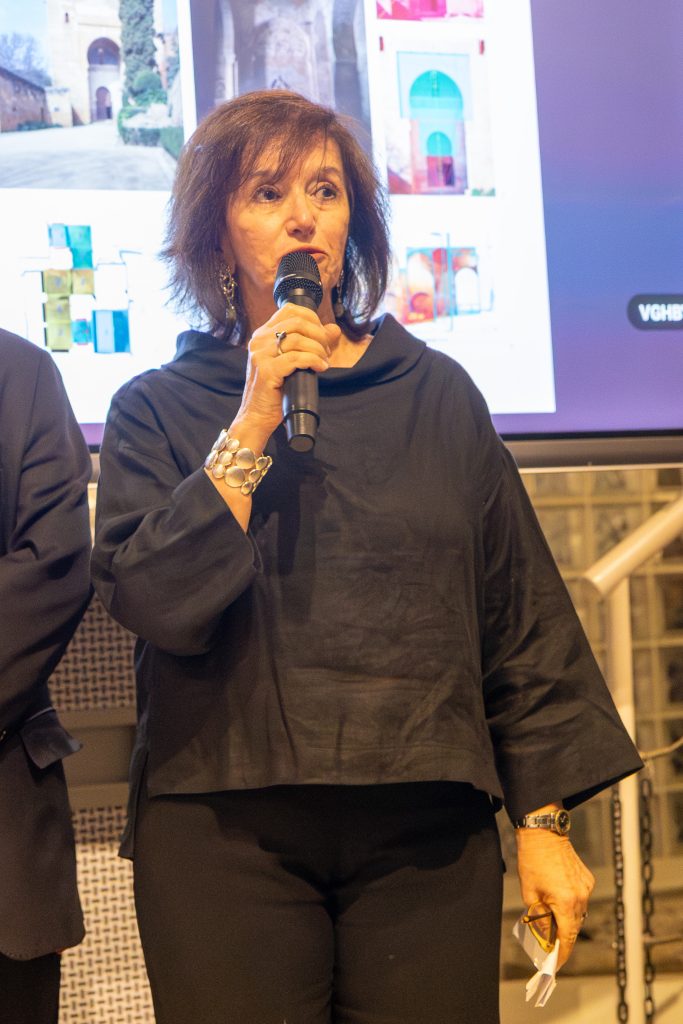
Icarabe president Natalia Calfat remarked that she had visited the show in 2024 in Madrid, Spain, which sparked the idea to bring it to Brazil. “I find that this initiative celebrates the impact of Arab legacy on the history of Spanish life, culture, and arts. This may come as a surprise to Brazilians, but it is so common to Spanish people,” she said.
Arab Chamber Communication and Marketing vice president Silvia Antibas told ANBA that the exhibit demonstrates the connection of Arab people with the Iberian Peninsula. “It is important for us to reach deeper into the imaginations of non-Arab peoples so people will become aware of the richness of our science, our mathematics, our culture, our music, our language. That was all brought over by the seafarers long before the immigrants arrived,” she said.
In addition to the exhibit, the program includes workshops and lectures. On Wednesday (15) and Thursday (16), the University of Granada Mathematics Tour project science director Alvaro Martinez Sevilla will administer the workshop “Digital manufacturing in Andalusian architecture.” On those same dates, the workshop “Virtual reality and Andalusian architecture” will be taught by the University of Almería Department of Mathematics professor José Luis Rodríguez Blancas. On April 28, the professor and translator Pedro Martins Criado will deliver the lecture “Lights of Al-Andalus: thinking, science, and cultural dialogue in the formation of the Medieval West.” All events are free of charge. Additional information is available here.
The exhibition opening was also attended by the Arab Chamber’s International Relations vice president and secretary-general, Mohamad Orra Mourad, and director Arthur Jafet.
Translated by Gabriel Pomerancblum
