



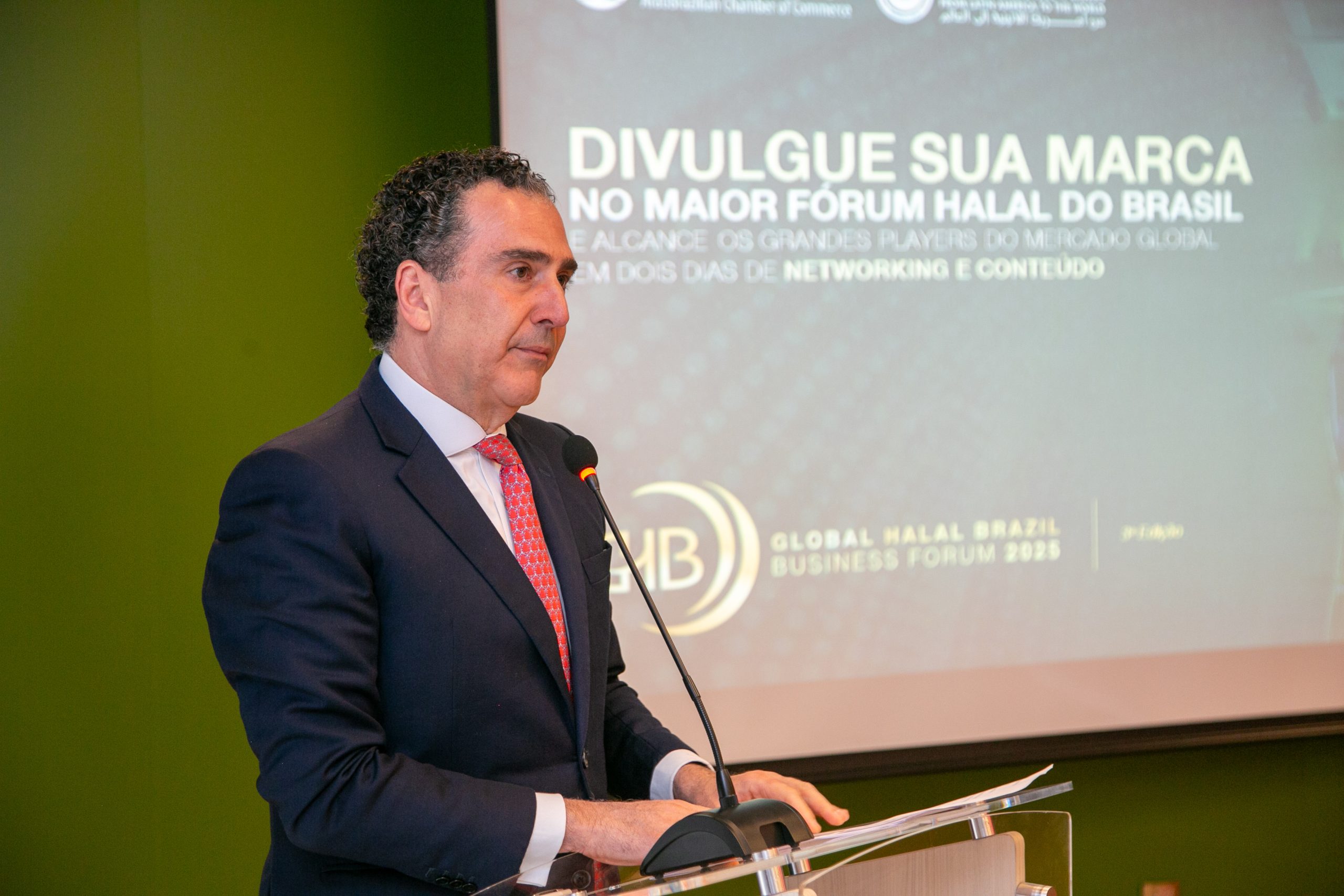
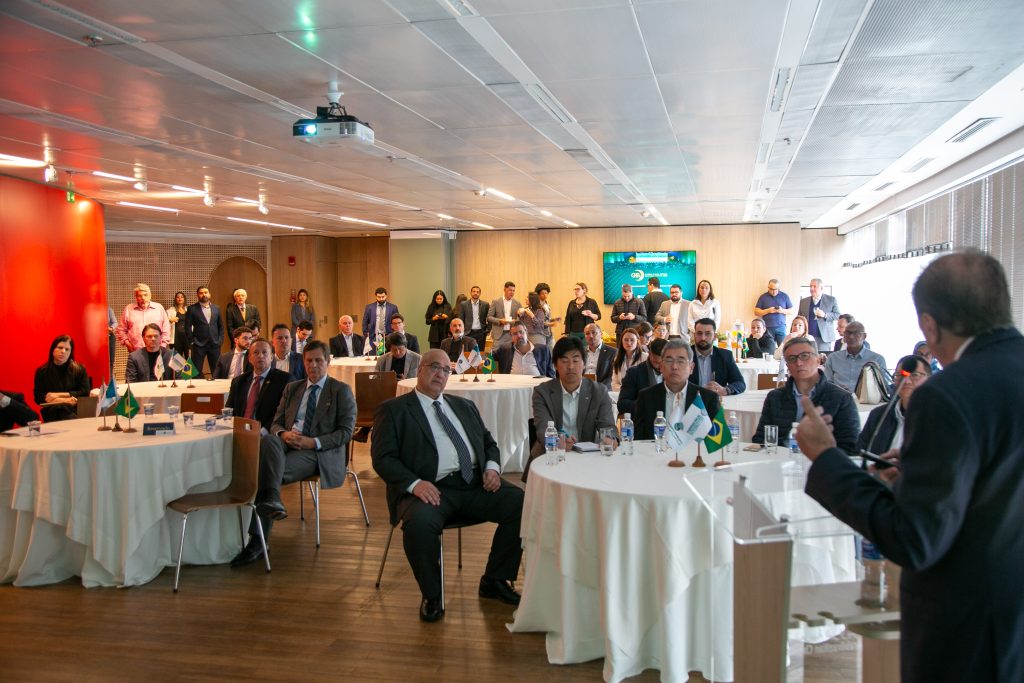
São Paulo – The Global Halal Brazil Business Forum (GHB) taking place on October 27 and 28 will focus on the potential for business involving Brazil and the global halal market, which consists of goods made in compliance with the rules of Islam. This Tuesday (5) morning, during the event “2025 GHB Connection,” the forum’s organizers, the certifying body Fambras Halal and the Arab Brazilian Chamber of Commerce, gave a presentation at the latter’s offices in São Paulo on the opportunities offered to businesses by the GHB.
Arab Chamber president William Adib Dib Junior noted that the GHB is an opportunity to reach halal food and beverage markets, as well as various other goods and services required to comply with the guidelines of Islamism. Halal food and beverage alone, Dib said, is a USD 1.4 trillion market. The world’s leading supplier of halal food products, Brazil exports USD 28 billion worth of product per year, “that is, only a fraction,” the executive said.
“The delta is even wider in other halal consumer sectors, particularly hygiene and cleaning, pharmaceuticals, entertainment, tourism, and finance, all of which Brazil retains a minority share of. Considering that the global halal market has an annual turnover of USD 7 trillion, includes 25% of all people on Earth, and will include as much as 30% by 2060, it is abundantly clear to the Arab Brazilian Chamber of Commerce and Fambras Halal that this sector needs to be given visibility,” he said.
Fambras Halal vice president Ali Hussein El Zoghbi said “there is still a long way to go” when it comes to increasing market share for Brazilian halal items around the world. “Halal has outgrown its connection to Muslims to become a label of quality and ethics, which I believe are in everyone’s interest,” he said.
Halal is the set of rules that make a given product fit for consumption by Islamic shoppers. Requirements include being alcohol- and pork-free, as consumption thereof is not permitted to Muslims. Companies such as Fambras Halal attest that goods are halal and are therefore sellable to this demographic.
Zoghbi said halal goods are not consumed only in countries with large numbers of Muslim residents such as Indonesia, the Arab countries, Turkey, or Nigeria. He explained that European nations like France and Italy are major consumers or exporters of halal products, and that the United States are also a key halal market.
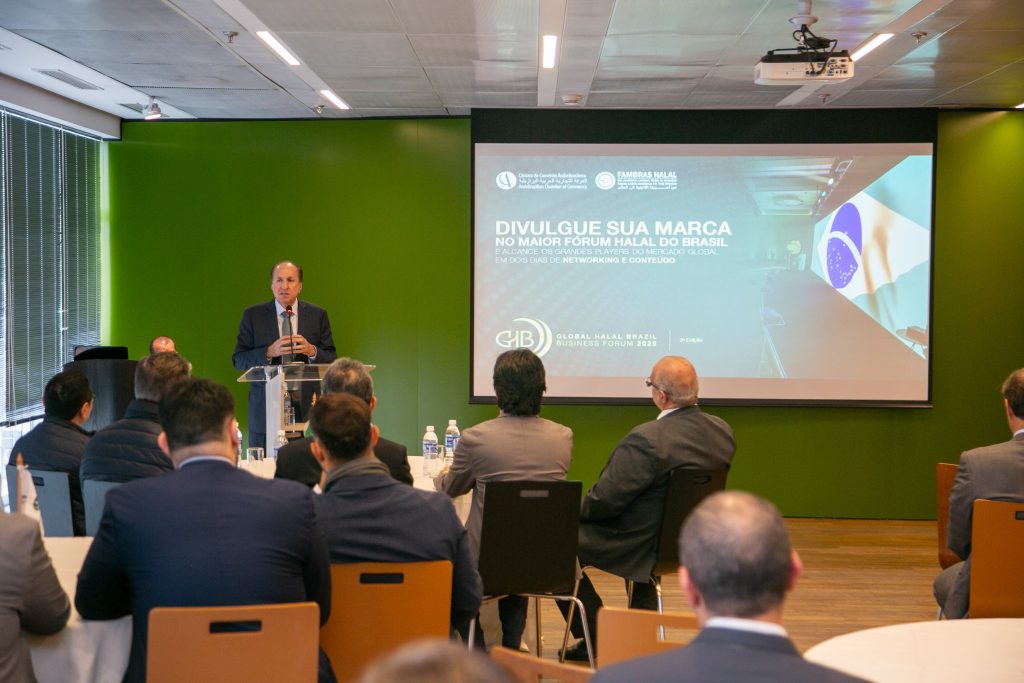
Arab Chamber International Relations vice president and secretary general Mohamad Mourad went over the panels and topics to be covered during the two-day event, starting with the forum’s main theme for this year: “Halal Green – Sustainable Business.” Panels will include food and agriculture; sustainability and ethics; tourism; Islamic finance; and strategic partnerships.
The GHB program will consist of panels, meetings and lectures in the mornings on both days, and the Halal Technical-Scientific Congress (CTec Halal), organized by the International Halal Academy, in the afternoons. The Academy’s secretary general Delduque Martins said that during the meeting, studies, theses, monographs, and scientific papers on halal will be presented, in an education and research initiative designed to share knowledge regarding the halal market.
During the meeting, executives from the commercial departments of the Arab Chamber and Fambras Halal discussed opportunities for businesses to liaise with market players, executives, and politicians from countries with a demand for halal products, as well as GHB sponsorship opportunities. The meeting was attended by executives from animal-based protein companies, industrial sanitizer companies, and real estate and law firms, among other sectors.
Also in attendance were the Arab Chamber’s Treasury director, Mohamad Abdouni Neto, Institutional Relations director, Fernanda Baltazar, and board members Claudia Yazigi, William Atui, Sami Roumieh, and Suzana Chohfi.
Read also:
Halal: Brazil could go beyond protein exports
Translated by Gabriel Pomerancblum
