



São Paulo – This year, Brazil is tipped to have its biggest year at Gulfood, the Middle East’s leading food industry fair, slated for February 21 to 25 in Dubai, the United Arab Emirates. In all, 88 Brazilian companies will exhibit at the expo. The Brazilian Export and Investment Promotion Agency (Apex-Brasil), which organizes the national pavilion, is forecasting USD 659 million in deals will follow from the event.
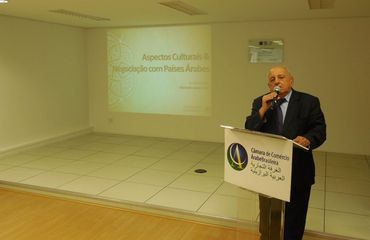
“Gulfood is an established fair, a fair where demand is really strong. We had some 130 interested companies this year, so we adapted our space to accommodate a bigger number of them. We went from 72 companies in 2015 to 88 now, in 2016,” said Apex Business Promotion coordinator Rafael Prado during a preparatory meeting at the Arab Brazilian Chamber of Commerce this Thursday (21) in São Paulo, attended by delegates from the companies that are set to exhibit at the expo.
Prado claims the export-friendly exchange rate is sparking new interest in selling abroad, but the weakening of Brazil’s real in relation to the US dollar is not the only factor providing a thrust to Brazilian exports at Gulfood.
“We are estimating USD 659 million worth of deals for this edition, which is more than the USD 646 million seen in 2015, and the reasons for that are manifold. Nowadays, we make a point of taking the companies that are truly ready for the markets targeted by each of our actions,” he said.
“In the case of Arab countries, you have halal certification, which is a factor; the question of labels [adapted for those countries]; you have the promotional material, [which must be] at least available in English, but Arabic is a plus when the time comes to talk business; and then you have the fact that [products exported by Brazilian companies] already permeate the Arab market. So, by working with several criteria in addition to the exchange rate, we are able to bring along a group with better chances of faring well in the markets that Gulfood reaches,” Prado explained.
In order to help better prepare the companies for the exhibition, Apex hired a consulting firm to work one-one-with each participating business. The Dubai-based firm is tasked with profiling the region’s buyers and the Brazilian companies, so it can get the importers in touch with manufacturers of the products they are looking for. The consulting firm will make personnel available during the expo to show potential buyers to the Brazilian companies’ stands.
Arab Chamber: exclusive area
At the meeting this Thursday, Arab Chamber CEO Michel Alaby gave an overview of the Arab countries and discussed strategies for successful business dealings at the Gulfood. “Arabs, by definition, negotiate with people they trust. Arabs do business with the person, not the company,” he asserted.
Alaby stressed the importance of foodstuffs being halal-certified, an attestation of compliance with Islamic rules. “Seventy percent of all protein exported from Brazil is halal. The Arabs pay a premium for halal,” he noted. It is worth remembering that halal doesn’t only apply to beef; many other food or personal use items can be made for Muslim consumption. “Keep in mind that anything halal will make your business stand apart from the pack,” said Alaby.
The CEO spoke of the Arab Chamber’s role in supporting commercial promotion actions by Brazilian companies in Arab countries, as well as in issuing certificates of origin for the goods said companies export to those countries. Alaby added that the Chamber will provide an area at Gulfood for its member companies to gather with prospective buyers. “It will be a seven-table meeting room for you to hold meetings in and get in touch with [importers],” he said.
Participants
Biscuit company Itamaraty, of São Paulo, has been an exhibitor at Gulfood since 2009. For its Foreign Trade manager, Laura Seixas, being at the expo is of an utmost importance to business in several parts of the world. “Not just the Middle East, but many countries around the world, because that exhibition gets lots of visitors from other countries,” she pointed out.
Her company ships product to Libya and the UAE, and is now resuming selling to Egypt. “We are taking products on ‘healthability,’ which are whole, healthy products, and that’s an added hook. We are also prepared for the expo with Arabic catalogs,” the executive revealed.
On the market for 30 years, Santa Edwiges has exported in the past and is going back now. The company makes biscuits, cakes, panettone and gingerbread. “We currently sell to Libya and are now doing prospecting in Algeria and the UAE,” said export representative Fabiano Fusco.
He said expectations for the expo “are the best possible.” “I believe it’s a very interesting market. It’s a great importing market, and distribution is easy as well,” he said regarding Arab countries. According to Fusco, the company has been contacted by importers from Oman, Yemen and Morocco. Santa Edwiges has a strategy to expand in the Middle East and is in the process of obtaining halal certification. The next step will be translating its promotional material into Arabic.
Camil, which sells rice, beans, sugar, and canned tuna and sardine, began shipping rice to the UAE five months ago. “We are shipping our second batch now,” says Export manager Guillermo Curtis. “We are selling to two UAE brands and are now in our first talks to ship rice to Saudi Arabia,” he revealed.
Curtis believes going to Gulfood is important even to a major company such as Camil. “What I have noticed is: the fact that Arabs see you at the trade show every year builds trust, and trust is key for them to do business with us,” he pondered.
*Translated by Gabriel Pomerancblum

