



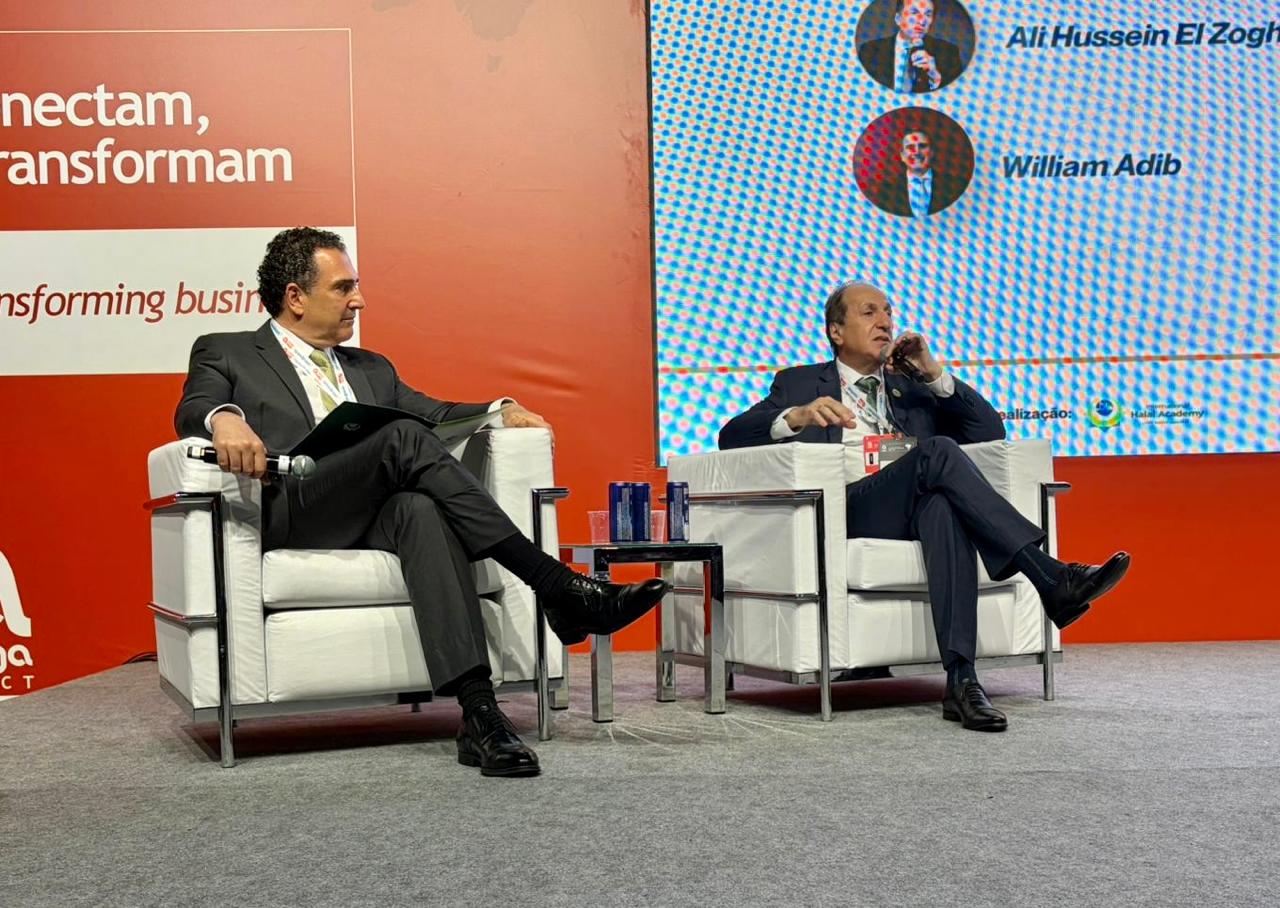
São Paulo – Brazil is one of the main sources of food security for Islamic countries, but it must diversify its export portfolio. This was the main point made during two panels at the 1st Anuga Select Brazil Halal Forum, held this Tuesday (7) amid the Anuga Select Brazil trade show. The show will continue in São Paulo until Thursday (9), featuring exhibiting companies at the Arab-Brazilian Chamber of Commerce stand. The forum is hosted by the International Halal Academy, a strategic partner of the food certifier Fambras Halal.
During the first panel, “The global halal market: trends and opportunities,” Arab-Brazilian Chamber of Commerce president William Adib Dib Junior shared Islamic market figures and growth estimates for next year.
Dib quoted the State of Islamic Economy Report, according to which the halal food and beverage sector grossed USD 1.4 trillion worldwide in 2023 and is expected to hit USD 1.9 trillion by 2029. Brazil, the world’s leading supplier of halal protein and one of the biggest purveyors of halal foods in general, sold approximately USD 24 billion worth of halal products in 2024. Halal designates goods made in compliance with the rules of Islam, which prohibit alcohol as well as pork meat and products.
“Brazil is the premier food supplier to the 57 Islamic countries. If we look at the export portfolio, there is little in the way of added value,” said Dib. “This begs reflection: we must maintain and keep expanding our sales of staples, but there is still a strong demand for processed goods,” he said. He mentioned that Muslim consumer trends include halal-certified, organic, easily cooked foods.
Sitting next to him on the panel, Fambras Halal vice president Ali Hussein El Zoghbi said that in the next few years, halal should grow and even mix with non-halal products. He explained that halal rules meet many of the demands placed on industry today: sustainability, eco-friendliness and animal welfare. “Halal is a feasible and a universal label, and in the future, perhaps no one will say it comes from religious tradition,” he said.
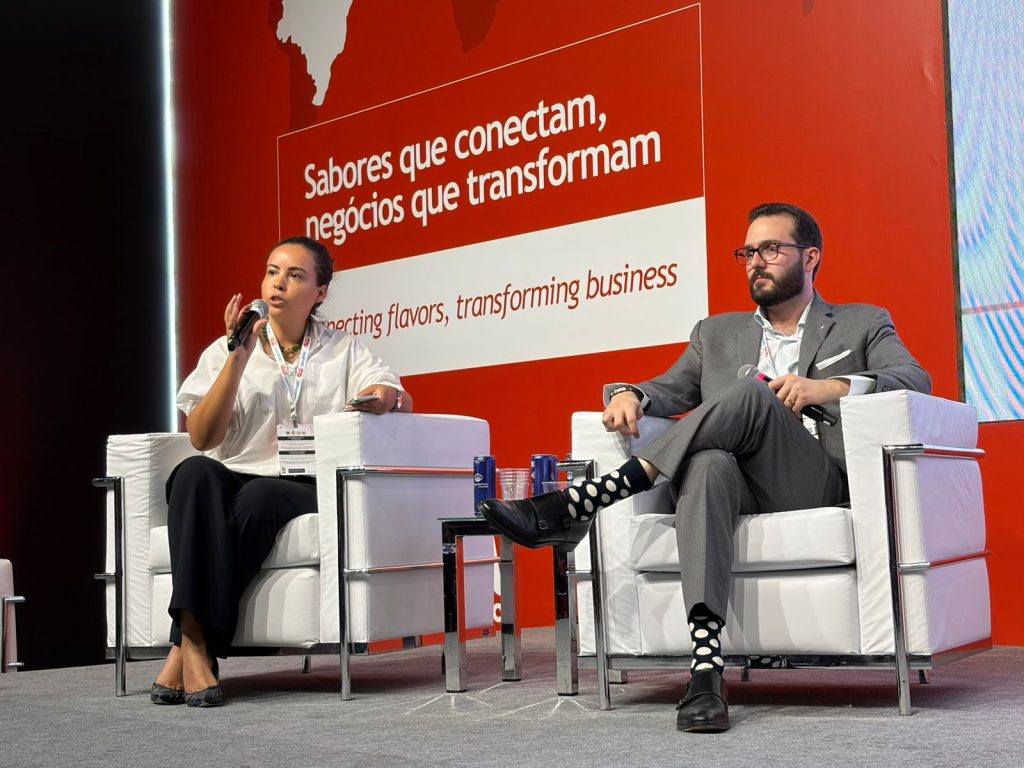
During the second panel of the day, “Halal foods and beverages: key economic data, trends, and challenges,” Arab-Brazilian Chamber of Commerce Institutional Relations director Fernanda Baltazar discussed the organization’s Halal Brazil Project, managed in partnership with the Brazilian Trade and Investment Promotion Agency (ApexBrasil) to advertise Brazilian-made halal items in other countries.
According to Baltazar, the project involves 150 small and medium businesses that export “excellent quality” products to Muslim countries. “They must be made aware that they can [export], that this is not a market only for the big ones,” she said. Baltazar also remarked that the Arab Chamber’s lines of work include cultural promotion to spread knowledge about countries and fight stereotypes.
During the panel, the Brazilian International Business Relations Development Institute (Ibrei) International vice president Arthur Martinho said Brazil is “well-positioned” as a halal food supplier but needs to add diversity to its export portfolio and remain open to Islamic market demands.
Read more:
Anuga: Arab brands seek Brazilian market
Translated by Gabriel Pomerancblum
