



São Paulo – In its most recent World Economic Outlook (WEO) report, released this Tuesday (12), the International Monetary Fund (IMF) revised down growth forecasts released in the previous edition of the report in January. The new edition calls for a growth of 3.2% of the world economy for this year and 3.5% next year. Before, the estimations called for a global expansion of 3.4% in 2016 and 3.6% in 2017.
For Brazil, the latest forecast is a retraction of 3.8% this year and no growth next year. Before, the Fund believed in a retraction of 3.5% this year and the same no growth in 2017. Among the countries in the Middle East, North Africa, Pakistan and Afghanistan (the last two are not Arab countries), the new forecast points to an expansion of 3.1% in 2016 and 3.5% in 2017. Before, it called for a growth of 3.6% in both years.
In the Fund’s assessment, global economy is still recovering from the 2008 crisis, but in an increasingly weaker rhythm. In the report’s opening remarks, the IMF’s chief economist, Maurice Obstfeld, warns for the aversion-to-risk behaviors, which translates in fewer investments, and for the “continuing violent instability” in some countries, especially Syria. These fears result in, according to Obstfeld, reduction of the consumption, deflation and the increase in social inequalities. “In brief: lower growth means less room for error”, says the economist.
The forecast released this Tuesday (12) indicates that developing countries, category that includes Brazil and Arabs, will post a growth of 4.1% this year and 4.6% in 2017. The WEO’s previous edition called for developing countries to grow 4.3% in 2016 and 4.7% the next year.
Concerning Brazil, the Fund expects an economic scenario of “large uncertainty”. “The output is expected to contract by a further 3.8 percent in 2016 (following a contraction of 3.8 percent in 2015), as the recession takes its toll on employment and real incomes and domestic uncertainties continue to constrain the government’s ability to formulate and execute policies.
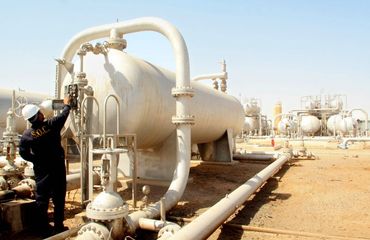
Among the oil exporting countries in the Middle East, North Africa, Pakistan and Afghanistan, forecasts point to worst results due to the fall of oil’s international prices and escalation of conflicts. The Fund points out that the nations of the Gulf Cooperation Council (Saudi Arabia, Bahrain, Qatar, United Arab Emirates, Oman and Kuwait) adopted measures to reduce the impact of oil’s falling prices. Even so, their fiscal deficit should increase “considerably” this year.
However, the report believes in a more confortable situation in the medium-term for these countries due to a weakening of the conflict in Yemen and Iran and Iraq resuming oil exports after the end of sanctions. The document believes the return of these countries to the market will result in a “consolidated” growth of the region’s GDP. The estimation is that oil exporting countries will post a consolidated growth of 2.9% this year and 3.1% in 2017. Last year, the growth was 1.9%.
For the Middle East and North Africa countries that import oil, the forecast points to “moderate” growth. The reports acknowledges that they have achieved political stability, carried forward reforms and were able to put into effect measures of fiscal consolidation, in addition to spending less with oil purchases. Even so, their possible growth is impacted by regional instabilities and the slowdown of countries that export oil. Among oil importing countries, the GDP should grow 3.5% this year and 4.2% next year.
In a general assessment on developing countries, the report points out that they were and continue to be strongly impacted by the fall of commodities’ prices and states that, since the trend is for these prices to remain low, the countries dependent on exports of commodities will need to perform “adequate” adjustments in domestic spending.
Specifically on Brazil, the Fund says that the government needs to “persevere in its consolidation efforts as to promote a turnaround in confidence and investment”. The report also states that “structural” reforms that result in an increase in the country’s productivity and competitiveness “are crucial to invigorate its growth potential”.
*Translated by Sérgio Kakitani

