



São Paulo – The global economy will grow at a slower pace this year than previously thought of due to an uneven expansion of advanced economies, slowdown in China and weak performances by Brazil, Russia and the Middle East. The update on the report World Economic Outlook, released this Tuesday (19th) by the International Monetary Fund (IMF), forecasts that global economy will expand 3.4% this year, or 0.2% less than it was estimated in the last version of the report, released in October. For 2017, the forecast calls for a 3.8% expansion, also with a 0.2% decline in comparison to what was estimated three months ago.
The IMF says that, overall, the growth forecasts were revised downward in 0.2 percentage points for both 2016 and 2017.
“In terms of the country composition, the revisions are largely accounted for by Brazil, where the recession caused by political uncertainty amid continued fallout from the Petrobras investigation is proving to be deeper and more protracted than previously expected; the Middle East, where prospects are hurt by lower oil prices; and the United States, where growth momentum is now expected to hold steady rather than gather further steam”, says the report.
Forecasts for the US economy were also revised downward: for both 2016 and 2017, the North American Gross Domestic Product (GDP) should grow 2.6%. The previous estimate was 2.8% for both years.
Brazil, according to the Fund’s analysis, will end 2016 in recession. Its GDP should shrink 3.5%. The previous estimate called for a retraction of 1% for this year. It was the country with the steeped drop from the forecast made in October to this update. In 2017, the Brazilian economy will neither grow nor shrink. Before, the IMF forecasted an expansion of 2.3% for the period.
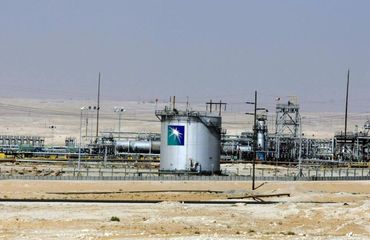
Among the Middle East countries, the Fund estimates “high growth rates”, however, warns that lower oil prices are a challenge to the growth of these economies. “Lower oil prices strain the fiscal positions of fuel exporters and weigh on their growth prospects, while supporting household demand and lowering business energy costs in importers, especially in advanced economies, where price declines are fully passed on to end users.”
Besides the loss of revenues with oil, the IMF warns for domestic and regional instabilities as challenges for the Middle East economies.
For the regions of the Middle East, North Africa, Afghanistan and Pakistan the IMF forecasts a growth of 3.6% in 2016 and 2017. The previous outlook called for the economies of these countries to grow 3.9% this year and 4.1% in 2017. Saudi Arabia’s economy, the only one listed the document, should have an expansion of 1.2% this year and 1.9% next year, with a decline of 1% in both years in the comparison between the current and previous forecast.
The report advises the developed countries to try to growth by investing in productive capital, with a focus on the strengthening of the labor market and creation of jobs. Meanwhile, the emerging economies, which have been facing greater difficulty to resume growth, the Fund advises to cut public spending, increase revenues of sectors away from commodities, and promote reforms and investments to alleviate infrastructure bottlenecks and facilitate a dynamic and innovation-friendly business environment.
*Translated by Sérgio Kakitani

