



São Paulo – Palestinian authorities have successfully managed the national budget and decreasing donations over the past few years, but Palestine still struggles with lack of resources, high unemployment and weak revenues. Such are the conclusions of a review by the International Monetary Fund (IMF), which have been made public in a press release this Thursday (11). The document is signed by Christoph Duenwald, the chief of the IMF mission that met with local authorities from February 03 to 11.
The Fund expects the economy of Gaza and the West Bank to grow 3.3% this year, with Gross Domestic Product (GDP) going up some 5% in Gaza and less than 3% in the West Bank.
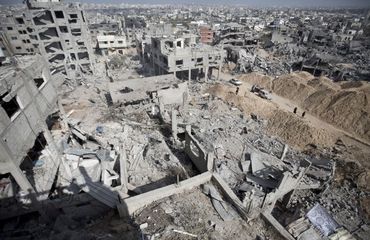
In the next few years, the Fund sees 3.5% GDP growth – not enough to fight unemployment or improve the population’s income. Additionally, uncertainty and restrictions enforced by Israel prevent the economy from thriving, the press release states. The IMF believes Gaza will not return to pre-conflict development levels before 2018.
Duenwald claims Palestinians have successfully managed their scant finances in a year that saw a “sharp drop” in donor aid, whose results include high public debt arrears.
“Assuming donor aid around the same level as 2015, IMF staff estimates that the budget implies a large financing gap of over $500 million. To prevent arrears accumulation, the authorities are advised to take measures to narrow the gap, such as containing the increase in the wage bill to below 2%. However, as measures alone will not close the gap, increased donor aid will be critical in the year ahead,” the press release reads.
The Fund warns that authorities must be prepared to support the banking system if the need arises. On the other hand, it acknowledges that the recently approved money laundering and terrorism financing law shows the country’s commitment to protecting its economy and adhering to best economic practices.
*Translated by Gabriel Pomerancblum

