



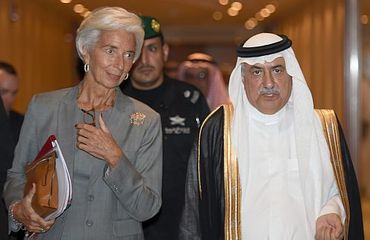
São Paulo – Christine Lagarde, managing director of the International Monetary Fund (IMF), visited Riyadh, Saudi Arabia, where she met with King Salman Bin Abdulaziz Al Saud and took part in a meeting of the Finance ministers and central bank presidents from the Gulf Cooperation Council (GCC).
“The reforms that the GCC countries have been implementing over the past year in response to the decline in oil prices are impressive,” said Lagarde at the end of the visit in a statement made public by the IMF this Wednesday (26). The bloc is comprised by Saudi Arabia, Bahrain, Qatar, United Arab Emirates, Kuwait and Oman.
However, she pointed out that these countries need to continue enforcing fiscal adjustment measures in the medium term. “Where possible, countries should phase in deficit-reduction measures gradually, while strengthening their medium-term fiscal frameworks and fiscal transparency to support the adjustment,” she said. “Policies to support growth and employment will also need to continue,” she added.
In the specific case of Saudi Arabia, Lagarde said that the country has started a great change in economic policy to respond to low oil prices. The so-called “Vision 2030” and “National Transformation Program (NTP)” strategies provide for “ambitious” reforms to reduce the country’s dependency of the commodity.
She also said that the Saudis have started a fiscal adjustment, with expenditures coming down and revenues increasing. “These efforts should continue over the medium-term including through further increases in energy prices which are still low by international standards, further revenue-raising measures including from the planned introduction of excises and the VAT at the GCC level, and further spending restraint,” she said.
An overwhelming chunk of Gulf countries’ revenues come from oil industry exports and not from taxes such as Brazil’s Income Tax and the Value-Added Tax on Goods and Services (ICMS), hence the need to bring expenditures down and seek other revenue sources when the prices of the commodity fall in the global market.
*Translated by Sérgio Kakitani

