



São Paulo – In its ten years in existence, ANBA has reported hundreds of actions aimed at promoting Arab culture in Brazil. Specialists approached by the agency have confirmed that during this period, the number of cultural initiatives and the interest of Brazilians in the language, habits and customs of Middle East and North Africa countries have grown considerably.
The most prominent initiatives, to name a few, have included the founding of the Institute of Arab Culture (Icarabe) and of the Library and Study Centre of South American-Arab Countries (Bibliaspa), which host Arab-related activities; the publishing of the Koran’s official Portuguese version, translated by professor Helmi Nasr, the Foreign Relations vice president at the Arab Brazilian Chamber of Commerce; a significant increase in demand for Arabic language courses, and the direct translation into Portuguese of the Book of One Thousand and One Nights by professor Mamed Jarouche, of the University of São Paulo (USP).
As a result of the work of professionals and institutions such as these, Arab culture ceased to be regarded as merely exotic and became better understood by the Brazilian public instead. The Arab Brazilian Chamber has sponsored many of these activities throughout the past ten years.
“I can tell that at this time, we are seeing much more interested people than in the past,” says João Baptista de Medeiros Vargens, a full professor in the Arabic Studies Department of the Language School at the Federal University of Rio de Janeiro (UFRJ). “I was in the first Arabic licensure class ever at the UFRJ, in 1974. There were only two students; I was 50% of the class. Now, there are 15 slots each year and three students compete for each slot, which is a very good rate compared to other language courses,” he says.
The Arabic course at the University of Rio is also offered as an optional subject, and it is sought after by students with various interests. “There are students interested in religion, Foreign Relations students interested in diplomacy, and there are people who want to build a career in foreign trade,” he explains. In October, Vargens will accept the King Abdullah International Translation Prize, from Saudi Arabia.
Arlene Clemesha, an Arab History and Culture professor at the USP, points out the increased demand for this subject at the country’s premier university. “We get students from all over the university. The demand is very strong,” she says. The Arab Culture and History subject is open to all USP students, and is usually attended by approximately 60 students per semester, says Clemesha.
She also mentions the diversification in the topics of dissertations on the Arab world defended at USP. “People are specializing in different periods of the histories of different countries. One of the most in-demand subjects is the Palestinian issue, but I get students who are conducting research on Syria, on Egypt,” she explains. To Clemesha, there is still room available for the diversity of Arab-related themes to increase.
The professor recalls the work of some outstanding colleagues when it comes to spreading Arab culture in Brazil in the past few years; “We have seen very important translation works, such as those made by Safa Jubran, Mamed Jarouche, Miguel Attie Filho and Michel Sleiman,” she says.
In her opinion, the missing element when it comes to increasing Brazilian students’ knowledge of the Arab world is financial support. “There are next to no scholarship programs for the Middle East,” she critiques. Nonetheless, Clemesha stresses the importance of dedication to those who choose to do research on Arab themes. “Academic work is slow, but sure. These are people who dedicate their lives to studying one subject,” she says.
Helmi Nasr, who founded the Arabic course at the USP in the 60s, looks kindly on the expansion of the university course. “I dedicated myself a lot and managed to get the course up and running. Now, it is very highly regarded by the students,” he says.
About his translation of the Koran, published in 2005, he recollects that by the time he arrived in Brazil from Egypt, there were already seven translations of the holy book of Muslims available. “Six were made by people who did not possess knowledge of the Arabic language, and one was made by a person who knew the language, but not the culture,” he says. “Mine was the first translation by someone familiar with both the language and the culture. It is the only officially recognized translation,” he says.
In that same year, the professor also released an Arabic-Portuguese dictionary, and other scholars have published similar works in the past 10 years.
To Nasr, the large Arab colony residing in Brazil is one of the factors that have helped spread the culture in the country. However, he regrets the fact that there is no official organization for promoting Arab culture in Brazil, along the lines of Paris’ Institut du monde arabe or London’s The Arab British Centre, and says he is working for it to happen. “I am working to the best of my ability to create a fully Arab centre in Brazil,” he says.
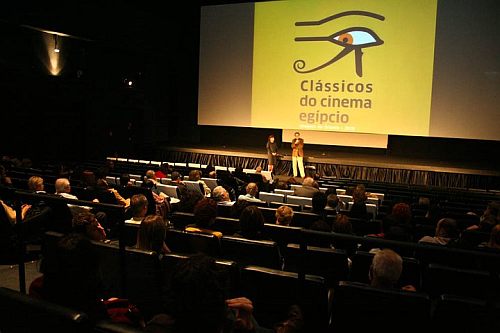
Outside of academia, the inception of the Icarabe was one of the driving forces in spreading Arab culture among Brazilians. Founded in 2004, the institute has offered over 12 courses on various aspects of life in Arab countries, in addition to having originated the Arab World Film Festival.
“The film festival has gone international, and it is now a part of [São Paulo] city’s calendar,” said the Icarabe secretary general Heloisa Abreu Dib Julien. “People are realizing how little they know about Arab culture, and they want to learn more,” she says.
Dib tells that some people have become affiliates with the institute after taking one of its courses. “More young people are choosing the master’s course on International Relations with an emphasis on the Arab issue. Many were drawn to the Palestinian issue and have written fine books and theses,” she says.
She also mentions the fact that Icarabe-affiliated university professors are featured more often in the media. “We have become the go-to source for the media, whereas in the past they would never approach us. Now is our time to showcase our work,” she says. Regarding ANBA, she stresses the fact that the agency has always provided support when it came to publicizing the institute’s actions. “ANBA is an indispensable asset when it comes to publicity,” she says.
*Translated by Gabriel Pomerancblum

