



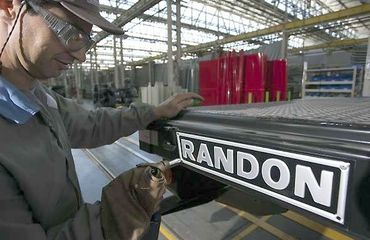
São Paulo – The Middle East dropped from a 6% share in exports by Randon in 2014 to 3% share last year, according to a balance report of the company released this Wednesday (23). The result followed the general decline that the company had with international sales in 2015 due, especially, to the low prices of commodities and oil.
“Although the dollar price is attractive for exports, economic crises in the commodities- and oil-dependent countries have hampered the increase of sales to the external market”, said the company during the report of the results. The company says that this can be seen in regards to exports to Europe, Africa and the Middle East.
Europe went from a 5% share in exports in 2014 to 2% last year. Africa dropped from 16% to 13%. Oceania, Asia, South and Central America and Nafta remained stable as the destinations for Randon’s exports, with share of 1, 9, 1 and 31%, respectively. However, external sales increased for the countries of Mercosur and Chile. This area went from a 31% share in 2014 to 40% in 2015.
Overall, Randon’s exports declined 17.4% last year and generated USD 158.2 million in revenues. According to information released by the company, several actions are being taken for the recovery of these markets. The company had a weak performance in the international market in Q4 of last year also, with the results being released this Wednesday along with this year’s figures. Sales declined 8% over Q4 2014, with revenues of USD 36.8 million.
The Randon group registered a decline in overall results of last year. The consolidated net profit stumbled 18% over 2014 with BRL 3.1 billion (USD 843 million). The net loss in the period was BRL 24.6 million (USD 6.69 million), against a net profit of BRL 202 million (USD 54.93) in the previous year. The company says that the “confidence crisis in the country has been a key factor for the economy to continue in recession and enhance the weak volumes of sales and output”.
The company points to the termination, at the end of October, of the program Finame PSI (Investment Sustainment Program), a credit line of the Brazilian Development Bank (BNDES) for the purchase of machinery and equipment and vehicles such as buses and trucks with attractive interest rates. “Besides, the constant search of automakers for the adjustment of theirs and their dealers’ inventory levels dropped once again the output volume”, said Randon.
The Randon group is the controller of eight companies that operate in the vehicles and machinery, auto parts and financial services sectors. The company manufactures, for instance, trailers and semi-trailers for grain transportation, dump trucks for containers, silos, tanks, among others.
*Translated by Sérgio Kakitani

