



São Paulo – The Ras Al Khaimah Free Trade Zone (RAK FTZ), in the United Arab Emirates, is looking to attract more Brazilian enterprises into its facilities. The free trade zone located in the country’s third largest emirate already hosts 25 companies from Brazil. The cost of setting up a business in RAK FTZ is low, allowing small and medium-sized companies to open units in the emirate.
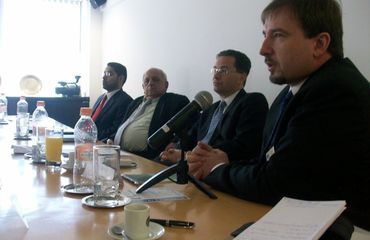
“What sets us apart from other free trade zones, especially the Jebel Ali Free Zone (in Dubai), is the fact that we offer packages for smaller businesses. Our starter package costs US$ 5,000 a year, whereas the Jebel Ali Free Zone focuses on very large companies,” RAK FTZ’s CEO Peter Fort explained during an event hosted by the Arab Brazilian Chamber of Commerce this Wednesday (29th) in São Paulo. The goal of the seminar was to show Brazilian executives the advantages of operating from RAK FTZ.
A delegation from the free trade zone was welcomed by Michel Alaby, the Arab Chamber’s CEO, and by Saleh Ahmed Alsuwaidi, the general consul of the United Arab Emirates in São Paulo.
“The prices we charge for all products are significantly lower than other free trade zones, including what we offer to major businesses in terms of office space, warehouses and land. This allows companies to cut costs and maximize their profits,” said Fort.
According to RAK FTZ’s CEO, the US$ 5,000 annual package includes a license to operate in the country, registration, access to facilities such as a shared business centre with computers and printers, an email address, a telephone and fax number and other items. The package also includes a three-year residency visa for one person.
In his presentation, Fort also discussed Ras Al Khaimah’s infrastructure, including five ports with a combined annual throughput of 50 million tonnes of products shipped worldwide.
The executive also remarked that just like the other Emirati free trade zones, companies operating from RAK FTZ can be 100% foreign-owned, whereas outside these facilities, a local partner is required to own at least 51% of the business at hand. Companies operating from RAK FTZ also enjoy tax exemption.
RAK FTZ Business Development director Ralf Degenhart highlighted the freedom enjoyed by businesses to employ workers from any nationality. “We place no restrictions on the entry of workers into our country. Once you set up your business, you can bring in personnel from anywhere in the world,” he said.
The director also said setting up a business in the free zone is quick and easy. “You can be up and running in a few weeks,” he said. He explained that companies can also rely on an office for support in activities ranging from truck and car rental to guidance in product marketing, among other needs.
The Ras Al Khaimah Free Trade Zone does not specialize in any single industry and accepts enterprises from myriad sectors. Presently, RAK FTZ hosts nearly 8,000 companies. In the Emirates as a whole, there are 12,000 companies operating from free trade zones.
According to Fort, the best opportunities for Brazilian companies are in foodstuffs – the main export item from Brazil to the Middle East – and cosmetics, auto parts and machinery. Most of the Brazilian businesses already operating at the facility are small or medium trading and services companies.
The delegation from RAK FTZ arrived in Brazil last Monday (27th) and kept appointments in Rio de Janeiro and São Paulo. They attended meetings at the Federation of Industries of the State of Rio de Janeiro (Firjan), The Brazilian Machinery and Equipment Manufacturers Association (Abimaq), the Brazilian Medical Devices Manufacturers Association (Abimo), the Federation of Industries of the State of São Paulo (Fiesp), the Brazilian Cocoa and Confectionery Manufacturers Association (Abicab), the Osasco Commerce and Business Association and the São Paulo City Hall.
According to the CEO, the purpose of the meetings was to showcase the advantages and opportunities the free trade zone can offer. The delegation will travel to Argentina this Wednesday.
Expansion
Laura Caruso, the director of the São Paulo-based trading company Marco Polo Imports, says her company set up operations in the emirate of Ras Al Khaimah five years ago, and exports Brazilian products to the United Arab Emirates and other Gulf countries.
The flagship products are foodstuffs and agricultural veterinary products. “Once you have actual headquarters there, the chance of doing business is much greater. I spend half the year in the region, doing commercial and marketing work for companies that wish to sell their products and services,” she explains.
She claims she attended the event because she has plans of expanding activities in the emirate. Her focus, she says, is on helping Brazilian enterprises interested in manufacturing their products in Ras Al Khaimah. “This is a big difference in breaking into the local market. The cost is much lower,” she asserts.
*Translated by Gabriel Pomerancblum

