



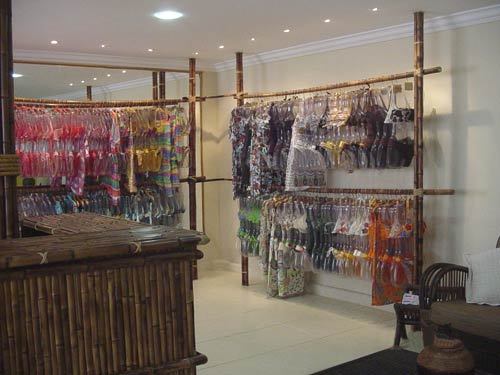
São Paulo – Rio de Janeiro more than doubled beach fashion exports to the Middle East and North Africa last year. In 2012, the state earned the equivalent to US$ 88,000 in bikini, bathing suit and swimming trunk sales to the region, 131% more than obtained in 2011.
Exports to the Arab countries represented just 2% of the total beach fashion exported last year, but they confirm the tendency for expressive growth. “In the last decade, exports (to the Arabs) reached 623%,” said Cláudia Teixeira Santos, a specialist in Foreign Trade at the Federation of Industries of the State of Rio de Janeiro (Firjan).
“Apart from that, the countries of the League of Arab States consume Rio de Janeiro state beach fashion with higher added value, US$ 260 per kilogram, and had 432% growth in terms of the volume exported over the last decade,” said Santos. The average price of beach fashion sold by Rio de Janeiro last year was US$ 154 per kilogram.
In the Middle East, the United Arab Emirates was the main destination for Rio de Janeiro beach fashion exports in 2012, with US$ 49,000, representing 56% of purchases made by the Arab countries. “The bikinis, bathing suits and swimming trunks exported to the country had higher average prices, US$ 323 per kilogram. Then, in 2012, exports to Lebanon were prominent, US$ 34,000, at an average price of US$ 210 per kilogram,” says the Firjan specialist.
In total, Rio de Janeiro state beach fashion exports totalled US$ 5.4 million in 2012. With this, the state became the main exporter in the sector in Brazil, answering to 49% of foreign sales in the sector, exceeding São Paulo, which occupied the first position in the past.
According to Firjan, over the last 10 years, while Brazilian beach fashion exports dropped 25%, the state of Rio presented growth of 8% in sector foreign sales. From 2011 to 2012, Rio de Janeiro state beach fashion exports rose 19%, while São Paulo had a 29% reduction and the whole of Brazil, 7%.
The main Rio de Janeiro state destination for beach fashion was the United States, which has been in the same position for 10 years. In 2003, the country represented 62% of total beach fashion exported by the state, while in 2012, this participation dropped 45%. According to Firjan, this reduction reflects diversification of destinations for state sales.
*Translated by Mark Ament

