



São Paulo – From this Thursday on (5th), audiences in São Paulo will be able to learn about Saudi traditions, with a touch of Brazilian culture thrown in for good measure. Saudi Culture Days will feature dancing, music, costumes, film, paintings and photos from the Gulf country, all for free, until next Monday (9th).
“We want to be close to the Brazilian people because we love them, we want a closer relationship with them. That is why we want to culturally expose ourselves, so they may learn more about us,” said Abdulaziz Almulhem, deputy minister for International Cultural Relations of the Saudi Ministry of Culture and Information.
To show how closely related the two peoples are, the ministry has produced a 15 minute documentary containing statements by Brazilians who live in the Gulf country. Interviewees include Flávio Marega, the Brazilian ambassador in Riyadh.
“We have many Brazilians living in Saudi Arabia. They love living there. We have taken some statements in video and they will be shown every day during the event,” said Almulhem.
The event will mostly be held on Ibirapuera Park, where photographs, paintings, handicraft and typical Saudi costumes will be on display. Folk dance performances will also take place, as well as music concerts and henna paintings for women.
The delegation of Saudi artists is large. They are 36 dancers, 17 musicians, four picture painters, and 2 henna painters. The film about Brazilian expatriates in Saudi Arabia will be screened daily until the event is over, and visitors will be able to take home a CD copy.
Those looking to learn more about various aspects of Saudi culture, from economics to education, can also take home a book written in Portuguese explaining how things work in the Arab country. For those interested in local food, three tonnes of dates will be distributed.
On Friday (6th) and Saturday (7th), the only attraction outside the park will take place. At 2:00 pm, mall Butantã, in west São Paulo, will host a performance of “younbouawi,” a typical Saudi dance, which will be set to the sound of Brazilian samba.
“Now, Brazilians have the chance to find out more about the Saudis. This is why I am here, to show who we are, what we think, what we believe in, what we do and what we like in terms of food and customs. I believe this will build many ties with Brazilians,” the deputy minister stated.
Costumes and photographs
Susan Baaghil, who is in charge of the typical attire exhibit, explains that she has brought 20 pieces of garment from her country. “They are all original ethnic clothing, men’s and women’s. They are beautiful, handmade items worn on special occasions such as weddings, commitment parties. They are rich in embroidery and colours,” she explained.
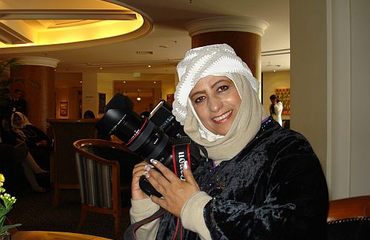
About her own life, she recounts that she was the first woman ever to work as a professional photographer in the Arab world. Baaghil graduated in Photography in 1983, in the United States. “Then I returned to Jeddah, in Saudi Arabia, and opened the first studio and lab [owned by a woman] there,” she said.
She has been collecting traditional attire for over 20 years. “I buy them from the Bedouins, for some of them cannot be found at malls,” she said. The items are also used in her photography work, in case the subjects wish to wear them.
Baaghil also said she has won over 35 photography prizes and exhibits her work around the world. The latest one took place in South Korea, and the next one will be in Malaysia. This is her first visit to Brazil.
Regarding the differences in attire between the two countries, she says they are not that pronounced. “We dress normally when we are at home with our families. We only wear the ‘hijab’ when we go out in the streets,” she said, in a mention to the scarf Muslim women cover their heads with.
Service
Saudi Culture Days
June 5th to 9h
Opening on June 5th at 7:00 pm
Exhibits open from 10:00 am to 8:00 pm
Place: Ibirapuera Park Events Arena
Avenida Pedro Álvares Cabral, no number – São Paulo
Free of charge
“Younbouawi” performances
June 6th and 7th at 2:00 pm
Butantã shopping mall
Avenida Professor Francisco Morato, 2718, São Paulo
*Translated by Gabriel Pomerancblum

