



São Paulo – Current events across the Middle East and the role of Lebanon in local geopolitics will be the topic of the First Brazil-Lebanon International Seminar, slated for November 25th at Candido Mendes University in Rio de Janeiro.
“Stability outweighs instability in Lebanon. It has institutions that actually work. In comparison with Iraq, Syria and the Palestinian issue, Lebanon is more stable and its democracy is deeper-rooted than in other countries,” notes Erica Resende, an International Relations professor at Instituto Universitário de Pesquisas do Rio de Janeiro (Iuperj), an education and research arm of Candido Mendes University and one of the event’s organizers.
The event is organized by Iuperj in partnership with the Brazil-Lebanon Culture Institute, Université Saint-Esprit de Kaslik in Lebanon and the Consulate General of Lebanon in Rio de Janeiro.
Resende remarks, however, that other countries and regional factors ultimately bear down on Lebanese geopolitics. “The civil war in Syria, which is considered an offshoot of the Arab Spring, and the intervention in Iraq (by the United States and the United Kingdom). Not to mention this new player, which raises concerns both in the United States and Russia, the Islamic State,” the professor points out.
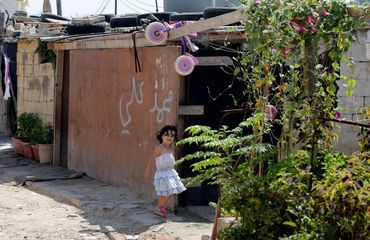
She claims Lebanon is not seen as a troublemaking country in the Middle East, therefore it could help create a solution for the region. She stresses, however, that in a country with a population of under 5 million, the added burden of 1.5 million Syrian refugees is a major disruption.
“It’s enough to destabilize any organization. The government is trying to provide food and get the children in school,” she says. She believes the fact that Lebanon and Syria share a common past (the Ottoman rule, the French mandate etc.) and a common language provides some relief to the Syrians arriving in Lebanese territory.
“This is not the case with people arriving in Greece, Macedonia or Germany. But Lebanon is seen by these refugees as a place of passage. The vast majority of them do not wish to stay,” says Resende.
Regarding Arab immigrants who have come to Brazil, the professor claims their adaptation went smoothly. “Just enter any snack bar and you’ll find kibbeh and sfihas on sale. This goes to show that the [Arab] presence doesn’t startle [Brazilians],” she asserts.
When it comes to Syrians, however, she says government support is lacking. “The Brazilian Foreign Ministry grants them asylum, but coming to Brazil to rebuild their lives isn’t easy. Until they attain legal status, they rely on NGOs,” she explains.
First Brazil-Lebanon International Seminar
November 25th from 8:30am
Venue: Candido Mendes University (auditorium, room 507)
Rua da assembleia, 10 – Centro – Rio de Janeiro
Free of charge and open to the public
*Translated by Gabriel Pomerancblum

