



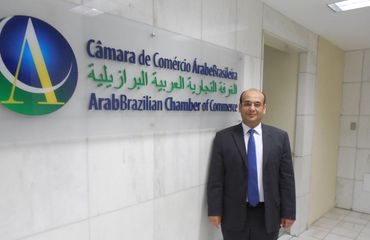
São Paulo – Tunisia is looking to attract Brazilian companies into setting up operations in its territory. To that end, the country offers fiscal incentives and an advantageous location. So says Khalil Labidi, CEO of the Tunisian Foreign Investment Promotion Agency (Fipa), who visited the Arab Brazilian Chamber of Commerce headquarters in São Paulo this Wednesday.
“Tunisia offers many infrastructure-related, tax-related and social incentives in order to be targeted by investment. We offer good tax rates, [currently] at 25% of net income. For companies exporting at least 70% of their output, which are considered exporting companies, the rates are only 10%,” Labidi explained.
Apart from opportunities in industries where large corporations are, such as mining and aerospace, Labidi points out that his country offers possibilities in other fields. “The most interesting field is auto parts. We are Africa’s second leading exporter of automobile components to Europe. We are very competitive and our infrastructure is good in this area,” the executive said.
“Another sector is offshoring, i.e. services Brazilian companies can carry out in Tunisia. We also have agrofoods and tourism,” he added.
Labidi also highlighted his country’s location, infrastructure and labour force qualification. “We have industrial zones and airports located near tourist areas. Furthermore, should the companies need professionals with specific skills, the government can provide cost-free training,” he said.
“Tunisia boasts a very interesting location, in between Africa and Europe and the Arab countries. We are a two-hour-flight away from most European countries, and there are land connections by land with Libya, Algeria and Egypt. All of that can be very useful to Brazilians,” he noted.
Labidi said he is hoping to receive businessmen from Brazil at the International Investment Forum due next June, in Tunisia, and disclosed plans of opening a Fipa office in Brazil. “There are no set dates yet, but we will draft our plans,” he said.
According to the executive, industry is the sector with the highest rate of foreign companies in Tunisia, at approximately 50%, followed by (40%) and tourism (7%).
Last year, Tunisia saw an influx of US$ 1.25 billion in foreign direct investment. This year, according to Labidi, over US$ 1.56 billion is expected.
During his visit to the Arab Chamber, Labidi was welcomed by CEO Michel Alaby and by Foreign Trade vice president and Tunisian honorary consul in São Paulo Rubens Hannun.
*Translated by Gabriel Pomerancblum

