



São Paulo – The Tunisian exhibitors who took part this week in the São Paulo Supermarkets Association (Apas) believe the event was important for introducing their products and increasing market share in Brazil, and also for Brazilians to learn more about foodstuffs produced in Tunisia. They were featured at the exhibition in a stand organized by the Arab Brazilian Chamber of Commerce.
“We intend to return for the next edition because we believe we must be on the market permanently. We need to invest time and money in the market. This is a huge market, of millions of people,” said Mohsen Boujbel, president and CEO of date exporting company Boudjebel S.A.
His company has exported dates to Brazil since 1997. “We made some great contacts, did a lot of prospecting and hope to see good results. We are optimistic,” he stated.
Ines Ben Ghorbal, the general manager for Carthagenna International Trading, attended the São Paulo expo for the first time. “I have great expectations of doing business with contacts I met at Apas,” she revealed. Her company deals in foodstuffs like couscous, olive oil and chamiah, a typical Tunisian pastry made from sesame seeds and dried fruits.
She said she plans on coming back in the future, now that she is more familiar with the Brazilian market. “I would surely like to return, next time with a more experienced outlook, an understanding of the mindset of Brazilian producers and consumers. I am certain I will come back, not only with our basic products, but with a range of Tunisian products to sell,” she claimed.
Attending the Apas fair for the second time, Kamel Fhoula, the commercial manager for South America with Midcom International, said this edition was better than last year’s. “This time we got in touch with names that are lesser-known at the national level, but better known locally, in areas like Goiás state, the Brazilian Northeast and the São Paulo countryside,” he said.
For him, it is important to make a name for Tunisia among Brazilians as a food producing country. “We can tell that the Tunisia brand is not well publicized in Brazil yet, Brazilians don’t know it. There’s a lot of work to do when it comes to promoting the Tunisia brand. Most Brazilians don’t know Tunisia is the world’s second leading olive oil producer,” he explained.
Tasting
Before leaving for the last day of Apas, which closed this Thursday (7th), the Tunisian exporters attended a luncheon with a delegation of Tunisian government officials.
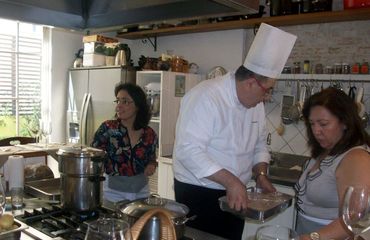
The goal was to show local journalists the typical ingredients and flavors of Tunisia. The specialty of the day was couscous and lamb meat. Tunisian bread and olive oil, dates, wines and sweets were also served.
Couscous and lamb is not a fast-cooking dish: it takes as long as three hours, because the lamb meat found in Brazil isn’t as soft as Tunisia’s.
The food was cooked by chef Edmundo Issa, assisted by two Tunisian women. The Brazilian-born Issa is of Syrian and Lebanese descent. A chef for 20-plus years, he is also a professor of Mediterranean cuisine at the Gastronomy course of Universidade Anhembi Morumbi.
Considering this, before digging in, this ANBA reporter seized the occasion and asked for a few tips on how to cook the typical North African recipe. “In Brazil, what we do is we seal the meat. They just put it in the cooker without sealing,” he said regarding the difference between the Tunisian and Brazilian cooking styles. Sealing meat means searing it quickly on the outside until it turns golden.
There is also a little secret to preparing the couscous. “Over in Tunisia, they will hydrate the couscous with hot water, salt and olive oil. Knowing how to hydrate the couscous is crucial. You do it little by little,” he said.
It’s worth a try. The meat is soft, the couscous tastes light and it feels loose in your mouth. The Tunisian red wine Magon, with 12% alcohol content, goes well with the meal.
*Translated by Gabriel Pomerancblum

