


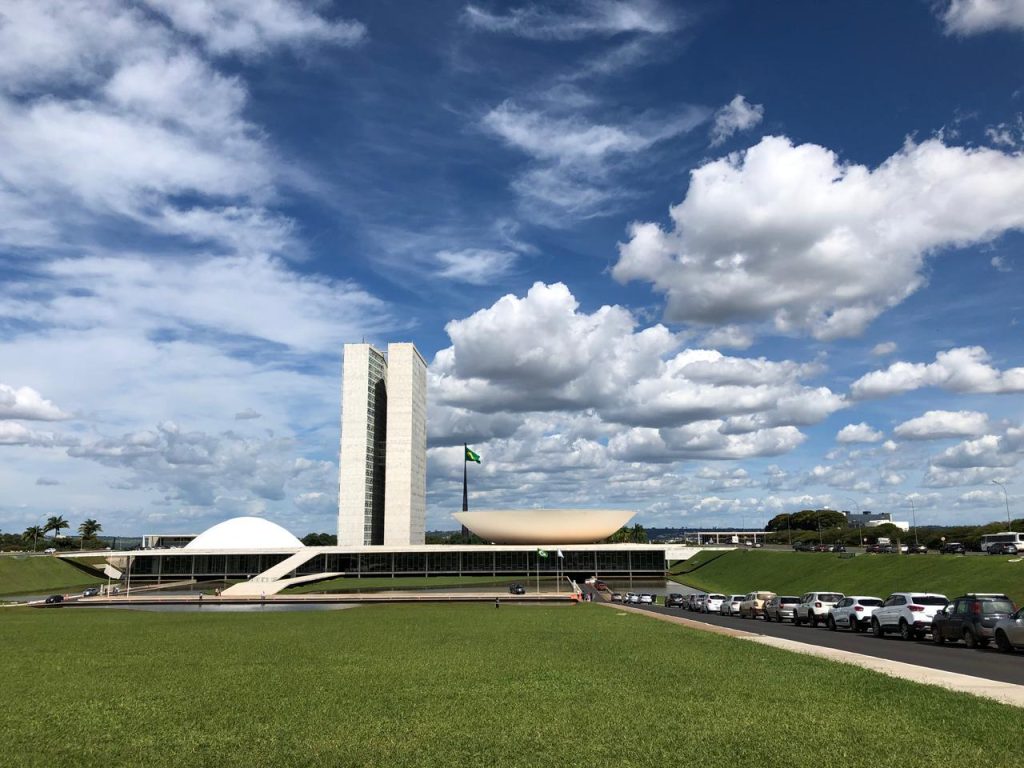
São Paulo – The Praça dos Três Poderes, home to the Palácio do Planalto, the Supreme Federal Court (STF), and the National Congress, features prominently in Brazilians’ daily news and in decisions that shape Brazilians’ lives. But these landmarks are also works of art and architecture in a city that breathes history and culture and offers leisure even amid so many political negotiations.
Building a capital in Brazil’s Central-West was an insistence of President Juscelino Kubitschek de Oliveira (1956–1960), who commissioned the project to architect Oscar Niemeyer (1907–2012). He, however, recommended that the urban plan be designed by another professional and then focused on the buildings. A competition selected Lúcio Costa (1902–1998) to plan the city. His proposal featured a cross, later dubbed the “Plano Piloto” — when looking at a map of Brasília, one can see a design that resembles not a cross, but an airplane structured into the north wing, central axis, and south wing.
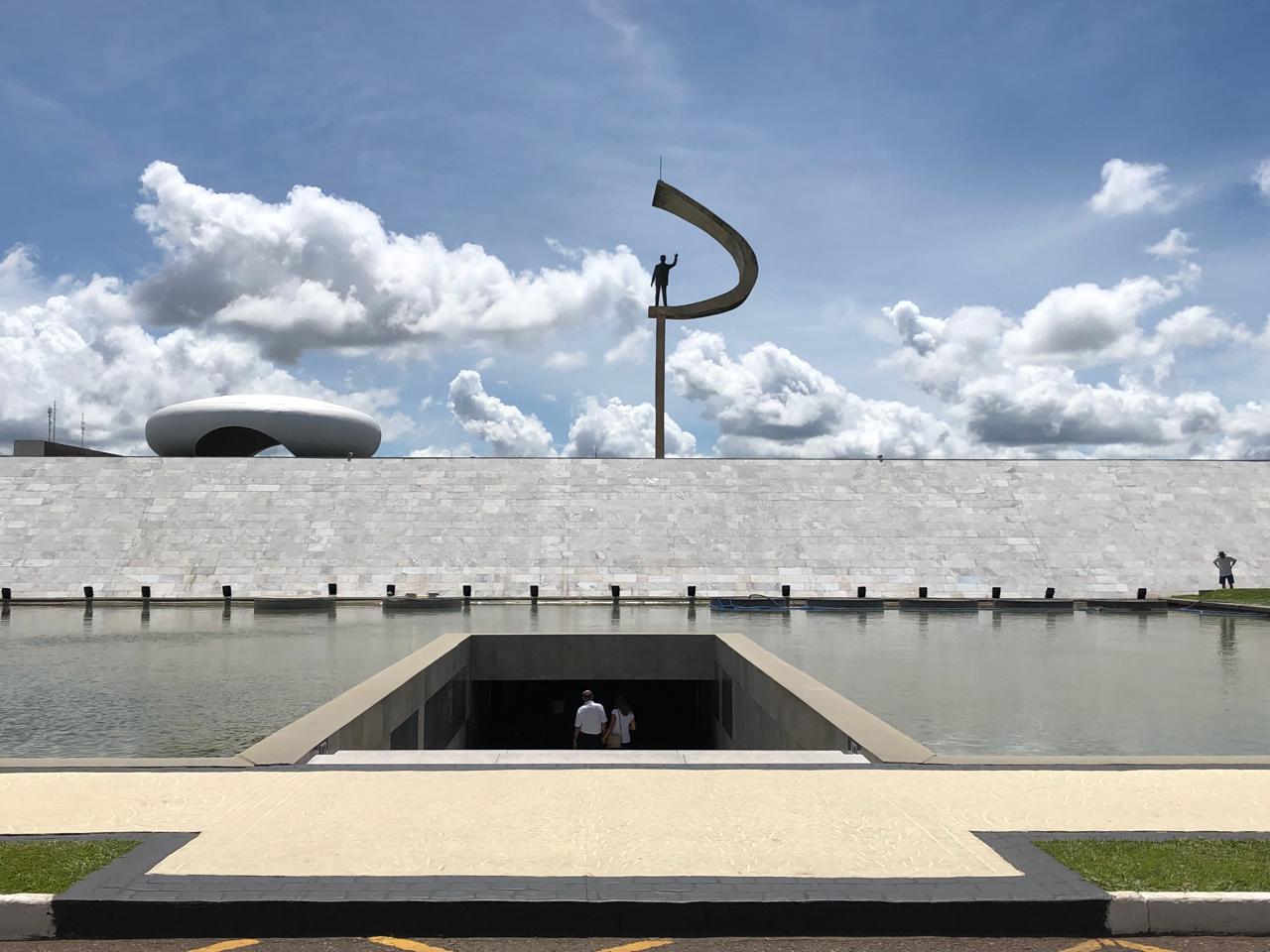
Thus, the city, which now has 2.9 million inhabitants, was designed with residential and commercial buildings in the two “wings,” separated by the Monumental Axis, an avenue stretching more than 15 kilometers that is home to landmarks such as the Cathedral of Brasília (Nossa Senhora Aparecida), the National Museum of the Republic, the Arena Mané Garrincha football stadium, the Memorial of Indigenous Peoples, and the JK Memorial. It is also along this avenue that the Esplanade of the Ministries is located.
At one end, the Monumental Axis meets the Praça dos Três Poderes, which brings together at each point the Palácio do Planalto, seat of the Executive branch; the STF, the country’s highest court; and the National Congress, where laws are passed in the Chamber and the Senate. In front of the STF, the statue The Justice, by Alfredo Ceschiatti, depicts the Greek goddess of justice, Themis, blindfolded. Another sculpture, The Candangos, by Bruno Giorgi, pays tribute to the workers who, in five years, built a city where there had once been a sparsely populated area. “Candangos” was the term used for workers from across Brazil who migrated to build Brasília.
Art everywhere
Also by Ceschiatti are the works As Iaras, located at the Palácio da Alvorada, the official residence of the president; Leda e o Cisne, at the Palácio do Jaburu, where the vice president lives; and Duas amigas, at the Itamaraty Palace, headquarters of the Ministry of Foreign Affairs.
The city’s works of art and architecture “dialogue” with the interior decoration of its buildings and with the surrounding landscaping. When Brasília is mentioned, two names almost automatically come to mind: Oscar Niemeyer and Lúcio Costa. But it is the visual artist Athos Bulcão (1918–2008) whose panels, tiles, and reliefs stand out across the capital’s main landmarks. The graphic patterns based on geometric forms created by Athos Bulcão welcome visitors as early as the Aeroporto Internacional Presidente Juscelino Kubitschek, as well as at the National Congress and the Itamaraty Palace, among many other places.
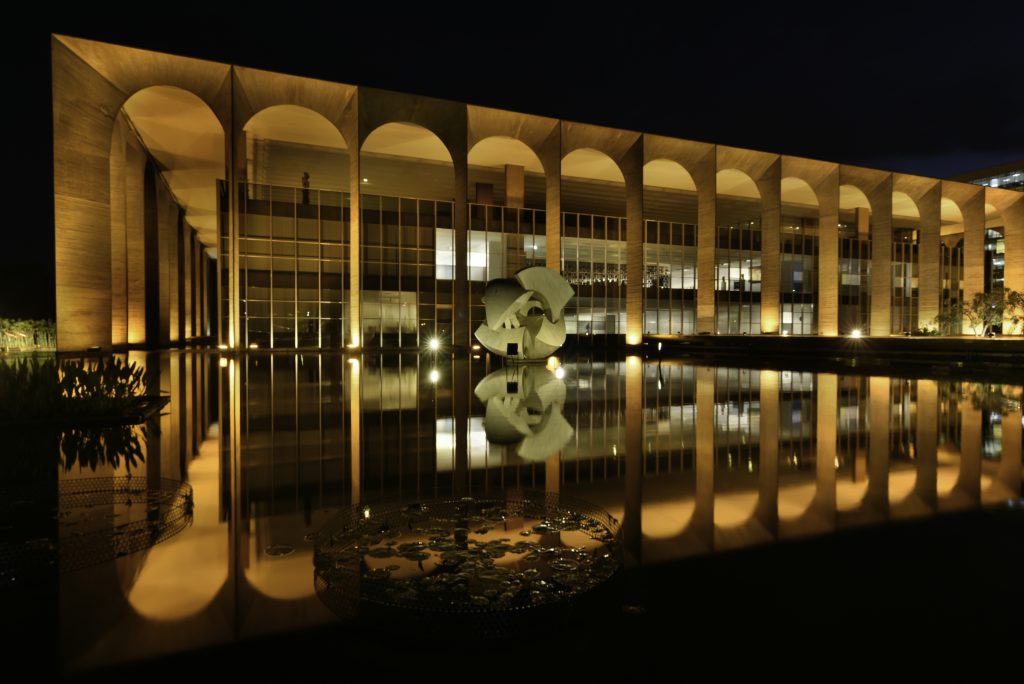
Creations by Athos Bulcão can also be seen during a visit to Itamaraty. The building was completed in 1970, after the inauguration of Brasília. To present Brazil to the world and celebrate the country’s ties with other nations, it was built predominantly with Brazilian materials and houses works by leading names in Brazilian and international art, including Candido Portinari, Alfredo Volpi, Djanira, Maria Martins, Tomie Ohtake, and Iberê Camargo. Another Brazilian artist contributed to the design of Itamaraty: the gardens and reflecting pool surrounding the building were created by landscape architect Roberto Burle Marx (1909–1994).
Nearly all of Brasília’s government addresses feature design, architecture, and engineering solutions that are recognized, admired, and studied. This wealth of history and its distinctive architectural ensemble led Brasília to be designated a World Heritage Site by the United Nations Educational, Scientific and Cultural Organization (UNESCO) in 1987.
Brasília also offers breathing space, greenery, and views of Lake Paranoá, an artificial lake created to make the region less dry and now a leisure area for residents. One of the best views in the city can be enjoyed at Pontão do Lago Sul. In addition to being a dining hub, it offers cultural attractions and ample parking—an advantage in a city still reliant on cars.
Brasília can be seen, felt, and also heard. It is informally known as the capital of Brazilian rock. Bands such as Capital Inicial, Plebe Rude, and Legião Urbana, among others, emerged there. Some even referenced Brasília in their songs, often with critiques of power. Despite the challenges imposed by politics, Brazil’s capital surprises and is well worth a visit. It is home to decisions that shape people’s lives and the guardian of an architectural and cultural ensemble that represents a chapter in Brazil’s history.
Translated by Guilherme Miranda
