



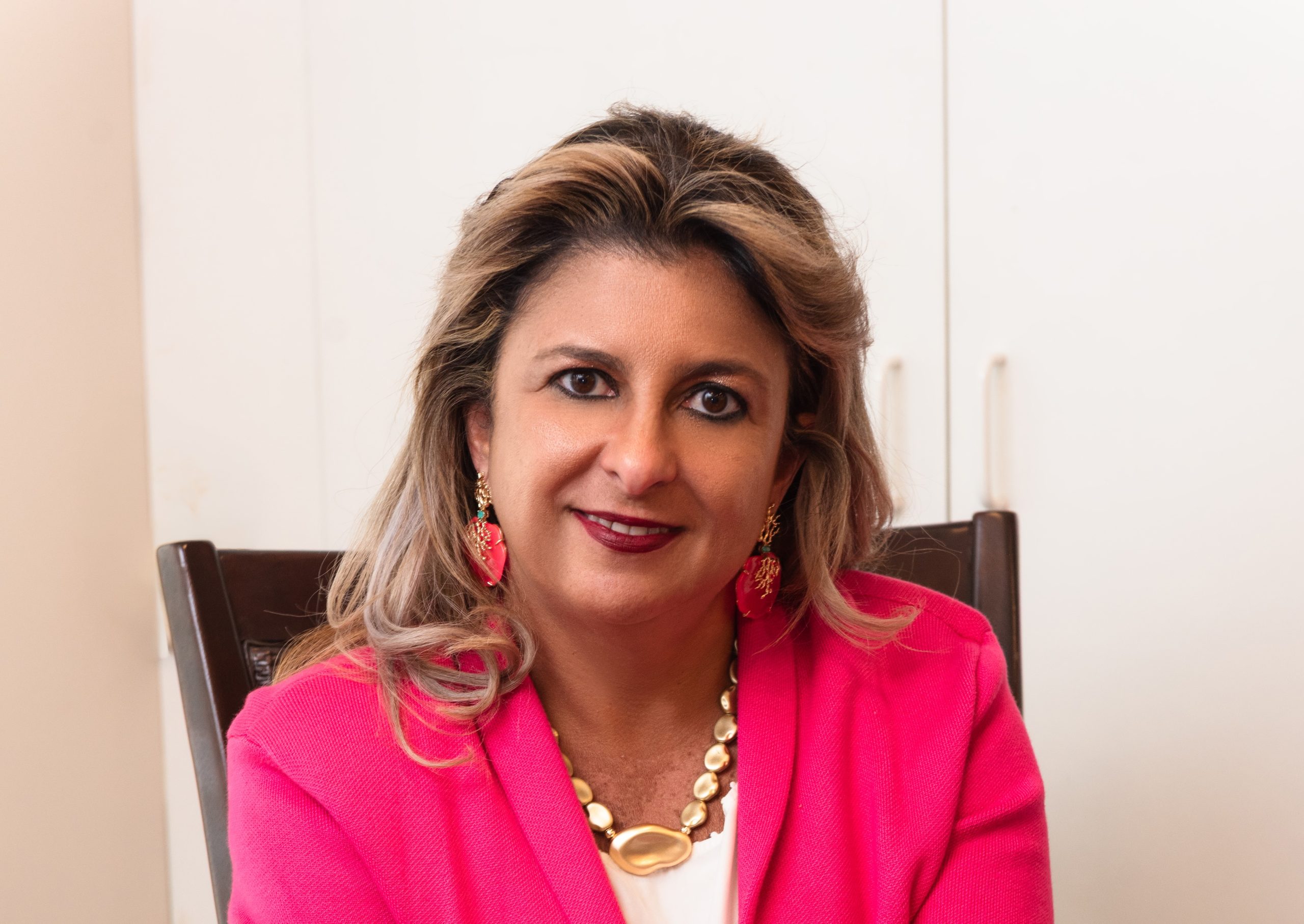
São Paulo – There are 1.7 million women leading or co-managing rural properties in Brazil, according to the IBGE. Together, they oversee around 30 million hectares across the country, yet they are rarely talked about. Motivated by this lack of visibility—and the problems it creates—entrepreneur, producer, and rural leader Juliana Farah began mobilizing to create initiatives aimed at this audience. More than three years ago, she launched Semeadoras do Agro within agriculture federation FAESP, a program built around three main pillars: Training in entrepreneurship and professional management; care for those who produce; and strengthening female leadership in rural areas.
“The creation of the Semeadoras do Agro Commission came from a conversation I had with the then president of the FAESP/SENAR system, Dr. Fábio de Salles Meirelles, who’s always been a strong supporter and advocate of women’s presence in leadership positions—so much so that, in a pioneering move, he opened space for women on the board during his administration,” recalls Farah, who also chairs the Rural Union of Mineiros do Tietê, the city where she produces grains, coffee, and livestock. “At the time, I shared with him my concern after witnessing the vulnerability of so many women in rural areas, who worked tirelessly yet remained invisible to society.”
The Commission’s initiatives are designed to support rural women in a comprehensive way because, according to its founder, success in agribusiness goes far beyond the farm gate. “Our work seeks to identify real challenges and propose practical solutions,” she says. This takes place through municipal meetings, which offer training modules developed by the Commission, as well as through other subprograms such as “Semear é Cuidar” (“Sowing Means Caring”), which provides free preventive screenings through the union network for the early diagnosis of breast, cervical, and skin cancer—an initiative supported by the NGOs Orientavida and Pense Rosa.
The program’s greatest distinguishing feature is that it does not merely provide a medical exam but enables the entire care journey—it handles logistics by transporting women to examination and treatment sites, offers meals, and provides emotional support for those who receive a diagnosis. To speed up diagnoses, most disease detection procedures are carried out through the private healthcare network. From its launch in 2023 through the end of 2025, 11,000 women had been assisted.
“We work tirelessly to strengthen female leadership, encouraging protagonism and the creation of solid support networks. By bringing together these pillars—training, healthcare, and profitability—we are not only changing the life of one woman but also driving the economic development of entire regions and inspiring future generations,” Farah summarizes.
In her view, the position of women in agribusiness today reflects an irreversible upward movement: they have gone from statistical invisibility to becoming key players in farm management and food security. She also celebrates the fact that there are now 16 women serving as presidents of rural unions in the state of São Paulo. But Farah notes that there is still much to be done.
“We fight daily against structural sexism, prejudice, and violence that still seek to limit our abilities to stereotypes. The issue of wage and rights inequality remains a constant concern: we must ensure that women are able to develop their skills under the same conditions as men, with real access to credit and an active voice in decision-making. There is also still much to be done to ease the burden of caregiving responsibilities that have historically fallen solely on us.”
“Men’s work”
Born in Bauru and raised in Birigui, both cities in the countryside of São Paulo state, Farah experienced rural life intensely and had to challenge prejudice against women in the countryside from an early age, especially when she began working at her father’s tannery. “My first contact with the workforce was with my father, while I was still a young girl, processing raw hides and working on the farm he owned in Goiás. Even then, I was already breaking patterns, showing that there was no such thing as ‘men’s work.’ Later I became a rural producer and entrepreneur, working with soybeans and cattle ranching in Mato Grosso, and more recently, with grains, coffee, and livestock in Mineiros do Tietê, Franca, and Cristais Paulista [all three also in the countryside of São Paulo state],” she says.
Her father’s maternal grandparents came from Syria, met in Brazil, and married in Jaú, another city in the countryside of São Paulo state. Her great-grandfather became a prominent businessman in the city, owning a car dealership and serving as a central figure in local society. Meanwhile, her father’s paternal grandfather came from Lebanon at the age of 13, traveling in the hold of a ship until arriving in Santos. He settled in Bariri as a peddler but returned to Lebanon around the age of 20 for an arranged marriage to Juliana’s great-grandmother, who was Syrian.
“They were married by proxy and only met once they were in Brazil. In Bariri they prospered with a store and later on a farm, where they produced coffee, beans, and corn. My great-grandfather was a strong-willed man who supported the entire family through coffee production until his death in 1958,” she says.
From her Arab roots, she believes she inherited the DNA of entrepreneurship and the courage to take risks. “My family’s story is one of great courage and a deep connection to the land. My roots are a blend of resilience and entrepreneurship that crossed oceans. I carry with me very strong values of respect for others, religiosity, and cooperation. I learned that leading is, above all, about serving as a role model and positively influencing people’s lives,” she concludes.
Read also:
Portraits of Brazil of Arab origin
Translated by Guilherme Miranda
