



São Paulo – Trade between Brazil and Arab countries increased in the January-September period from a year earlier. According to data from Brazil’s Ministry of Development, Industry and Foreign Trade, compiled by the Arab-Brazilian Chamber of Commerce (ABCC), exports totaled USD 15.3 billion, up 3.7% from 2025. Imports also rose, increasing 7.7% to $7.9 billion through September.
Total trade is also up 5% at USD 23.3 billion, while Brazil’s trade surplus fell 0.4% to USD 7.4 billion. In September, exports fell 7.1% from September 2025 to USD 2 billion, while imports declined 9.7% to USD 877.8 million.
So far this year, Arab countries as a bloc remain Brazil’s third-largest export market, behind China and the United States, and its sixth-largest source of imports, after China, the U.S., Germany, Argentina and South Korea, and ahead of Russia, India, Mexico, and Italy.
Among Arab countries, the main buyers of Brazilian products are Egypt, the United Arab Emirates, Saudi Arabia, Algeria and Morocco. The leading suppliers to Brazil are Saudi Arabia, Morocco, Egypt, Algeria, the UAE, and Oman.
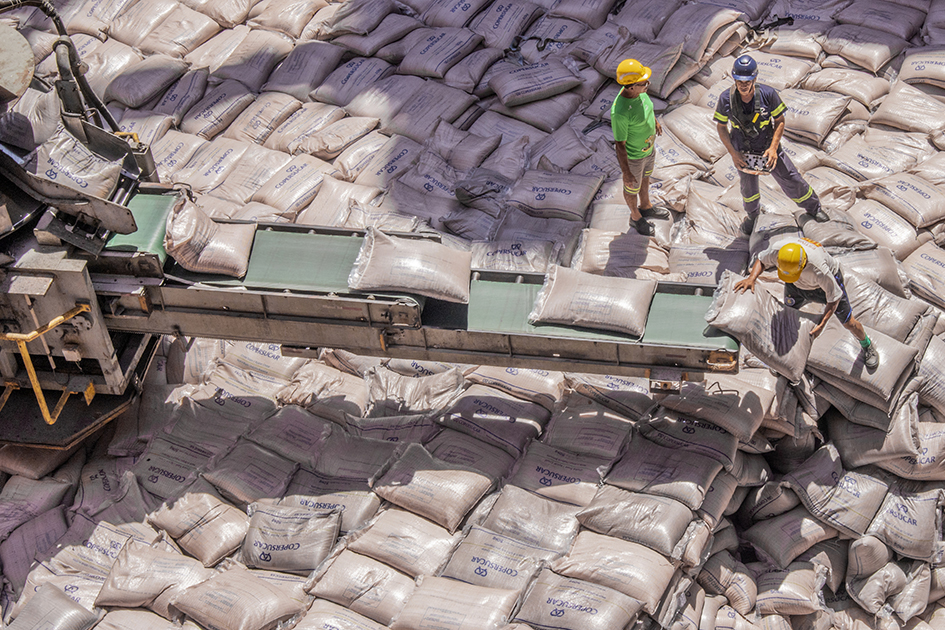
Brazil’s main exports to Arab countries are sugar, chicken, corn, iron ore, and soybeans.
Brazil’s main imports from Arab countries are crude oil, refined petroleum, phosphate fertilizers, mixed fertilizers and nitrogen fertilizers. Brazil is heavily dependent on fertilizer imports for its agricultural sector, with Morocco and Egypt among its main suppliers.
Read more:
Brazil’s fertilizer imports and production decline
Translated by Guilherme Miranda

