


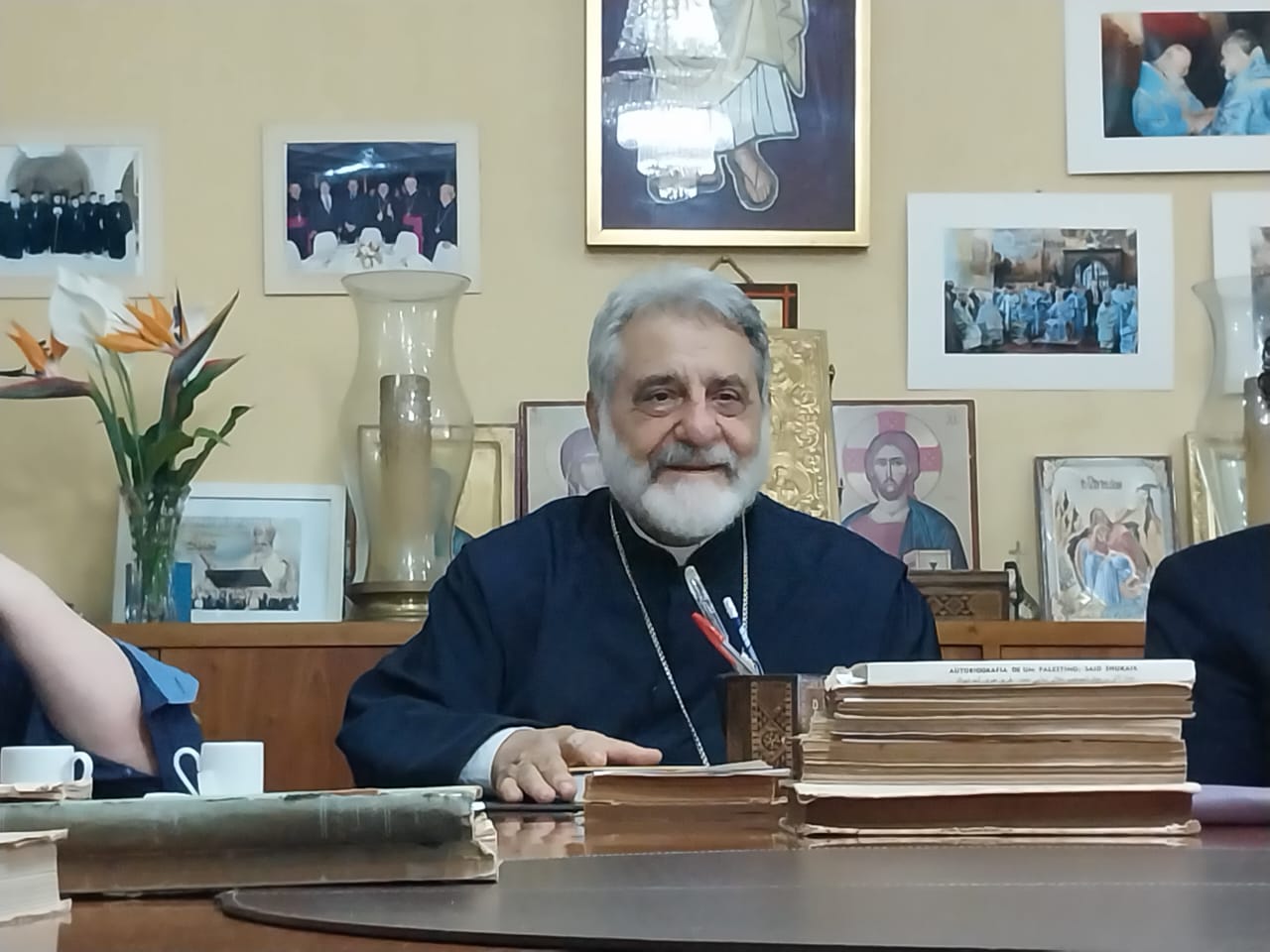
São Paulo – A project dedicated to preserving the history of Arab immigration to Brazil has identified findings in the book collection of the Metropolitan Orthodox Cathedral of São Paulo. The Arab Immigration Memory Digitization Project, which collects, preserves and digitizes documents and publications related to the history of Arab immigrants in Brazil, returned 41 books and a magazine to Archbishop Damaskinos Mansour on Monday (5). The materials had been loaned by the cathedral for digitization. During the handover, the clergyman was informed about the important items found among the publications, all of them in Arabic.
The research identified 10 books of interest in the cathedral’s collection, seven of which project coordinator Christina Queiroz highlighted as very important: No Tapete Voador [On the Flying Carpet], by Fawzi Maluf, published in 1929; O Poeta do Abqar e os Cânticos da Arte [The Poet of Abqar and the Songs of Art], by Abd al-Latif al-Yunis, published in 1966; Autobiografia de um Palestino: Said Shukair [Autobiography of a Palestinian: Said Shukair], from 1993; Gibran: Vivo e Morto [Gibran: Alive and Dead], by Habib Masud, from 1932; A Revolução Paulista [The São Paulo Revolution], by Menotti del Picchia (translated into Arabic); Viagem pela América [Journey Through America], by Yusif al-Id; and Árabes na América do Sul [Arabs in South America], by Al-Badawi al-Mulattam, published in 1956.
The work on the collection is currently being carried out by a team from the Edward Said Chair of Contemporary Studies at the Federal University of São Paulo (Unifesp), which became a partner in the project with the Arab-Brazilian Chamber of Commerce (ABCC) and the University of the Holy Spirit of Kaslik (USEK) in Lebanon last year and assigned a team to process the publications in April this year. Christina Queiroz is a visiting professor at the chair, which is coordinated by political scientist Javier Amadeo.
When the Unifesp team began working on the collection as part of the project, the cathedral’s books had already been screened and were beginning to be cataloged and digitized.
“When the Unifesp team took over, the first thing we did was resume the cataloging and digitization of the cathedral’s books,” Queiroz said.
All works digitized by the project are made available for research on the USEK platform, while the ABCC keeps a backup copy, and the institution or individual who lends a book receives a copy as well as the physical book back.
“What Unifesp has also been trying to do is identify the research findings,” Queiroz said.
The identification is carried out jointly by the Unifesp team, which, in addition to Queiroz, includes historian and conservator-restorer Isaac Gabriel Silva, Arabist Pedro Martins Criado and anthropologist Isabella Aquino.
“We all work together to identify the findings, the gems that have the potential to contribute to the advancement of scientific knowledge,” Queiroz explained.
The coordinator said that Habib Masud’s book, for example, is particularly important for understanding the ties between intellectuals from the Arab diaspora in South America and intellectuals in North America. In Árabes na América do Sul [Arabs in South America], meanwhile, Jordanian intellectual Al-Badawi al-Mulattam recounts a tour of South America in the 1940s to gather data on Arab immigration in the region.
“The book contains information we did not know about, for example, the press and publishing houses that operated in Brazil, printing these books in Arabic or books about Arabs,” Queiroz said.
Archbishop Damaskinos Mansour said that most of the books in the cathedral’s collection were donated by individuals, usually after a family member dies and leaves behind books in Arabic. He said many of the books donated to the cathedral were taken to Syria, but some remained.
“We put them in order here and keep them because we believe this is the history of our Arab community, a very important history,” he said. “I turn to these books to learn about the history of the community because many Brazilians, many immigrants born after 1950, do not know Arabic well enough to read these books,” he added.
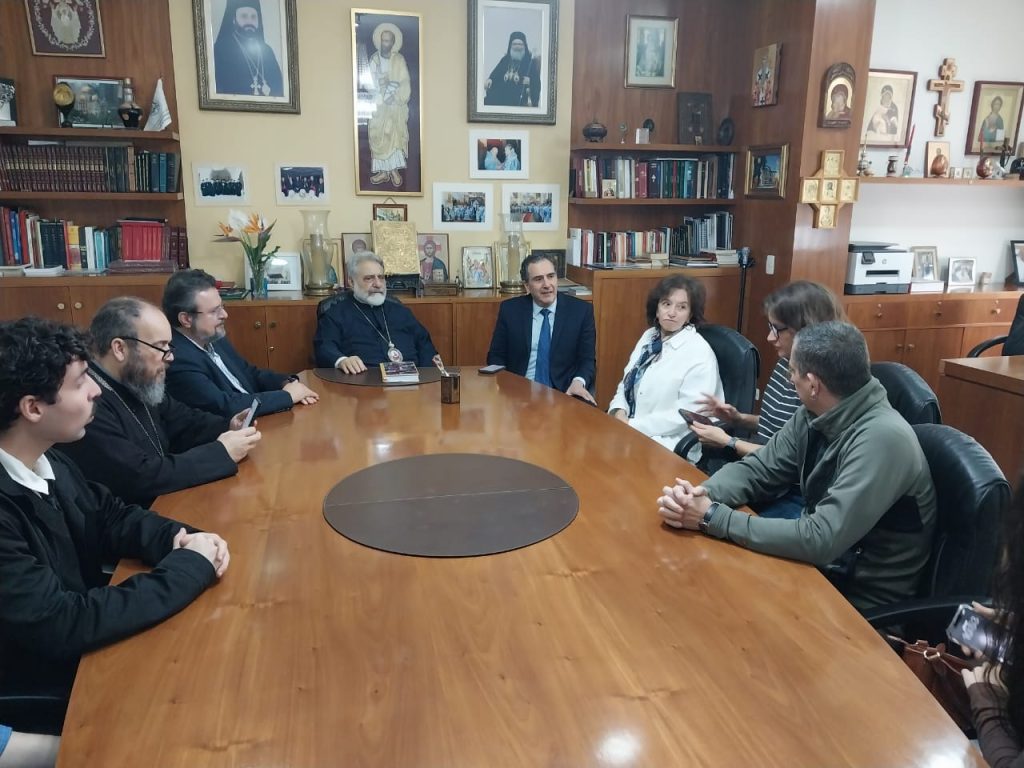
During the handover of the books, at a discussion with the archbishop about the project, ABCC Vice President of Marketing and historian Silvia Antibas asked for access to more works from the cathedral’s collection for digitization. She said the project dispels some myths about Arab immigration and shows that many authors and intellectuals came to Brazil as part of the immigration movement. Antibas briefed the clergyman on the project’s progress and praised the way Unifesp is carrying out the work.
“This team is extremely enthusiastic about this history. It moves me deeply,” she said.
The cathedral received the loaned books divided into three groups: those that do not require restoration or repair, those that would benefit from such work, and the notable finds. The cathedral also received digital copies of the books. The digitization process generated 21,000 images. “It is the digital book; it is a way of preserving all of this forever,” said ABCC President William Adib Dib Jr. during the handover, referring to the recorded history of immigration.
ABCC Director Sami Roumieh also attended.
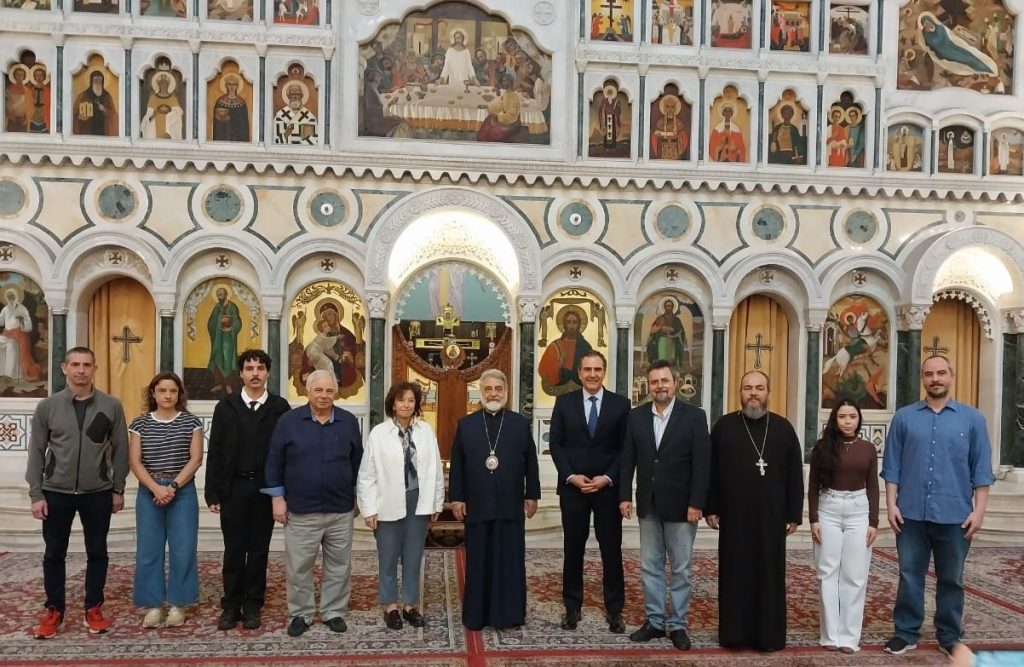
Javier Amadeo also attended the meeting at the cathedral and spoke about an initiative that could expand access to the collection, along with the other Unifesp team members working directly on the project: Christina Queiroz, Isaac Gabriel Silva, Pedro Martins Criado and Isabella Aquino. Also present were cathedral priest João Abdullah and Antonio Naime, vice president of the Antiochian Orthodox Archdiocese.
Read also:
Genesis of an immigration memory project
Translated by Guilherme Miranda
