

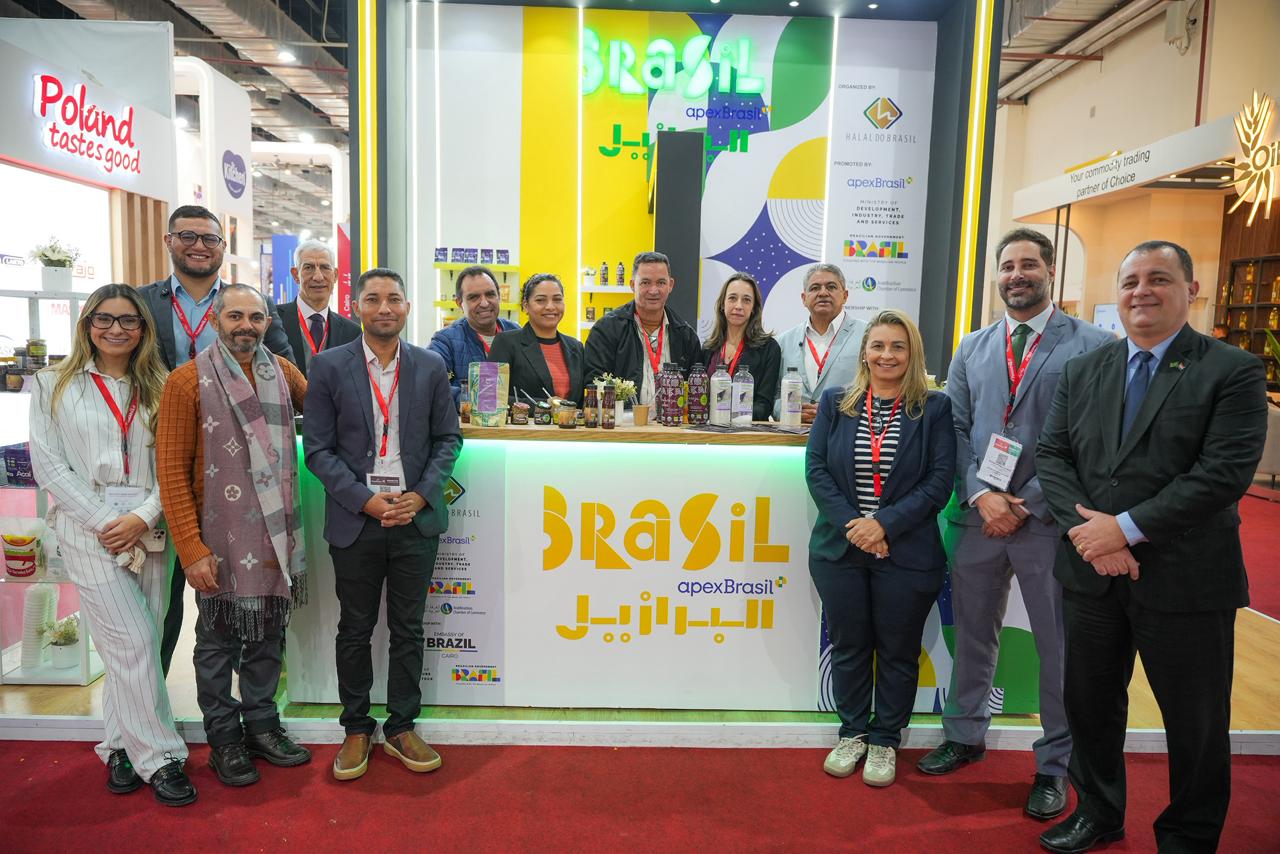
São Paulo – The Arab-Brazilian Chamber of Commerce (ABCC) is accepting registrations from Brazilian companies interested in exhibiting at the Food Africa food and beverage trade show, which will take place from December 7 to 10 in Cairo, Egypt. Participation is organized by the ABCC through the Halal do Brazil project, in partnership with Brazil’s Ministry of Agriculture and Livestock.
“All Brazilian companies that participate normally come back very satisfied,” says ABCC Internationalization Projects Manager Fernanda Dantas, who will attend the show for the third time. “It is a highly relevant trade show,” she says, highlighting the large presence of buyers from Africa, particularly North Africa, and the show’s year-on-year growth in size and attendance.
This year, from January to October, Arab countries in North Africa bought USD 7.4 billion worth of products from Brazil, mainly food. Egypt was the region’s largest buyer, purchasing USD 3.3 billion in goods, followed by Algeria with USD 2 billion, Morocco with USD 1 billion, Libya with USD 447 million, Tunisia with USD 328 million, and Mauritania with USD 122 million. Corn was the top-selling product, followed by sugar, iron ore, soybeans, live cattle and beef.
Ten Brazilian companies are registered to participate, six with the Ministry of Agriculture and Livestock and four with the ABCC. The ABCC still has booths available for two companies, for a total of six exhibitors it plans to take to Egypt. The companies already signed up to exhibit are from sectors such as sesame, corn, soybeans, coffee, meat, açaí, dairy products, and processed fruit. Dantas says there is plenty of room in the Egyptian market for products like most of these, which are ingredients for the food industry, but there are also opportunities for processed products.
“Egypt’s goal is to foster local industry—they want to produce in the country,” the manager says, pointing to the opportunities Brazilian exporters of ingredients or raw materials may find in the Egyptian market, including products covered by the Arab country’s free trade agreement with Mercosur.
The manager notes that ingredients in demand in Egypt include grains for animal feed, not just human consumption. The Egypt-Mercosur agreement marked its 10th anniversary in September, eliminating import tariffs on all products covered by the agreement.
Million-dollar market
The participation of the Halal do Brasil project in the trade show is an initiative of the ABCC. The project aims to bring Brazilian halal foods to Muslim markets, with halal meaning products made according to Islamic rules and suitable for consumption by followers of the religion.
“Egypt is a highly populous Muslim and Arab country,” Dantas says.
Egypt has the largest population in the Arab world, with around 120 million inhabitants.
The trip will focus exclusively on participation in the trade show, with no parallel activities planned. However, the ABCC will have support from its Cairo office team to bring potential importers to the ABCC’s booth to meet with exhibitors. Portuguese-to-Arabic and Portuguese-to-English interpreters will also be available to help Brazilian companies communicate with visitors.
The Brazilian companies that have confirmed their participation are Cooperativa Agrícola da Alta Paulista (Camap), Laticínios Passa Quatro, Aurea Alimentos, International Brazil, Petruz, Açaí Super Fruta, Arbaza Alimentos, Neoking, Vilac and Trivalli. Companies interested in exhibiting can contact the ABCC’s Commercial team at +55 11 3145-3200 or [email protected].
Read also:
Brazilians sell USD 18.5 million in Egypt
Translated by Guilherme Miranda
