


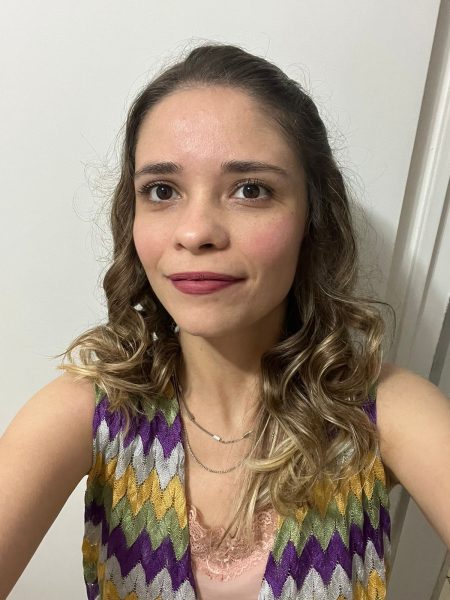
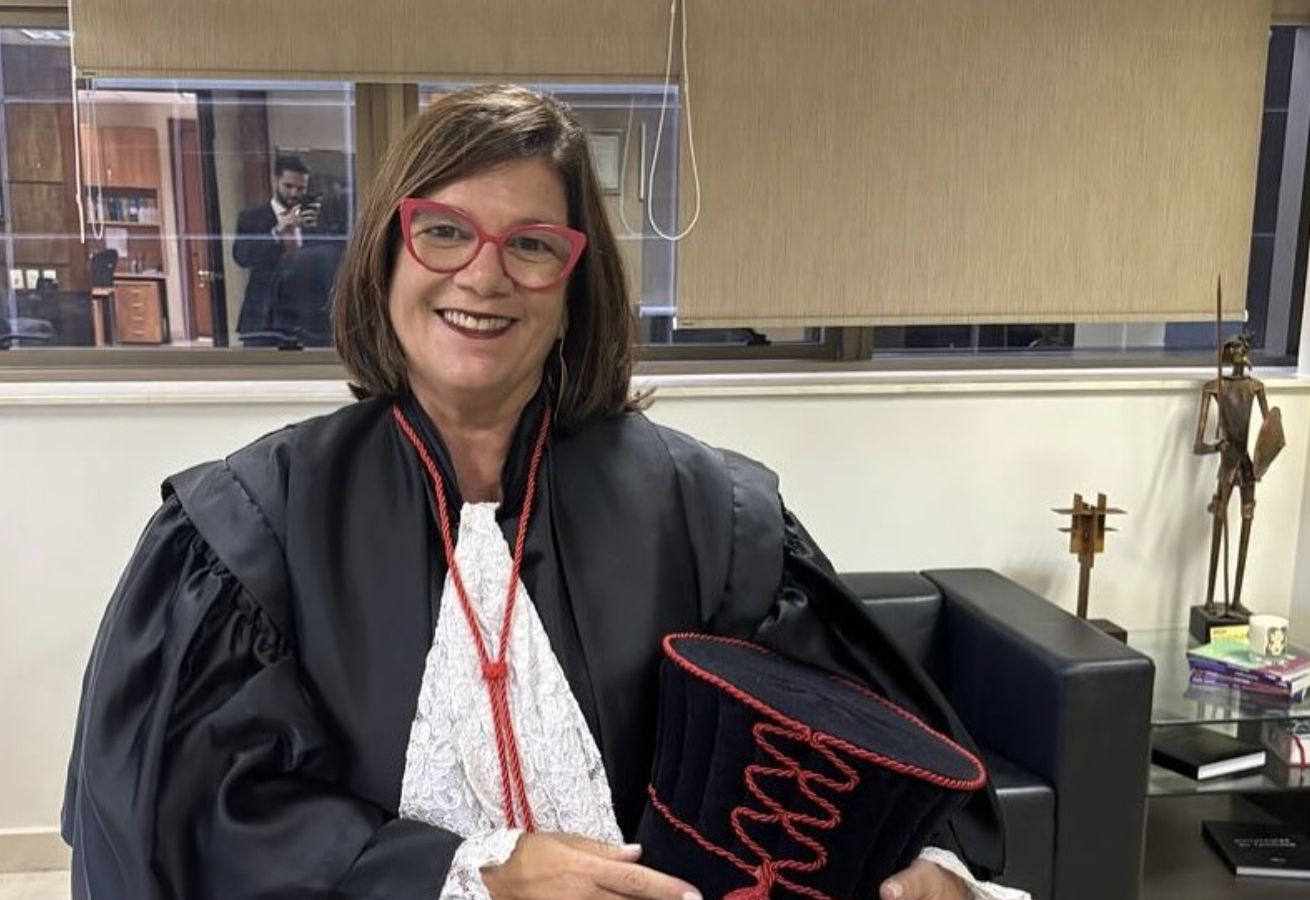
São Paulo – Born in Petrópolis, Rio de Janeiro state, Arab descendant Andréa Maciel Pachá is proud of her journey. An appellate judge at the Rio de Janeiro State Court of Justice and a writer, since June 2024 she has been working in the Office of the Secretary-General of the Presidency of the Superior Electoral Court (TSE).
“I am currently away from my position as an appellate judge at the Rio de Janeiro Court of Justice, in the 8th Chamber of Private Law, because I am providing direct assistance to Justice Cármen Lúcia Antunes Rocha until June 2026,” says Pachá, 61.
At the Office of the Secretary-General of the Presidency of the TSE, Andréa Maciel Pachá works alongside Justice Cármen Lúcia Antunes Rocha. Versatile, in addition to being an appellate judge, the Brazilian of Syrian descent has worked in film and has written five books.
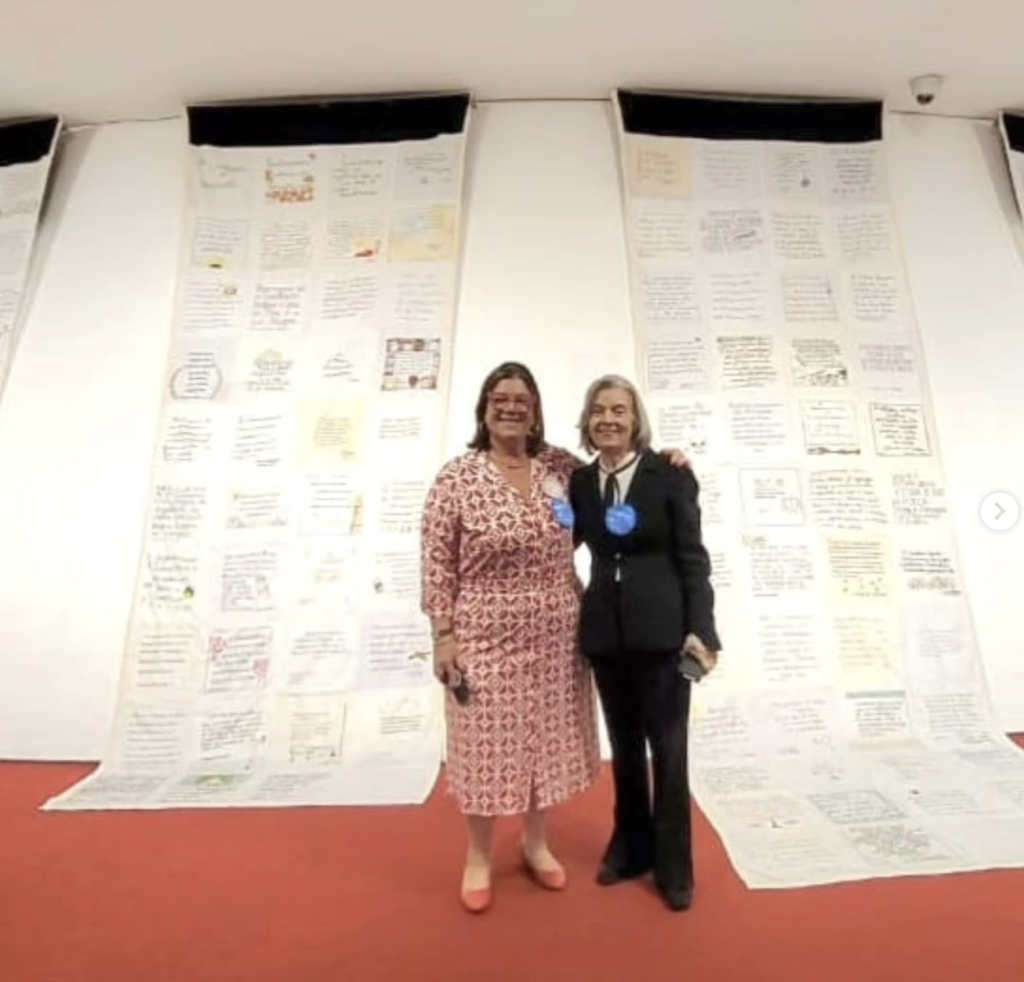
“For me, the minister currently embodies what’s most symbolic and republican in our country. She’s a person extremely committed to the public cause and dedicated to administration. That’s why it was a great privilege to be invited by her to take on this role.”
Graduating in Law at the age of 21, after practicing as a lawyer for two years, Andréa decided to pursue other professional experiences. Because of her deep love for texts and cinema, she spent five years studying playwriting, sociology, philosophy, and psychoanalysis. In the cultural field, she had the opportunity to produce plays directed by Rubens Corrêa, Aderbal Freire Filho, and Amir Haddad.
Wanting to achieve greater financial stability and to have children also led her to decide to return to law. Passing both the judiciary and public defender exams in 1994, Pachá took office as a judge in a small town of Rio de Janeiro state and later in Petrópolis, where she spent most of her career. “I worked for almost 20 years in the Family Court, where I presided over more than 20,000 hearings. Between 2007 and 2009, as a counselor at the National Justice Council, I created the National Adoption Registry and established Courts for Violence Against Women throughout Brazil.”
Understanding the importance of promoting campaigns to simplify the language used in legal proceedings and to combat “legalese,” Pachá created a project alongside Brazilian Portuguese professor Pasquale Cipro Neto. “Between 2002 and 2003, I spoke with law students from all over the country to teach them to study in order to talk about justice, not to speak in a convoluted way. It was and it still is necessary to use language that’s understandable to people,” explains Pachá.
Pachá, the writer
While working in the Family Court, the appellate judge found herself once again in a space full of stories that inspired her to write three books. A vida não é justa [Life Is Not Fair] was published in 2012, Segredo de Justiça [Secrecy of Justice] came out in 2014, and Velhos são os outros [The Old Are the Others] was released in 2018.
While her second book was adapted into a series for TV show Fantástico between 2016 and 2017, the other two were turned into plays. “My story ended up coming full circle because I moved from law to theater and cinema, then back to law, and went again to literature and theater,” she says.
“My story ended up coming full circle because I moved from law to theater and cinema, then back to law, and went again to literature and theater”
Andréa Maciel Pachá
By sharing a bit about the daily life of a judge, these books, Pachá says, are essential for people to understand how the branches of government that guarantee access to fundamental rights work. “They also help people have an easier time accessing their rights when necessary,” explains the writer.
As a coauthor, Andréa wrote Sobre femininos [On Feminines] and Nós… Mulheres do Século Passado: Nossas Escritas, Nossas Histórias [We… Women of the Last Century: Our Writings, Our Stories]. The Rio de Janeiro native is also a member of the Lebanese-Brazilian Academy of Letters, Arts, and Sciences.
“Even though I’m not Lebanese, I was very glad to accept the invitation. We share a very similar history, and I was deeply honored to participate. Among the other members of the academy are people who are references for me, not only publicly but also in private life, such as doctors and singers like João Bosco.”
Family influence on her profession
The Arab descendant saw her career choice and path shaped by the influence of her paternal grandmother, Elvira Bittar Pachá. A mother of five, Elvira came from Syria in her youth. Her paternal grandfather, Alfredo Pachá, worked in commerce in Petrópolis but was not part of the appellate judge’s life as he died before she was born.
“We had a very collective life. Every Sunday, the whole family gathered at my house to listen to her stories. It was like One Thousand and One Nights. She loved telling stories, and at the time, I didn’t realize it, but there was an intensity of affection toward me that ended up influencing my career choice. When I grew up, I also wanted to take care of other people,” Andréa Pachá recalls.
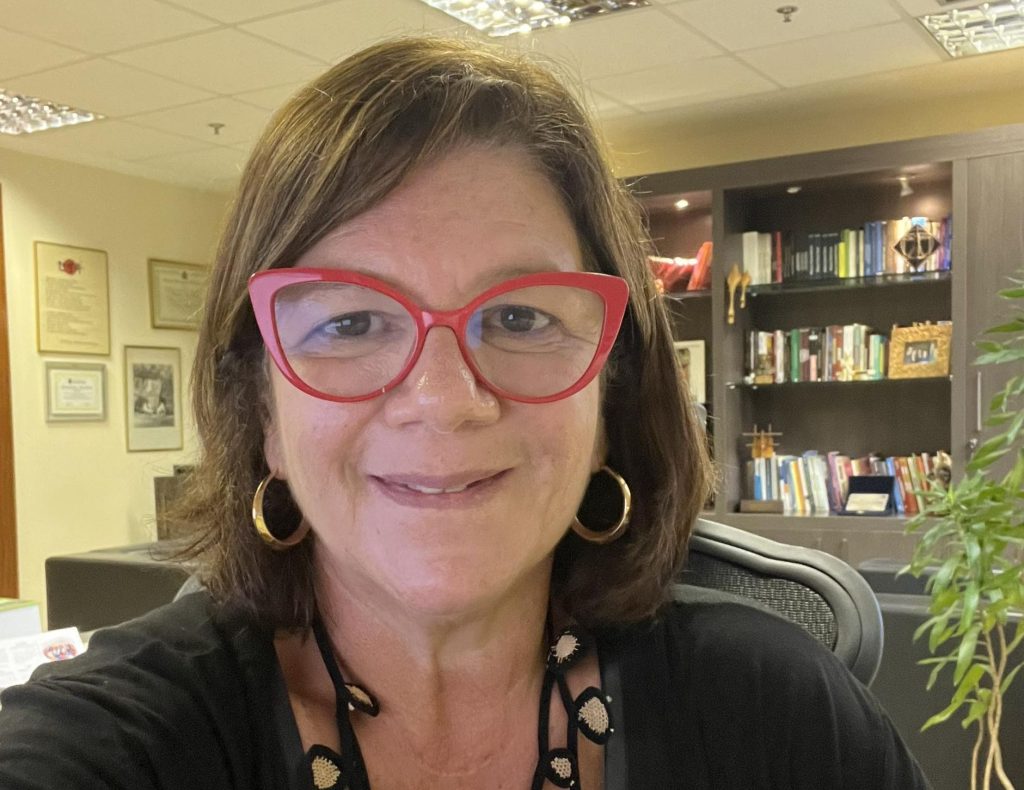
Besides her own family, it was common for friends and neighbors to come to hear her grandmother’s stories. “We formed bonds back then that last a lifetime. I realize that it came from her care, from the dedication she had to listen to other people’s stories. For me, it was a fundamental environment to develop a love for people.”
Although Arab culture and food were present in the appellate judge’s daily life, the language was not. Illiterate in her country of birth, Elvira made sure all her children and grandchildren learned to speak Portuguese well to have good opportunities. “Even without knowing how to read or write, oral tradition was very strong for her, which is why she told us so many stories throughout her life,” Pachá recalls.
Her father, Alfredo Pachá, the only son in the family to graduate from college, also influenced her choice of profession in some way. “He studied Law, then practiced as a lawyer for many years, served as a judge at the Court of Appeals, and presided over the Rio de Janeiro Court of Justice before retiring. He’s 90 years old today.”
Read more:
“We’re our ancestors”
Report by Rebecca Vettore, in collaboration with ANBA
Translated by Guilherme Miranda
