


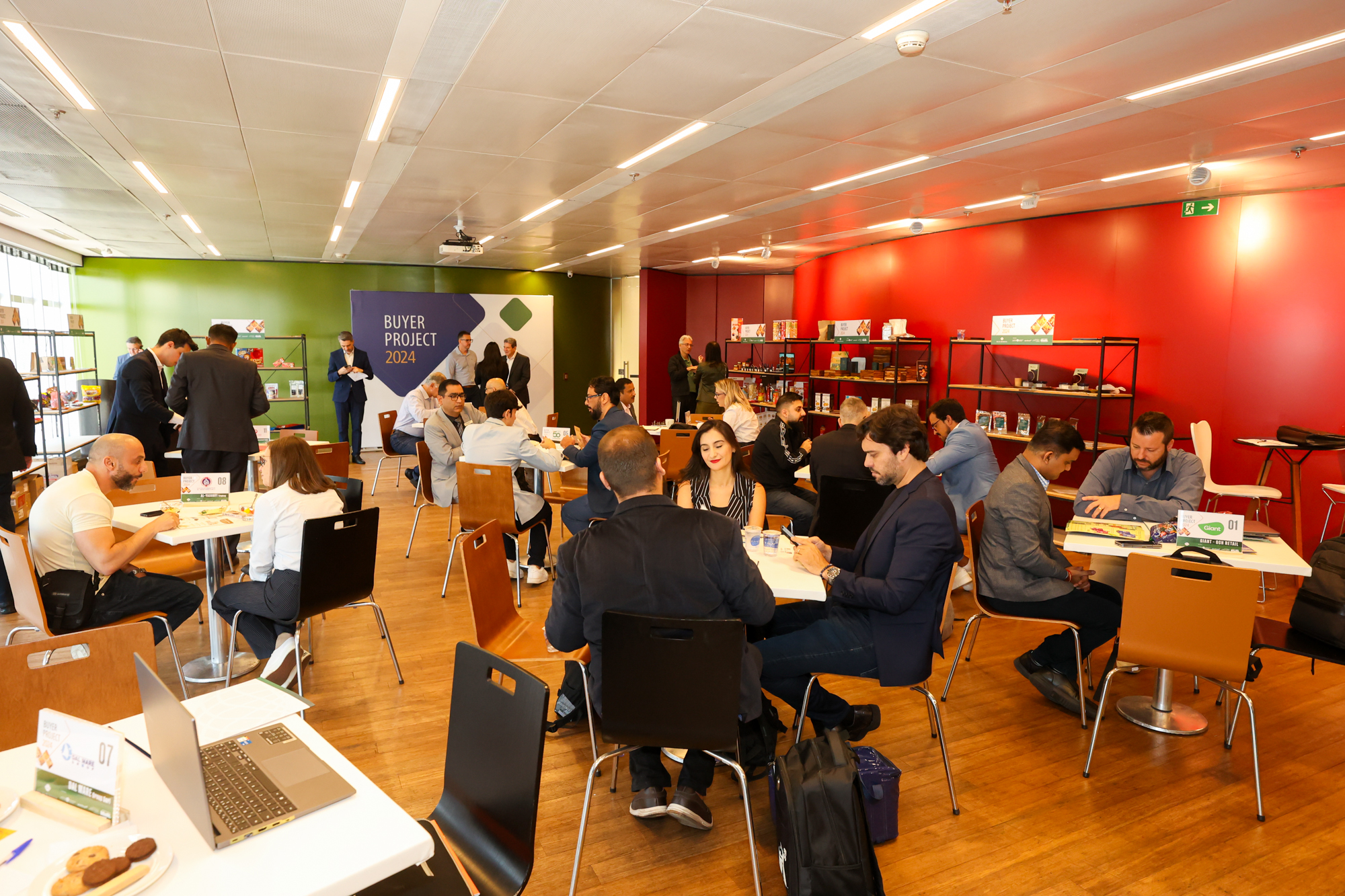
São Paulo – The Halal do Brasil project will host potential importers of Brazilian processed foods on August 24 and 26 during the Buyer Project. This Tuesday (5), business opportunities in the halal market and the Buyer Project program were presented during the webinar “From Brazil to the Islamic World: Connecting companies to the global halal market.”
Halal products are those made in accordance with Islamic rules and can be consumed by Muslims. They must not, for example, contain traces of pork or alcohol. Even though Brazil is not a predominantly Islamic country, it is the world’s largest producer and supplier of halal meat to the 57 Islamic countries, including both Arab and non-Arab nations.
The Brazil Halal Project is a partnership between the Arab-Brazilian Chamber of Commerce (ABCC) and the Brazilian Trade and Investment Promotion Agency (ApexBrasil) to promote Brazilian halal products abroad. Among its initiatives, it organizes participation in business matchmaking rounds, supports Brazilian companies at trade fairs in Brazil and overseas, and conducts roadshows across the country to present opportunities in the halal market.
The ABCC’s internationalization projects manager, Fernanda Dantas, presented the buyers who will come to Brazil to meet with exporters and said that this edition of the Buyer Project will focus on connecting buyers and sellers of processed food and beverages.
Confirmed participants include retailers Alzaeem from Bahrain, Hyper1 from Egypt. distributor SKM Tejaree from Jordan, and convenience store chain Circle K from Egypt. Two additional companies, still to be confirmed, are expected to take part in the project.
According to Dantas, the Buyer Project is an opportunity for Brazilian companies to meet potential foreign clients at a lower cost than traveling.
The ABCC’s market intelligence manager, Marcus Vinícius, presented figures highlighting the potential of the Muslim food and beverage market. This segment of the Islamic economy is expected to grow 35% between 2023 and 2028, reaching a value of USD 1.9 trillion.
In 2024, Islamic countries imported USD 271 billion in food, with Saudi Arabia as the main buyer, accounting for 10% of the total, followed by United Arab Emirates (9%) and Malaysia (8%). Brazil was the leading food supplier, with 11% of total exports, followed by India (7%) and Russia (6%).
“Processed foods are a consumption opportunity in these countries, and frozen products are particularly attractive to this [Islamic] population. These [Gulf] countries can also serve as re-export hubs to Asia, Africa, and Europe. We also observe that there is a non-Islamic population that sees halal as a mark of quality,” said Marcus Vinícius
Luiz Eduardo Simão, professor of Supply Logistics and Production Logistics at the Vale do Itajaí University, presented the panel “Logistics Between Brazil and Islamic Countries: Current landscape.” He emphasized that the Islamic market is not a niche, but the largest emerging consumption focus, with a population of two billion people.
Simão said there are business opportunities to be explored in sectors such as healthcare, pharmaceuticals, construction, technology, and fashion, but pointed to challenges for exports to Islamic countries, including the need for cargo transshipment, which can damage delicate or refrigerated products. He also cited geopolitical instability and volatility in freight costs. He added that obtaining halal certification is essential to winning clients. “Halal certification is not a cost — it’s an investment. It’s an asset that adds value to Brazilian products and opens doors,” he said.
Representatives from Timbro and Grupo Holen, two trading companies already doing business with Islamic and Arab clients, also took part in the webinar. Grupo Holen CEO Márcia Holen said that the biggest challenge in doing business with the halal market is not accessing it but being prepared to operate in it. She also noted that results are not immediate, but, once a client relationship is established, ties tend to be long-lasting. “Price is important to close a deal, but trust matters more. The halal market is not difficult, but it is professional,” she said. More information about the Buyer Project is available via this email.
Read more:
Halal project offers free course
Translated by Guilherme Miranda
