



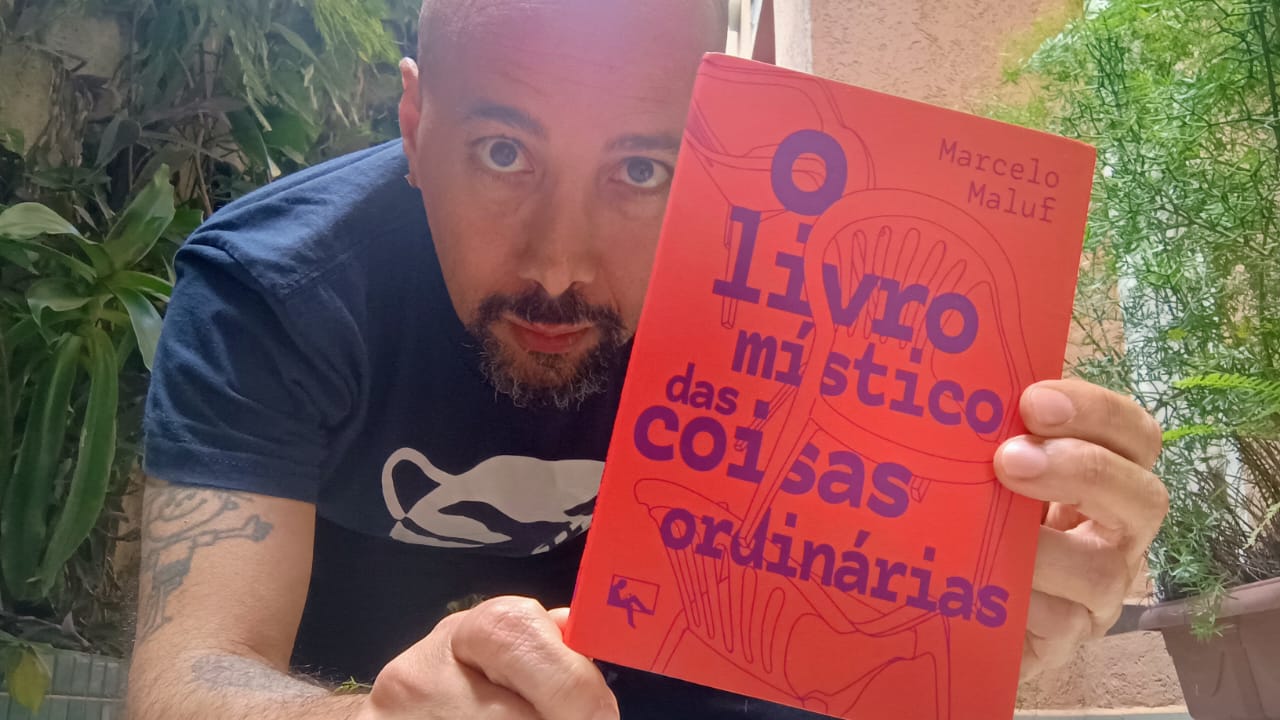
São Paulo – Arab-descendant and one of the emerging voices in Brazilian literature, Marcelo Maluf released his first poetry collection last month. The São Paulo-born writer, who won the São Paulo Literature Prize and was a finalist for the Jabuti Prize with a novel inspired by his Lebanese family history, now explores a new literary path with the publication of O livro mistico das coisas ordinárias [The Mystical Book of Ordinary Things], released by Curitiba-based publisher Arte & Letra.
The poems were written over the years and remained unpublished until Maluf identified a common thread running through most of them: his own spiritual quest, shaped by different religious traditions and experiences with the sacred. Raised in a Catholic family, the writer explored, among other traditions, Zen and Tibetan Buddhism and Sufism, the mystical branch of Islam, through which he discovered the poetry of renowned Muslim poet Rumi.
“These poems stem from this experience, which was more intellectual than practical,” he says of the spiritual quest that underpins the book. “I drew from all sources,” he adds.
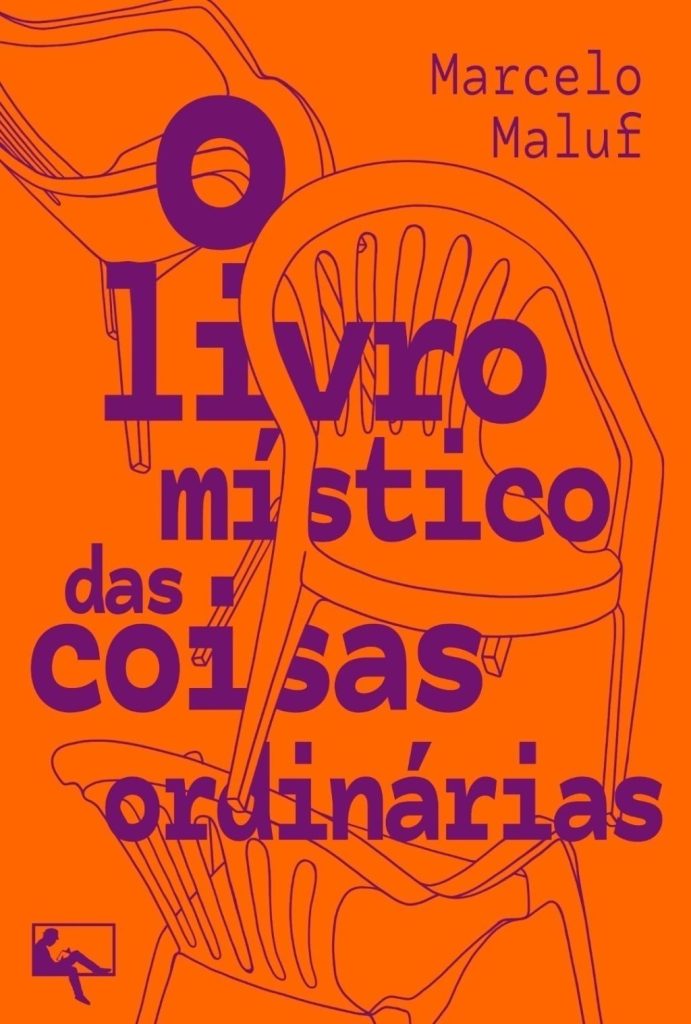
Marcelo Maluf’s poetry invites readers to see the sacred in life’s smallest details, much as he sees in great spiritual masters who shunned grandeur, luxury and power. This focus on the small things inspired the book’s title.
“Ordinary means common, everyday. The entire book deals with things that most of us do not consider sacred. I argue that the sacred is found in everyday life, in ordinary things. The sacred is washing the dishes—it is in these moments. You don’t need to seek the sacred in transcendence,” the writer explains.
“I seek God in the smallest things, in the little bits, in the corroded. The other day, I found him transformed into a moth, devouring the Book of Job,” reads a passage from one of the poems. Another poem reads: “I revere this glass that holds the water I drink and its willingness to serve and repeat its function every day.” In another piece, we read: “I am a mystical onion and make men with knives in their hands cry. I am without time, without body, without soul. I do not worry about Galliano or the Tokyo Stock Exchange, and I know nothing about eternity.”
In the book’s afterword, Brazilian writer and literary critic Mariana Ianelli places Marcelo Maluf’s work in opposition to literature centered on the self and describes it as an embrace of the anonymous and the homeless, referring to the attention given to others in his writing.
“The living, aching life, as miserable as it is majestic in its nakedness (of body and soul), which Maluf loves and embraces in these pages, also contains a silence greater than words. A silence filled only with the murmuring of rivers and winds,” Ianelli writes.
Marcelo Maluf describes himself as an occasional poet.
“I have always written little poetry, but ever since I started writing, poetry has always been with me, both as a reader and as a writer,” he says.
The poems had been sitting in a drawer, the last one written about 10 years ago, by the writer’s estimate. About four years ago, Maluf decided to bring his poetry together and realized the poems fit. He reread them all, reworked some, put them in order and told an editor at boutique publisher Arte & Letra about them in 2024.
For what remains the only poetry collection in his body of work, which comprises five books for adults—novels and short stories—and 18 children’s and young adult books, Maluf took a distinctive approach by choosing the publisher. Arte & Letra produces the book by hand using a traditional printing press, with a hardcover and numbered copies. Copies one, two and three, for example, are in Maluf’s own possession.
“I wanted a beautiful edition. I wanted something special,” he says. The book is available for purchase online and at brick-and-mortar bookstores.
Grandson and writer
Marcelo Maluf has been publishing books since 2008. He made his publishing debut with children’s and young adult literature, but it was his 2015 novel A imensidão íntima dos carneiros that brought him national recognition. In addition to winning the São Paulo Literature Prize in 2016, the book was a finalist for the Jabuti, Brazil’s most prestigious literary award, that same year. The novel was inspired by the story of his Lebanese grandfather, who moved to Brazil after his brothers were killed by the Ottoman Empire in Lebanon. The revelation of this family secret prompted Maluf to write the book.
The writer is of Syrian and Lebanese descent and published another novel inspired by his Arab family history in 2023, Os últimos dias de Elias Ghandour. The plot revolves around the life of a Syrian-descendant merchant who owns a fabric store on 25 de Março Street in São Paulo and reflects on the dreams he never fulfilled. The entire book is narrated from a stage, as if Ghandour were speaking to an audience, in an attempt by the author to give his ancestor one final moment in the spotlight.
With a degree in Art Education and a master’s in arts, both from São Paulo State University (Unesp), Maluf works as a creative writing instructor in addition to writing books. He teaches workshops and courses at educational institutions and organizations, as well as independently. He also gives lectures and leads reading groups. Born in Santa Bárbara d’Oeste, Marcelo now lives in São Paulo and is married to Daniela Pinotti, with whom he has co-written some of his children’s and young adult books.
Book details
Title: O livro místico das coisas ordinárias
Author: Marcelo Maluf
Publisher: Arte & Letra
Pages: 76
ISBN: 9788571620391
Proce: BRL 62 (Arte & Letra website)
Read also:
The creative immensity of Brazilian writer Marcelo Maluf
Translated by Guilherme Miranda
