



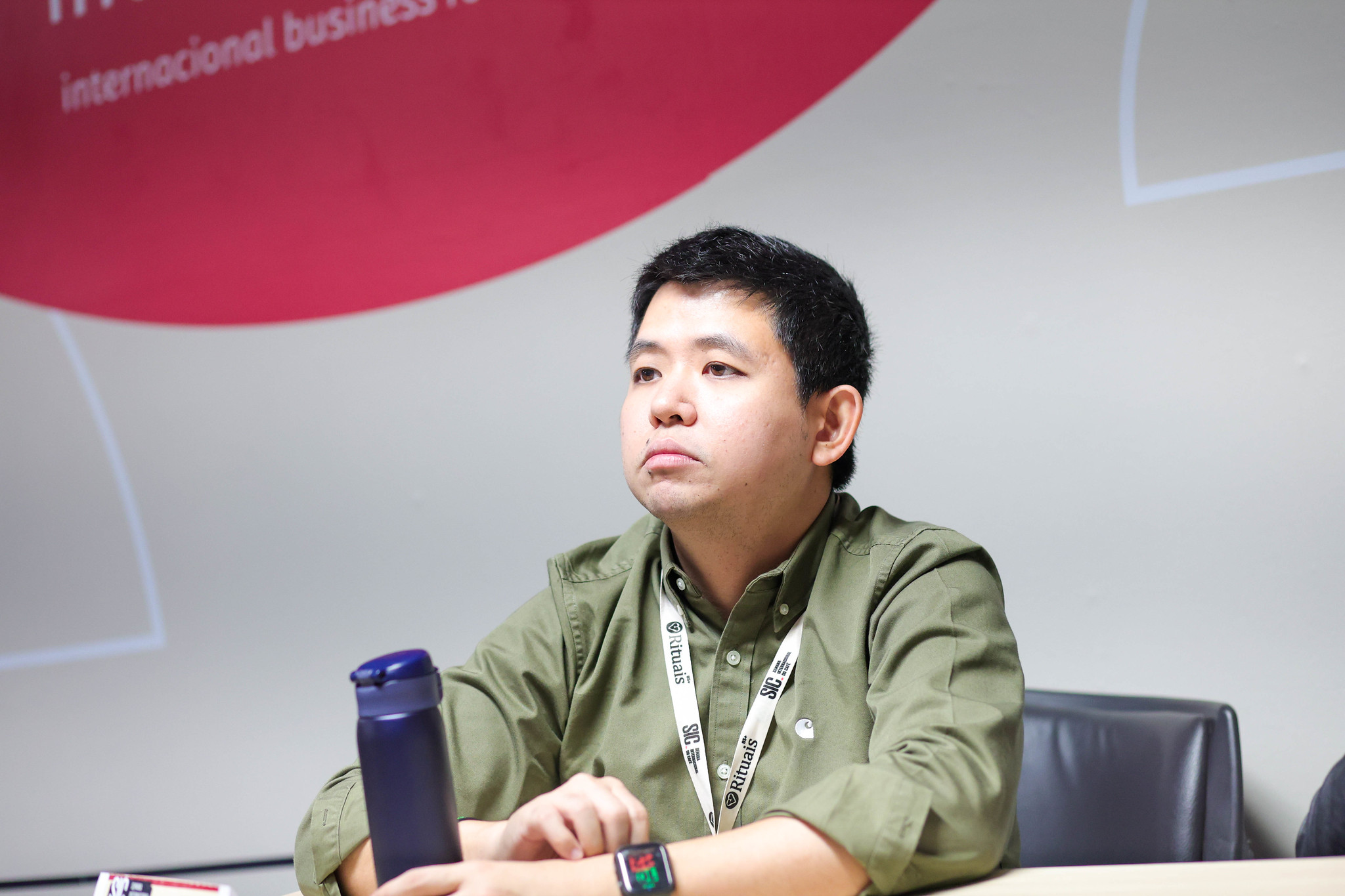
São Paulo – Vulcan Coffee Roastery, a coffee roaster in Doha, Qatar, has been a customer of Brazilian coffee since it was founded in 2017. During a visit to Brazil in November, the company’s director, Reyner Herbert, told ANBA that it buys Brazilian coffee because of the product’s quality and because it is the preferred choice among Gulf consumers.
Herbert took part in farm visits and business meetings at the International Coffee Week (SIC), held in Belo Horizonte, Brazil’s Minas Gerais state, from November 11 to 13. The international buyers’ program was organized by the AgroBR project, an initiative to promote Brazilian agribusiness products by the Brazilian National Confederation of Agriculture and Livestock (CNA), the Brazilian Trade and Investment Promotion Agency (ApexBrasil), and Sebrae, which promotes the competitiveness of small businesses.
Herbert is also a judge for the World Coffee Championships, an organization that runs the Specialty Coffee Association (SCA) competitions and travels the world in search of the best coffee beans.
“I’d say Brazilian coffee has a good perception of value in the Middle East. They [customers] always say: What is the best coffee? Brazilian,” he told ANBA during the SIC.
Arab consumers, the expert said, prefer coffee with a sweet taste and chocolate and caramel notes on the palate, which are found in coffee produced in Brazil. In addition to Qatar, the company serves customers in the United Arab Emirates, Oman and Kuwait.
From November 8 to 12, journalists from international media outlets, including ANBA, took part in a trip to southern Minas Gerais organized by the CNA. Like the international buyers, the journalists visited producers and companies involved in the coffee production chain and took part in cupping sessions and discussions with experts.
Vulcan Coffee Roastery roasts coffee, sells equipment and provides training for industry professionals, in addition to selling coffee to end consumers. The company has always sourced from Brazilian producers, the director said. He said Vulcan imports “classic coffees” but is also interested in specialty beans that offer more “experimental” and complex flavors, a demand met by Brazilian coffee. Arab consumers, he said, drink a lot of coffee as a base for other beverages, such as cortado, cappuccino and flat white, which are prepared with varying proportions of coffee and milk.
Brazilian coffee, meanwhile, is consumed differently.
“They like to taste Brazilian coffee brewed using a filter,” he said.
Their preference for filtered, black coffee has a reason: this brewing method generally allows all the aromas and flavors the beverage can offer to be fully explored.
Herbert visited producers to learn about the coffee processing methods being used in Brazil, as well as the “unique” flavors that can be found in Brazilian coffee.
Although the price of coffee from Brazil has risen in recent years, he said it is worth paying more for a quality product with unique characteristics.
“We are a business, and we monitor prices. But if quality improves, then of course, prices will rise too,” he said.
In addition to quality, Herbert said his company values product consistency over the long term, meaning the coffee must retain its qualities over time.
Read more:
From cars to coffee beans
Cetec farm: Specialty coffee headed to Dubai
Brazil’s Minas Gerais coffee seeks more importers
*Trip carried out at the invitation of the CNA
Translated by Guilherme Miranda
