




São Paulo — A Brazilian agtech is bringing solutions to the international market to boost plant performance in agriculture. Based in Brasília, Krilltech has already exported to seven countries, is set to enter more markets and is a finalist in a competition in the United Arab Emirates focused on technologies that reduce water use in agriculture without compromising crop productivity.
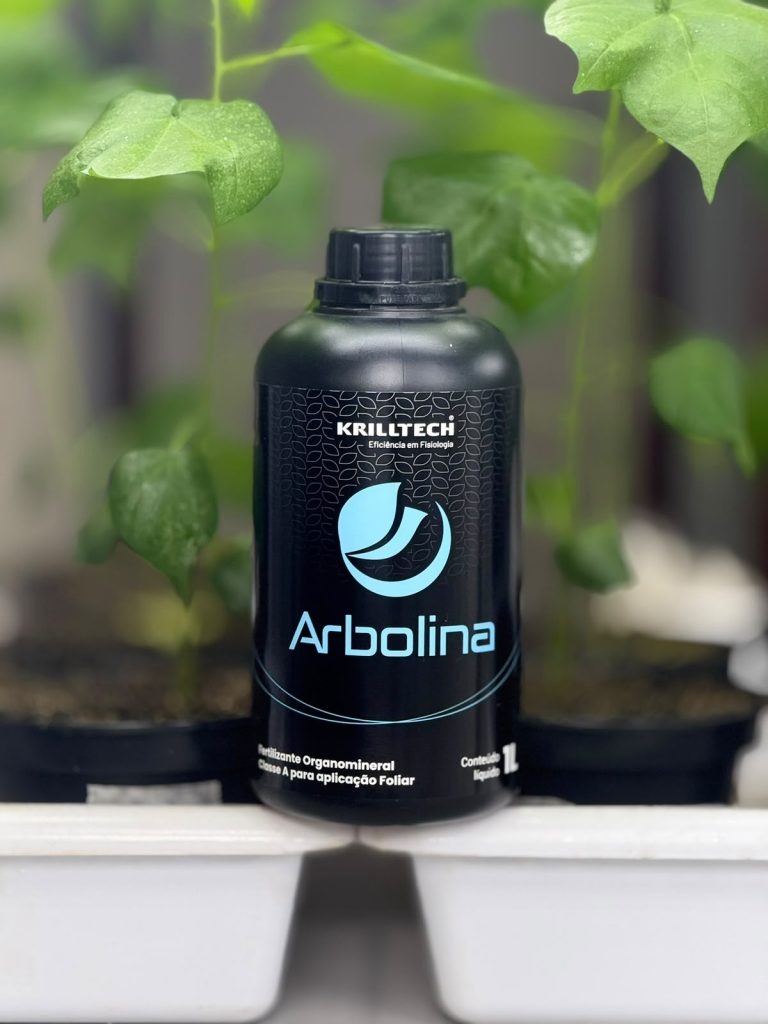
Krilltech’s key flagship product line is called Arbolina, which boosts plant productivity while improving water-use efficiency and was developed by the company in partnership with the University of Brasília (UnB) and Embrapa, Brazil’s agricultural research institute.
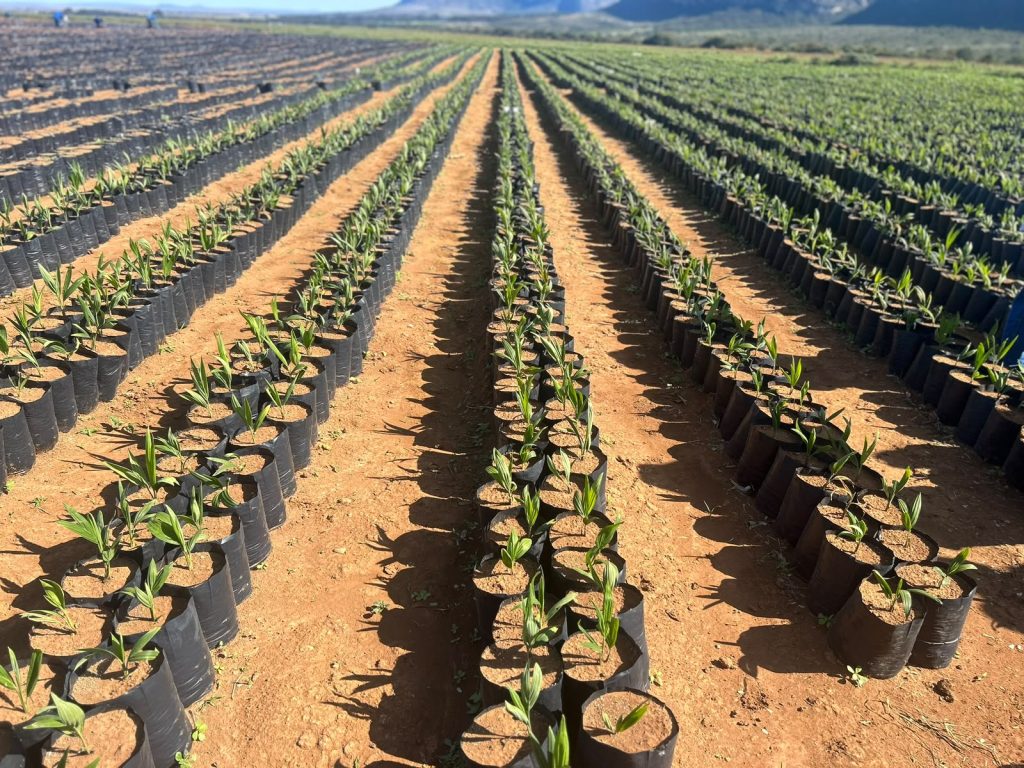
“Arbolina is a technology based on carbon nanomaterials (carbon dots) that stimulates specific processes in plant function, promoting the transport of water and nutrients and photosynthesis, the process through which plants use light to grow and produce,” said the company’s CEO and founder, Marcelo Rodrigues, who holds a PhD in Chemistry and is an associate professor at the University of Brasília.
By way of comparison, he explains that the plant is treated like a high-performance athlete.
“It already has good genetics, and with proper nutrition and stimulation of its physiological processes, it can better express that potential. With Arbolina, the plant works more efficiently and makes better use of the nutrients and water available,” he says.
Krilltech has already served growers in 18 Brazilian states, in addition to supplying foreign markets such as Uruguay and Peru. In European countries, including Spain, Portugal, France, Italy and Poland, sales were made with the help of a commercial partner.
“Ecuador is in the final stages of registration and testing; it has already been tested and approved. South Africa is going through the registration process; India is also going through registration, and we are in advanced talks with Japan and England,” Rodrigues says.
In Brazil, the company’s products have already been used on more than 40 crops, with coffee, tomatoes and vegetables accounting for the largest share of use.
“In work with Embrapa, we observed a reduction of about 10% in irrigation for tomatoes, accompanied by a 7% increase in productivity. In studies at the University of Brasília with beans, we were able to maintain productivity similar to that of plants without Arbolina while using only 90% of the water applied in the comparison treatment,” he says.
High-temperature market
The Brazilian agtech’s solutions have also caught the attention of Arab markets. The company is a finalist in the Al Miyah Challenge for Agriculture, a program of the Mohamed bin Zayed Water Initiative in the UAE, with the winners set to be announced in December this year. Beyond being one of the challenge’s six finalists, Marcelo sees the opportunity to test the company’s products in a country considered an important hub for the Middle East and Asia.
The entrepreneur and scientist has major plans for the United Arab Emirates: finding a commercial partner to help distribute the products in the region, continuing desert testing—considered by the Brazilian an especially complex and interesting environment—and building a factory in an Arab city to facilitate business between the two countries.
“A business plan that will depend heavily on the product’s performance in the field. We tested it, and apparently, it performed well, but it was only one test. We need to conduct several tests and readapt the technology to local conditions. We have plenty of room to adapt it to the relationship with Arab markets, and we are looking very closely at the Arab market,” the Brazilian says.
According to him, there are benefits to using Arbolina at high temperatures.
“In our studies, treated plants maintained photosynthesis more effectively up to 41°C, while plants without the product had already begun to show a decline at around 35°C. These results show the potential of this approach to help adapt crops to climate change and conditions of heat and water scarcity, such as those found in regions of Brazil and the UAE,” he says.
Marcelo Rodrigues, from Chemistry
Passionate about chemistry since his school days, Rodrigues, who was born in Alagoinhas, Bahia, and is now 47, had no plans to start a company when he was in college.
“Chemical Engineering was the first degree I chose, but then I switched to Chemistry because I wanted to be a scientist. My father wanted me to be an engineer, but I wanted to be a chemist and researcher, and I built my career around that,” recalls the Bahian.
Studying different areas of chemistry, he did not come up with the idea of starting a company during his master’s or PhD, but rather when he began working as an associate professor.
“When I got a position at the University of Brasília, I decided to change fields and said, ‘What I did in my master’s and PhD is behind me—I need to learn new things.’ I started interacting with several colleagues, some of whom are my partners, Marcelo Henrique and Breno, and I began moving away from the area of rare minerals and rare earths,” he says, referring to Marcelo Henrique Sousa and Brenno Amaro.
Research on carbon dots came next, along with research conducted with Embrapa and the launch of Krilltech.
Read more:
UAE award features Brazilian company in final
Report by Rebecca Vettore, in collaboration with ANBA
Translated by Guilherme Miranda
