



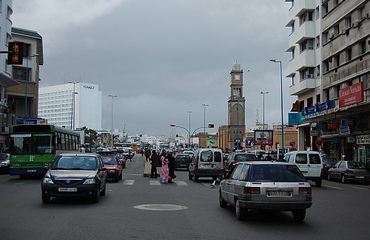
London – The Moroccan economy could grow 4.6% this year and 5% the next, judging by the estimates in a report issued by the European Bank for Reconstruction and Development (Ebrd) last Thursday (14th), local news outlet the Maghreb Arabe Presse (MAP) has said.
The Ebrd ascribes the positive growth outlook to the recovery of agriculture, rising exports of products with high added value, and the cheap oil prices.
“Implementation of scheduled reforms in the fiscal area, investment environment and pension system should contribute equally to reducing macroeconomic imbalances and improving economic perspectives,” the bank said. It also issues projections for Tunisia, Egypt and Jordan.
Tunis Afrique Presse (TAP) said Tunisia is expected to achieve 2.8% growth in 2015 and 3.6% in 2016. The Tunisia government forecasts 3% in both years. Last year, the country grew 2.3%.
“Tunisia’s rebound will be underpinned by a successful political transition and the oil prices,” the Ebrd posits. “However, the country’s economic performance is held back by delays in conducting economic and financial reforms, the slow Eurozone recovery, and by persisting social and security issues at the national and regional levels,” it said.
The Ebrd reduced in 0.2% its growth estimate for Tunisia this year from the projections it had made in January, since, in the institution’s assessment, there was a deterioration of the environment concerning security – due to the terrorist attack at the Bardo National Museum, in Tunis, in May –, which should have a negative impact on tourism and investments.
In the case of Egypt, the projected growth for this year stands at 4%, over 2.2% in 2014, and 4.6% in 2016. According to Ebrd, the country’s economy benefited from political changes and from a certain fiscal looseness allowed by the financial support from the Arab countries from the Gulf.
In the first half of the 2014-2015 fiscal year, the Egyptian growth accelerated to 5.5% over the 1.2% from the previous year. The performance was driven by domestic consumption and private investments.
In turn, Jordan’s Gross Domestic Product (GDP) should grow 3.6% in 2015 and 3.9% in 2016, over 3.1% in 2014, but below the 6% average observed in previous years. The Jordan economy suffers with the troubled environment around it. It’s worth reminding that the country is bordered by Syria and Iraq and receive a large flow of refugees from the conflicts that take place especially in Syrian territory.
*Translated by Gabriel Pomerancblum and Sérgio Kakitani

