
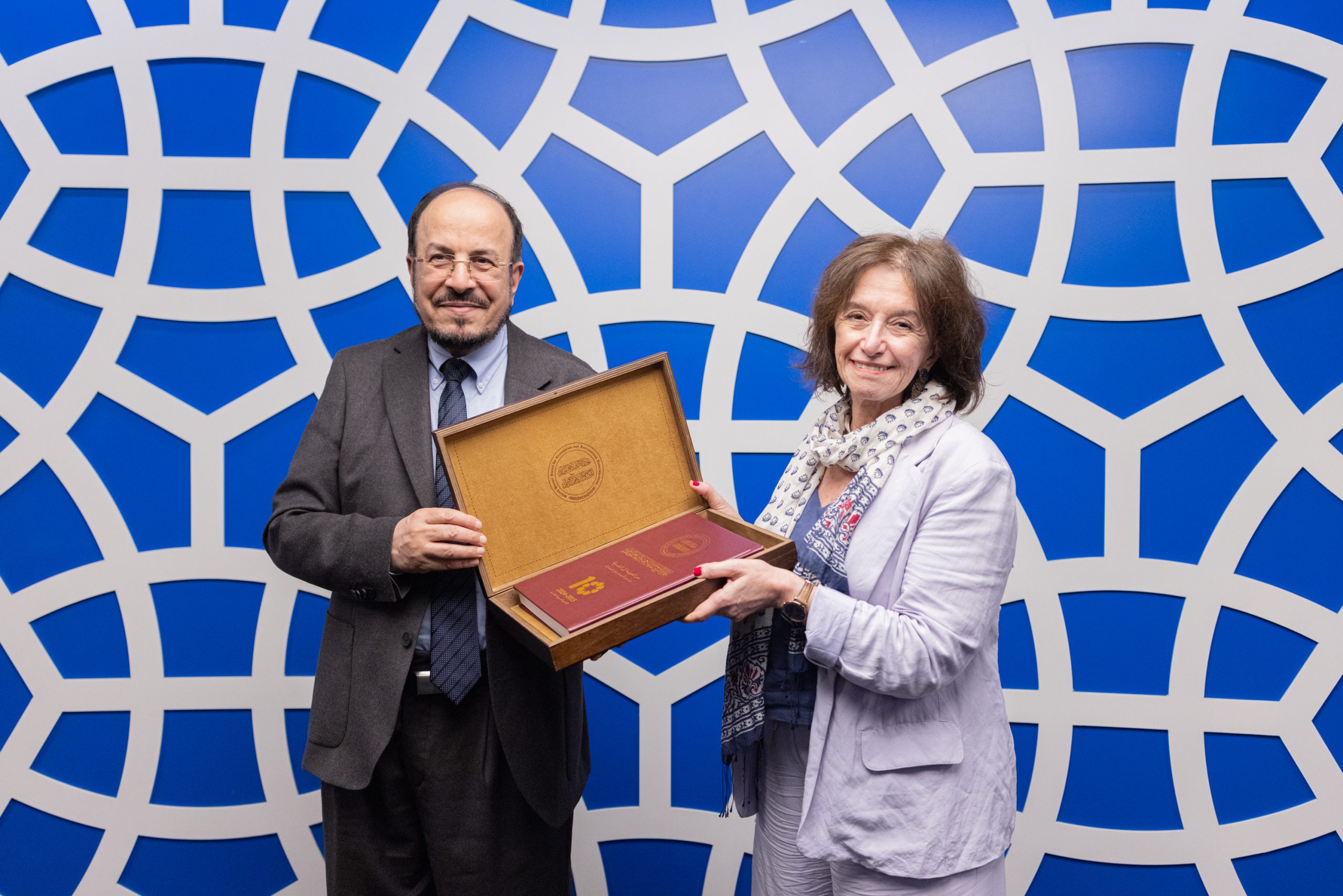
São Paulo – The inclusion of Portuguese in the 2027 edition of Qatar’s Sheikh Hamad Award for Translation and International Understanding was officially announced on Monday (19) by award representatives at the headquarters of the Arab-Brazilian Chamber of Commerce (ABCC) in São Paulo. The award recognizes translations between Arabic and other languages spoken around the world. Portuguese has been included for the second time, allowing Brazilian translators to compete. Applications will open on Jan. 1, 2027, and close on March 30, 2027.
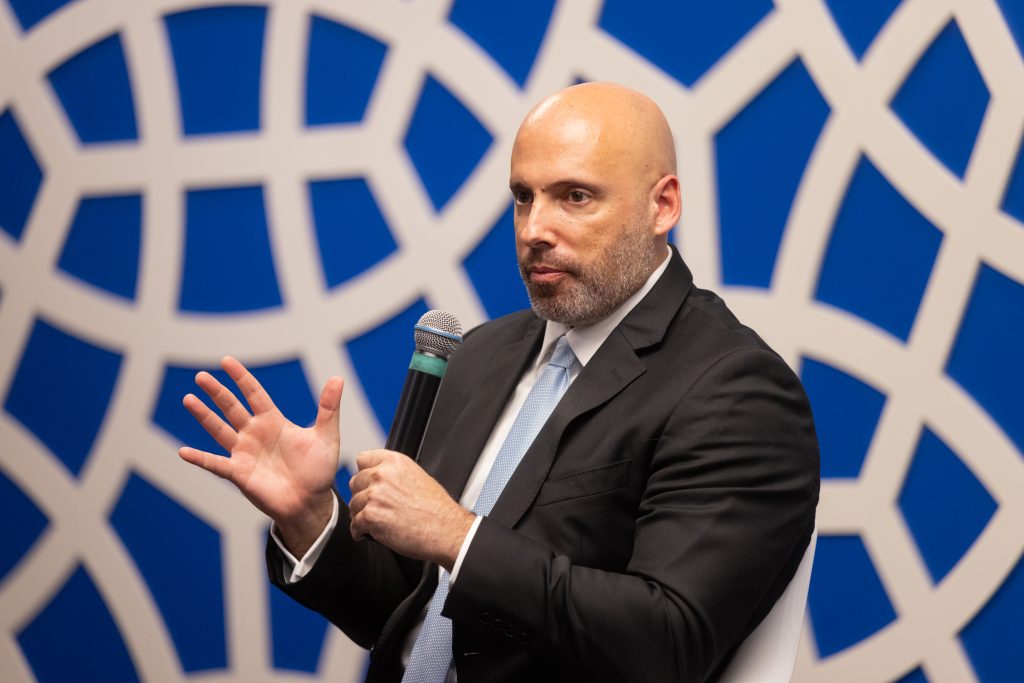
The award has two categories: Achievement, which recognizes a translator’s career or an organization’s track record in translation, and Individual Book, which recognizes the translation of a published work. Portuguese is confirmed for the Achievement category next year, but organizers are still considering whether to include the language in the Individual Book category as well.
According to information provided to ANBA by the award’s Executive Director Labib Nahhas, the Individual Book category focuses on the quality of a book and its significance in the cultures of both the original and target languages.
“In the Achievement category, we focus on the translator’s or organization’s entire career, all the books translated over perhaps decades, but also on international understanding. We look at the activities and initiatives that the organization or individual has undertaken to bring Arab and Brazilian cultures closer together—in the case of a Brazilian entry—and vice versa,” he said.
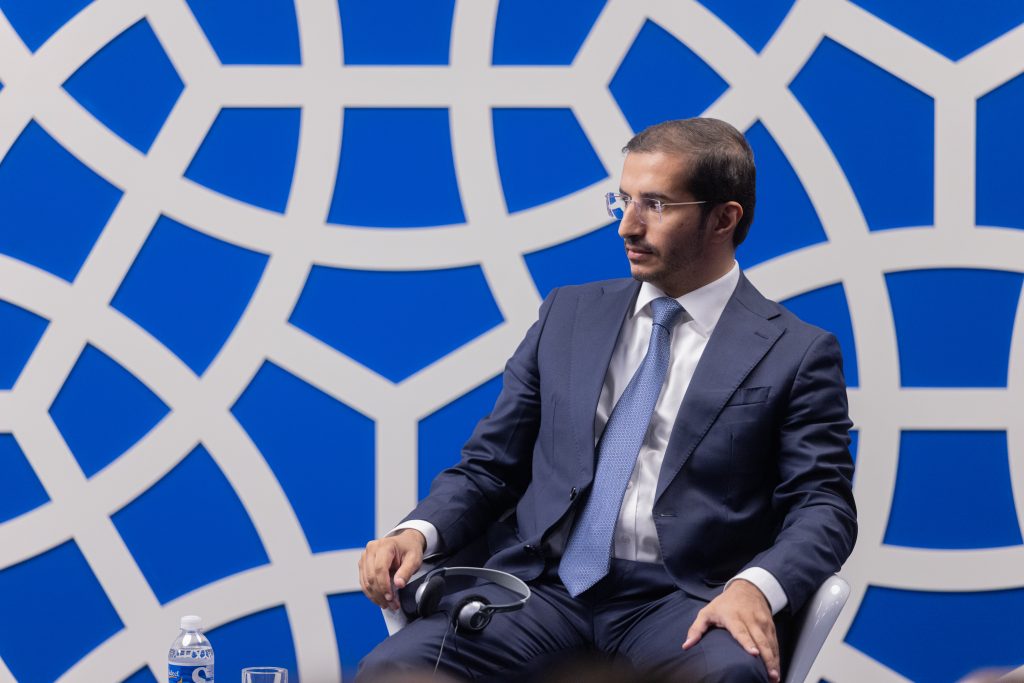
Each year, the award selects two to three widely spoken languages, such as English, Spanish and Chinese. English is included every year, while two to four less widely spoken languages, such as Italian and Japanese, are also selected to compete. Widely spoken languages can compete in both categories.
“So far, Portuguese has been classified as a less widely spoken language, but it may be moved to the widely spoken category for the award,” Nahhas said.
The Sheikh Hamad Award for Translation and International Understanding will distribute USD 2 million in prize money. There are usually multiple winners across the different categories. Nahhas said at least USD 200,000 will be allocated to awards involving Portuguese. Translators and organizations working with Portuguese anywhere in the world, including Portugal, are eligible to enter in the Arabic-to-Portuguese translation category; eligibility is not limited to Brazil or Brazilian nationals.
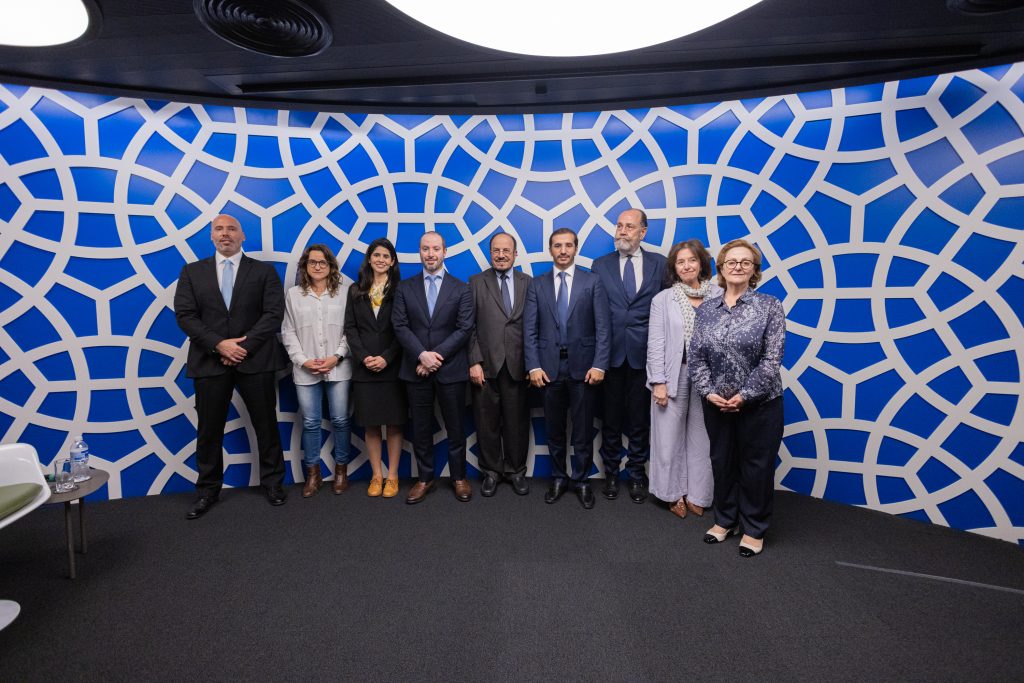
Brazil was selected to host a delegation from the award, comprising Nahhas, Director-General Mohammad Al-Ahmari, Head of Media Abdulrahman Al-Marri, and Mujab Al-Imam, a member of the Scientific Committee responsible for overseeing the award and head of the Translation Department.
The delegation began its schedule with the launch event at the ABCC and will hold activities in São Paulo and Rio de Janeiro over the coming days, meeting with translators, professors, publishers and academics. A seminar will be held at the National Library in Rio de Janeiro on Friday (23).
It was the award organizers’ first visit to Brazil, Al-Marri said at the event.
“We looked at Arabic-Portuguese translation activity, and Brazil emerged as a major force. So we had to visit Brazil, we had to invest in this visit. It is a unique opportunity to follow the development of Arabic-to-Portuguese translation,” he said.
Emphasizing the importance of translation, Al-Marri quoted a line from “Canção do Exílio” (Song of Exile), a poem by Brazilian writer Gonçalves Dias: “My homeland has palm trees, where the thrush sings.” He added: “Translators are the thrushes that sing in every land. May the thrush sing in every language.”
The event at the ABCC was opened by Silvia Antibas, vice president of marketing, who spoke about the its work, highlighting its cultural initiatives.
Brief presentations were also given by Christina Stephano de Queiroz, visiting professor at the Edward Said Chair of Contemporary Studies at the Federal University of São Paulo (Unifesp), who discussed the Arab Immigration Memory Digitization Project in Brazil and emphasized the importance of translation and preserving collections; and Natália Nahas Calfat, president of the Arab Culture Institute (Icarabe), who highlighted the ties between Brazil and the Arab world and the role of language and translation in maintaining those connections.
Award Winner
When the Sheikh Hamad Award for Translation and International Understanding last accepted entries in Portuguese, in 2019, Safa Jubran, a professor of Arabic Language and Literature at the University of São Paulo (USP), won an award. Speaking at Monday’s event, she described the different stages of Arabic literature translation in Brazil. The country has a tradition of Arabic studies and translation, but Arabic literature has had a limited presence in the commercial publishing market, with more recent momentum in the field following the award.
“Brazilian publishers now seek out works directly from Arab countries, negotiating rights and beginning to explore this literature without necessarily relying on prior mediation by Paris, London, New York, Berlin or other major publishing centers,” she said.
Jubran said she hoped the award would be seen not only as recognition of work already done, but also as an incentive for translation, translator training and publishing.
The event at the ABCC was attended by its Vice President for International Relations & Secretary-General, Mohamad Orra Mourad; Khalifa Najeeb Alsada, a diplomat at the Consulate-General of Qatar in São Paulo; and ABCC board member Arthur Jafet, among other institutional representatives and people interested in the award. The event was hosted by Marina Sarruf, the chamber’s marketing director.
The event was organized by the Arab-Brazilian Chamber of Commerce in partnership with Casa Árabe, Icarabe, Unifesp and Safa Jubran.
Learn more about the award here.
Translated by Guilherme Miranda
