



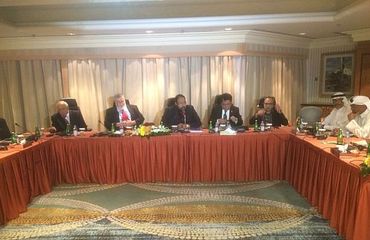
São Paulo – The Islamic Chamber of Commerce, Industry and Agriculture (ICCIA), organization that gathers the representatives of the private sector of Muslim countries, held this Wednesday (30), in Jeddah, Saudi Arabia, a workshop on the halal market of products and services focused on Muslim consumers.
The CEO of the Arab Brazilian Chamber of Commerce, Michel Alaby, attended the seminar. According to data presented in the event, the halal world foodstuff market reaches USD 632 billion per year and the Islamic population represents a market of 1.73 billion consumers.
The attendees emphasize, however, that the halal concept (Arabic word that means “lawful”) goes beyond the food market and can be applied to other products and services. ICCIA’s secretary general, Ahmed Mohiyeldin Ahmed, said, according to Alaby, that the term means more than just something fit for the consumption of Muslims, it means a healthy and quality product or service.
Several examples were listed. Alaby said that Brazilian exports of beef and poultry to the Arab countries are 100% halal, that is, the slaughter of the animals and the preparation of the food in Brazil follows the Islamic traditions. The halal product stamp is given by certifying organizations, such as the Islamic Dissemination Centre for Latin America (CDIAL), in São Bernardo do Campo, São Paulo metro area, and whose president, Ahmad Ali Saif, also attended the seminar in Jeddah.
Another example mentioned by the attendees was the multinational company Nestlé, which has more than 200 items with halal certification and that has a production plant in Malaysia, a country that is at the forefront in this segment.
Also mentioned were hotel, resorts and hospitals that adopt the concept. Alaby said, for example, that in Malaysia and Japan there are hotels “where all employees are Islamic and all products consumed and materials used are overseen and controlled by the halal quality and stamp”.
In this sense, the attendees discusssed the possiblity of creating an universal standard for halal certification that would “focus the health and quality of products and services”. “They are trying to create an international standard based on the ‘standards’ of Malaysia and United Arab Emirates”, said Alaby.
According to the CEO of the Arab Chamber, also attending the seminar were representatives from countries such as Egypt, Jordan, Sudan, Mauritania, Indonesia, UAE, Saudi Arabia, Mali, Brazil and others. The ICCIA is an organization affiliated with the Organization of Islamic Cooperation, multilateral organization with 57 country members.
*Translated by Sérgio Kakitani

