



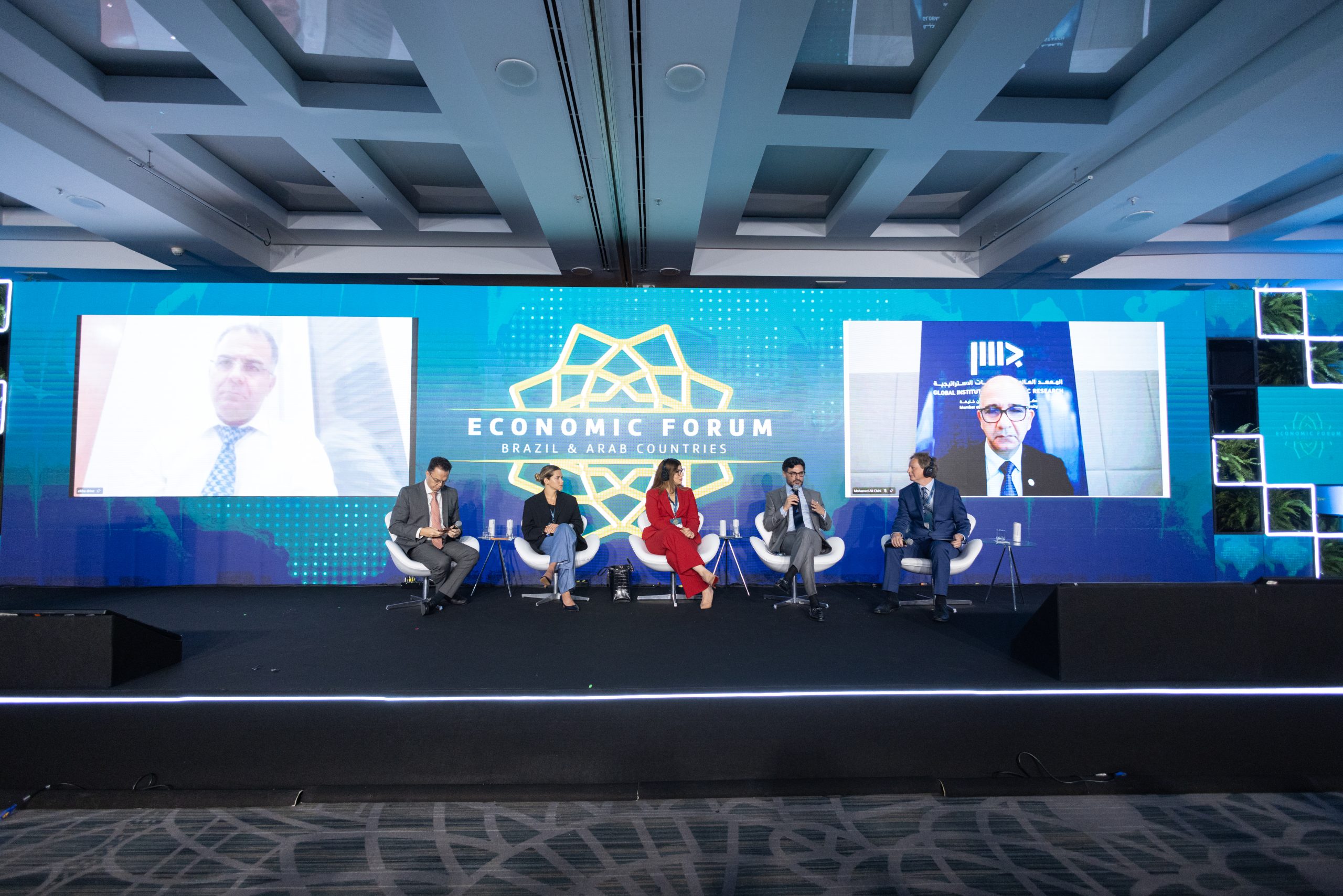
São Paulo – The first panel of the 5th Brazil & Arab Countries Economic Forum, organized by the Arab-Brazilian Chamber of Commerce (ABCC), focused on “Energy, Geopolitics and Industrial Opportunity” and featured six panelists moderated by Justin Alexander, director of Khalij Economics and an economist specializing in the Gulf Cooperation Council (GCC). The discussion centered on concerns over the impact of Middle East conflicts on the global economy, as well as the search for alternative solutions and business opportunities between Brazil and Arab countries.
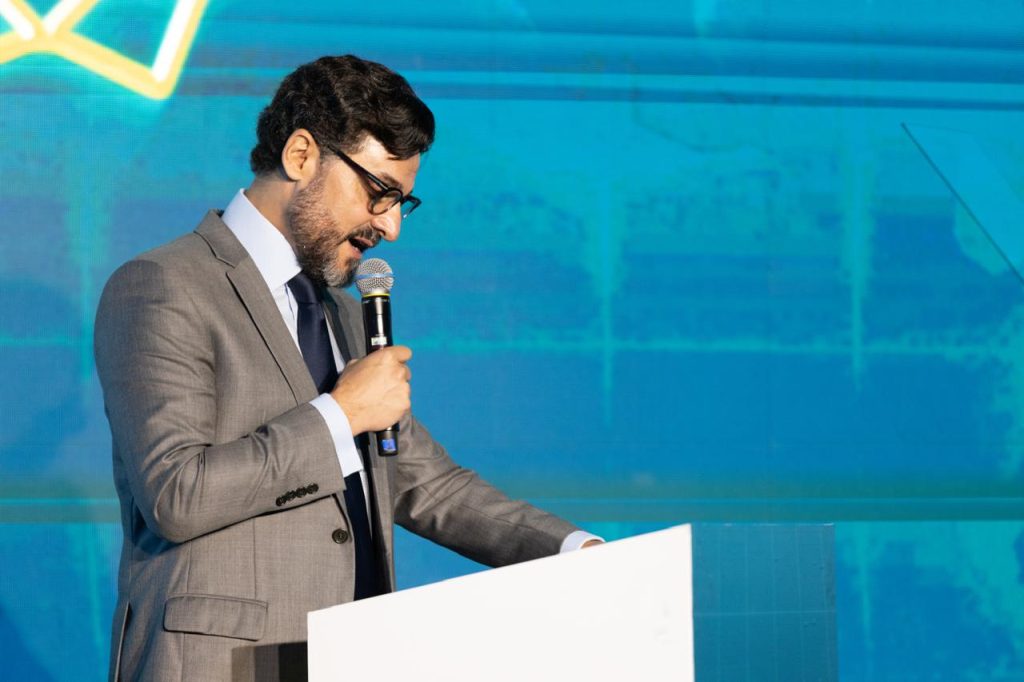
In the opening presentation, Hussein Kalout, an adviser at the Brazilian Center for International Relations (CEBRI), highlighted Brazil’s strong diplomatic tradition and its stance on the conflict involving Iran, noting that as the world’s 10th-largest economy, Brazil is a significant economic power.
“Regarding the Middle East and the conflict, I see an irreversible transformation in security issues and in how countries in the region view the United States and Iran,” he said. “International law has lost its essence, leaving those who depend on it most vulnerable.”
Kalout discussed the economic impact of the conflict, estimated at around half a trillion dollars and potentially reaching USD 2.5 trillion, and its global repercussions, including a surge in oil prices.
“I see no end to the war in sight, and rebuilding mutual trust will take time,” he said. Meanwhile, Arab countries need to seek security and economic alternatives, he said.
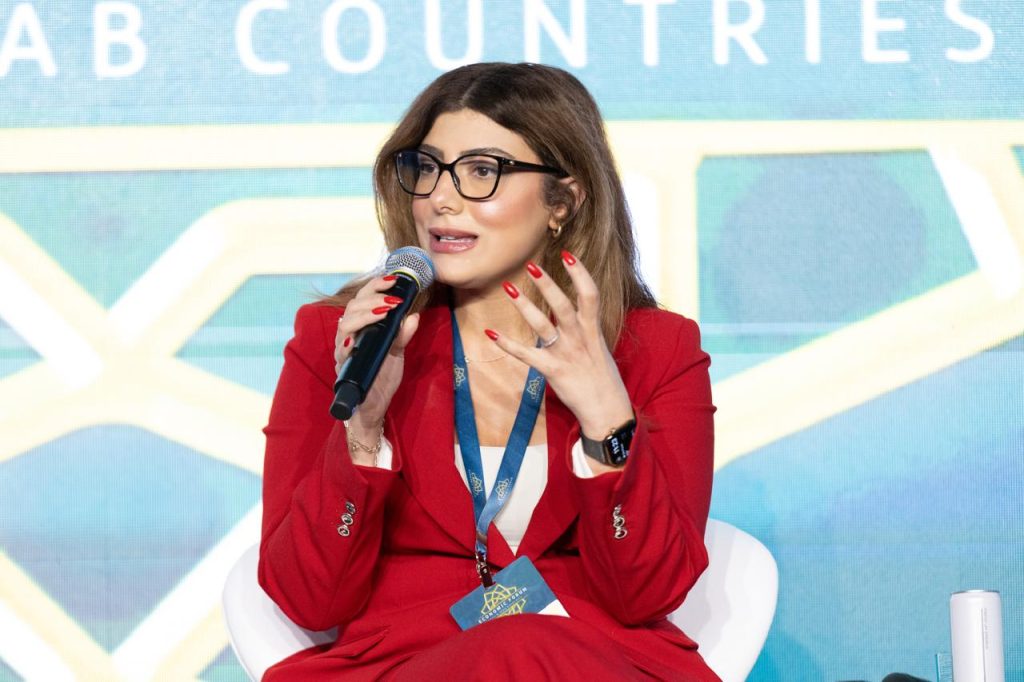
Dania Arayssi, program head and senior analyst at the U.S.-based New Lines Institute for Strategy and Policy, cited an alternative strategy emerging in the Middle East amid the conflict: the Four Seas project, which maps different routes across the Black, Mediterranean, Caspian and Gulf seas. She said her work also aims to engage Iraq, Syria, Jordan and Lebanon in oil production and exports.
“Lebanon, for example, has refineries in the north that are currently idle, and there are talks about reactivating them,” she said.
Mohamed Ali Chihi, executive director of the Global Institute for Strategic Research (GISR), said the conflict’s consequences for other countries in the region showed that “we cannot allow one country to shut down such an important trade corridor,” referring to the closure of the Strait of Hormuz.
“We hope for a long-term, peaceful solution,” he said.
He cited Qatar’s well-known mediation capabilities and stressed that Arab countries need to have a seat at the negotiating table, rather than remain mere spectators.
Bilateral trade
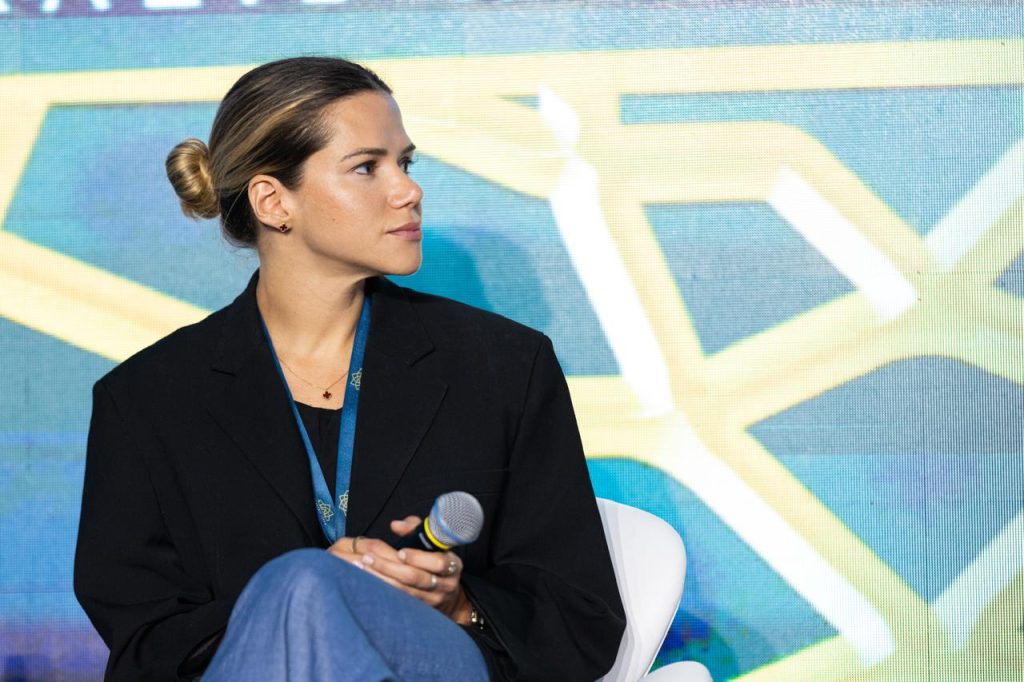
Juliana Candido, senior tax studies and reporting specialist at Dubai’s Department of Finance, and Frederico Lamego de Teixeira Soares, special adviser for international affairs at the National Confederation of Industry (CNI), focused on the wide range of business opportunities between Brazil and Arab countries. Candido highlighted the United Arab Emirates’ low taxes as an incentive for Brazilian companies seeking to establish a presence in the region.
“The government is aligned with international practices but intends to keep taxes low precisely to position itself as an international hub,” she said.
Soares cited three sectors with promising potential for Brazil-Arab partnerships: critical minerals, defense and energy. On critical minerals, he highlighted MagBras, a consortium of more than 20 companies focused on rare minerals. On defense, he said Brazilian companies face difficulties doing business with Arab countries.
“Our companies are even willing to set up local plants and share knowledge, creating a win-win situation and giving Arab countries an alternative amid geopolitical challenges like those we face today.”
Finally, Drine Okba, sales manager at Tunisia’s Groupe Chimique Tunisien (GCT), highlighted opportunities for Brazilian companies in the fertilizer sector, noting that Tunisia has one of the world’s largest phosphate reserves.
“We are investing to raise phosphate capacity to 9 million tonnes and expanding beyond our traditional partners,” he said. He concluded: “We are open to partnerships. Come and get to know Tunisia!”
The forum, organized by the ABCC, is sponsored by Fambras Halal, International Halal Academy, Vale, DP World, Cdial Halal, First Abu Dhabi Bank, MBRF Global Foods Company, Qatar Airways and MZAH Group Investment. Institutional supporters include the Arab League, the Union of Arab Chambers and the Federation of Industries of the State of Bahia. Cacilda Aragão Tours is a partner.
Read also:
Uncertain landscape calls for Brazil-Arab ties
Translated by Guilherme Miranda
