



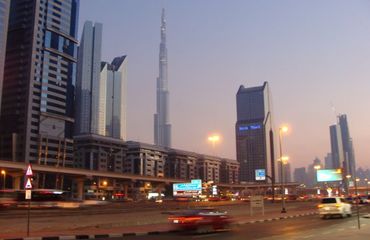
São Paulo – The good performance of the tourism sector, a small growth in the oil production and the recovery of the real estate market allowed the United Arab Emirates to grow 5% in 2013, according to estimates by the International Monetary Fund (IMF) released this Thursday (12th) in a document on the country’s economic situation. According to the survey, the Gross Domestic Product (GDP) of the United Arab Emirates should grow 4.75% in 2014 and 4.5% in the next years.
On the document, the Fund’s technicians, who met with local authorities between April 23rd and May 8th, observed that the Emirates economy is recovering solidly from the 2008 crisis.
“While growth in oil production moderated in 2013, ongoing public projects in Abu Dhabi and buoyant growth in Dubai’s services sectors continued to underpin growth. With a strengthening economic cycle, also supported by the UAE’s perceived safe haven status amid regional instability, overall economic growth is estimated to have reached 5 percent in 2013,” said the Fund’s statement.
Even with the good performance, the statement observes that the surplus in the current account dropped to 16% of the GDP, after reaching 18.5% of the GDP in 2012, driven by the increase in imports. Fiscal surplus has also dropped: from 8.9% of the GDP in 2012 to 6.5% of the GDP in 2013 as a consequence of the current expenditure, expenditure with security and Defense made by Abu Dhabi. In Dubai, said the IMF, the deficit dropped faster than expected. The emirate has also seen its real estate, which caused the local crisis in 2008, resume growing.
“The real estate sector has been recovering at a fast pace in some segments, especially in the Dubai residential market, where prices increased on average by 30 percent year-on-year in March 2014,” said the document, in reference to the March 2013 on May 2014. Due to the increase in the real estate price and rent, the inflation has also increased. Between March last year and March this year, the price hike was 1.9%. In the same period between 2012 and 2013 it had been 1%.
According to the forecast by the IMF, “macroeconomic outlook” is positive. “Growth will likely be driven by the nonhydrocarbon economy, which is expected to grow at around 5½ percent this year and beyond, supported by an improving global economic environment and strengthening domestic confidence associated with a rebounding real estate market,”, said the Fund.
As an example of the real estate sector recovery, the IMF mentions some megaprojects, such as the ones planned for the world’s fair Expo 2020 in Dubai, which will lure investments in infrastructure and hospitality sectors. The oil sector, on the other hand, should have moderate growth as the global market is “amply supplied”. As a consequence of the real estate sector’s recovery, inflation should also increase in the next years.
Emerging countries
This Thursday (12th), the IMF disclosed a document on the economy of emerging countries, where it evaluates the reasons behind the low performance in the last years and the challenges these nations will have in the future. On the study entitled “Emerging Markets in Transition: Growth Prospects and Challenges”, the Fund claims nations such as Brazil, emerging countries from Asia, Africa, Europe and Middle East can no longer depend only on the expansion of local consumption to grow and need to adopt structural renovations to ensure long term evolution of their economies. The study warns that the conditions which led to their fast growth in the beginning of the decade, as a buoyant global trade, should no longer prevail.
*Translated by Rodrigo Mendonça

