



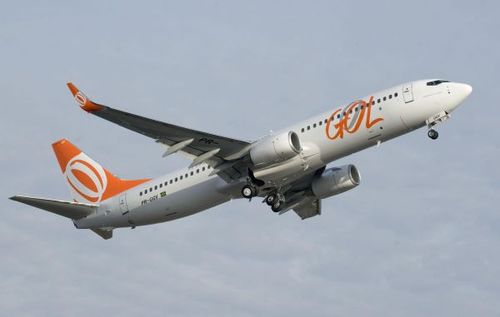
São Paulo – The Brazilian Tourism Institute (Embratur) is evaluating the possibility of allowing foreign airlines that already have regular international flights to Brazil to operate domestic flights during the 2014 World Cup. In an interview granted on Tuesday (22) to foreign correspondents, the president at Embratur, Flavio Dino, stated that the measure is a way to guarantee the offer of seats in aircraft to the 12 cities hosting the event, to take place from June 12 to July 13 of next year.
Dino stated that Embratur and the National Civil Aviation Agency (ANAC) are already negotiating the reorganisation of the air grid to guarantee passengers seat offer to all cities hosting the event, including Porto Alegre, in Rio Grande do Sul; Curitiba, in Paraná; São Paulo, in São Paulo; Rio de Janeiro, in Rio de Janeiro; Belo Horizonte, in Minas Gerais; Cuiabá, in Mato Grosso; Salvador, in Bahia; Brasília, in the Federal District; Manaus, in Amazonas; Recife, in Pernambuco; Natal, in Rio Grande do Norte; and Fortaleza, in Ceará.
“We aim to guarantee greater offer (of flights) and ANAC coordinates that (the reorganisation of the grid). We are going to reorganise it and, if necessary, we will take other measures, even the opening of the market to other international airlines during the Cup,” said Dino, recalling that the decision depends on the President of the Republic and that the reorganisation of flights and possible adoption of an “open skies” policy (for foreign airlines) will only be adopted after the selection of the Cup groups, which is marked for December 6th, in Bahia.
The government’s expectation is for the Cup to attract 600,000 foreign tourists and for three million Brazilian tourists to travel around the country. According to Embratur, it is not yet possible to know what countries will send more tourists to the World Cup. This information will only be known when the International Football Association (FIFA) discloses ticket demand figures.
Dino stated, however, that the main origin of visitors to Brazil should be South America and the United States. The Americans placed 374,000 requests for tickets. Germany, traditionally the third main origin of tourists, and the United Kingdom, the 11th main origin of tourists, should be among the ten main countries sending tourists to Brazil during the Cup.
Sky-high
In the interview, Dino also stated that the government of Brazil is already working on stunting abusive pricing in air fares and hotel stays. He said that the government has already approached the Administrative Council for Economic Defence (CADE) and consumer defence organisations and said that “soon” measures to stunt price hikes should be taken. The possibility of the open skies agreement and foreign airlines operating during the Cup would be a way to increase competition between airlines and control excessively high prices in the sector.
*Translated by Mark Ament

