



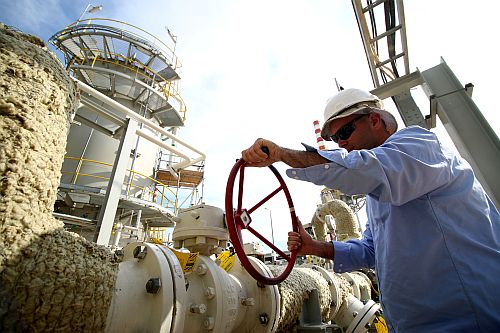
São Paulo – The Syrian Petroleum Company said on Tuesday (21) that the Iraq-Syria pipeline will serve as a strategic route for supplying oil to Europe and is expected to be completed within two and a half years, according to Iraq’s state news agency INA. Last week, the two countries signed a memorandum of understanding on the project. A separate memorandum was also signed between U.S.-based Chevron and TI Capital and Qatar’s UCC Holding for the pipeline’s construction.
“The memorandum of understanding signed between Iraq and Syria includes conducting technical and financial surveys and studies for an oil pipeline project extending from Haditha to Banias,” Safwan al-Sheikh Ahmad, director of corporate communications at the Syrian Petroleum Company, told INA.
Haditha is located in western Iraq, while Banias lies on Syria’s Mediterranean coast, providing access to a sea that also borders several European countries.
According to Ahmad, the pipeline is projected to have a capacity of 2.5 million barrels per day and span approximately 800 kilometers.
“The pipeline represents a vital artery for transporting Iraqi oil through Syrian territory towards Europe,” he said.
The project has been presented as an alternative route amid disruptions to global oil shipments caused by blockages and instability along key maritime corridors, including the Strait of Hormuz and the Red Sea.
Ahmad told INA that Syria and Iraq have maintained a high level of coordination on energy issues, particularly following the recent visit of Iraqi Foreign Minister Fuad Hussein to Syria, during which the participation of foreign companies in the pipeline project was discussed.
According to Ahmad, an earlier agreement between Iraq’s state oil marketer SOMO and the Syrian Petroleum Company provided for the transport of Iraqi fuel oil through the Al-Tanf border crossing to Banias and then to the Banias refineries before being re-exported to Europe by tanker.
“The project of this pipeline will contribute to reducing the effort and costs associated with transportation operations and will lessen the strain on infrastructure in both Syria and Iraq,” he said.
Read also:
Brazil’s exports to Arab Gulf countries rebound
Translated by Guilherme Miranda

