



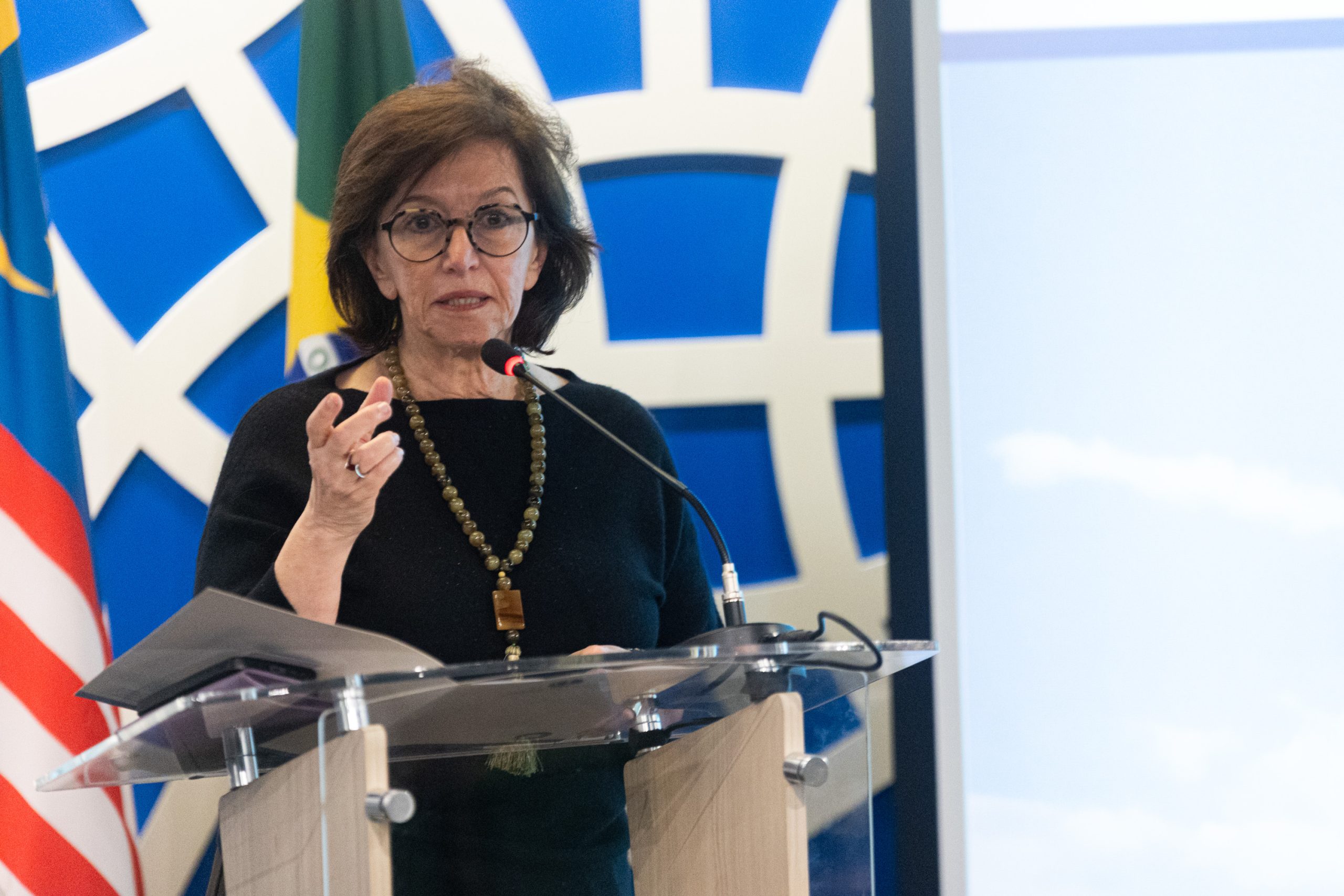
São Paulo – Malaysia’s trade promotion agency, MATRADE, held the Brazil–Malaysia Business Meeting on Tuesday (23) at the Arab-Brazilian Chamber of Commerce (ABCC) in São Paulo to attract Brazilian companies through increased trade and participation in the MIHAS trade fair in September. Malaysia shares with Arab countries the characteristic of having a predominantly Muslim population, which creates demand for halal products and services—those permitted under Islamic law.
Halal products are those that may be consumed by Muslims. They cannot, for example, contain traces of pork or alcohol. Halal products are characterized by being produced under high standards of sanitation, governance, and respect for animal welfare and the environment. Brazil is the world’s largest exporter of halal meat.
At the opening of the event, ABCC Vice President of Marketing Silvia Antibas said that halal-certified foods are valued even by non-Muslim consumers.
“That is why, for Brazilian companies interested in this market [Malaysia], seriously pursuing halal certification is not merely a regulatory or commercial matter. It is a way of communicating appropriately with the local consumer,” she said.
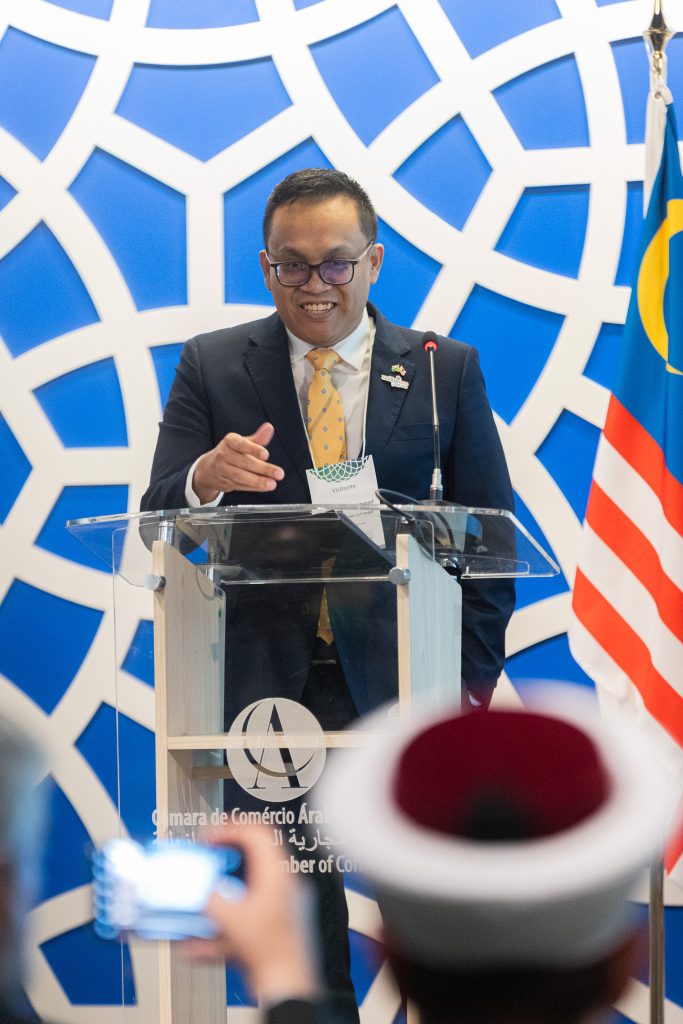
Meanwhile, Malaysia’s Commercial Consul and MATRADE Trade Commissioner in São Paulo, Amirul Azman Ahmad, said that the two countries are “separated by geography, but close through trade.”
Home to 35 million people and covering an area similar in size to the Brazilian state of Goiás, Malaysia is located in Southeast Asia and serves as an important distribution and re-export hub. The country is a member of the Association of Southeast Asian Nations (ASEAN), a free trade bloc that also includes Brunei, Cambodia, Indonesia, Laos, Myanmar, the Philippines, Singapore, Thailand, Vietnam, and Timor-Leste.
“Through Malaysia, Brazilian companies can access all ASEAN countries,” Ahmad said.
Malaysia
Brazil is Malaysia’s 19th-largest trading partner. According to data from Brazil’s Ministry of Development, Industry, Trade and Services, compiled by the ABCC, Brazil exported USD 3.5 billion worth of goods to the Asian country in 2025, a decline of 18% compared with 2024. Imports rose by 1.2% to USD 1.5 billion.
Brazil’s main exports were iron ore, sugar, and crude oil. Its principal imports from Malaysia were integrated circuits, telephone equipment, food preparations based on fat blends, and computers.
The event also featured experts in halal products and services, including Zaynab El Bernoussi, a researcher at the Africa Institute of the Global Studies University in Sharjah, United Arab Emirates. She delivered a presentation titled “Halal Certification and the Growth of the Islamic Political Economy,” outlining current halal consumption trends.
Bernoussi sought to demonstrate that halal is a broader concept than food production alone and that it evolves alongside changes in Islamic society and consumer behavior.
Jorge Ferreira dos Santos Filho, a senior advisor at state-run Banco do Brasil, presented the financial products offered by the institution to support companies seeking to expand their exports.
MIHAS trade fair expands business opportunities in Malaysia
In addition to its domestic market and strategic geographic location, Malaysia highlighted the MIHAS trade fair as a gateway to its market. A multisector event, MIHAS is held annually in capital Kuala Lumpur.
The ABCC will participate in the exhibition with its own pavilion through the Halal do Brasil sectoral project, which promotes Brazilian-made halal products abroad. The chamber first took part in the event in 2023 and has returned every year since.
Fernanda Dantas, Internationalization Projects Manager at the ABCC, presented the opportunities the event offers Brazilian companies and said there is still room for businesses interested in taking part in this year’s edition, scheduled for September 23–26.
“We are building Brazil’s presence and strengthening this relationship through a project aimed at positioning Brazil as much more than a supplier of meat,” Dantas said, noting that the trade fair also offers strong potential for the promotion of manufactured and higher value-added products.
Brazilian companies shared the results of their participation in the trade fair. One company began exporting pão de queijo—Brazil’s famous cheese bread—to Malaysia, while another found buyers for the grains it markets.
MATRADE Trade Advisor Kossi Telou said that Malaysia is a major business hub and is increasingly committed to exporting electronics, semiconductors, and petrochemical products.
“The global trade landscape will undergo major changes in the coming years, and the ASEAN region will be fundamental to this process,” Telou said, referring to the growing role of emerging countries in global commerce.
Taken together, ASEAN member states constitute the world’s fifth-largest economy, according to figures presented by Telou. By 2030, they are expected to rank fourth. In the same year, the halal economy is projected to reach USD 5 trillion.
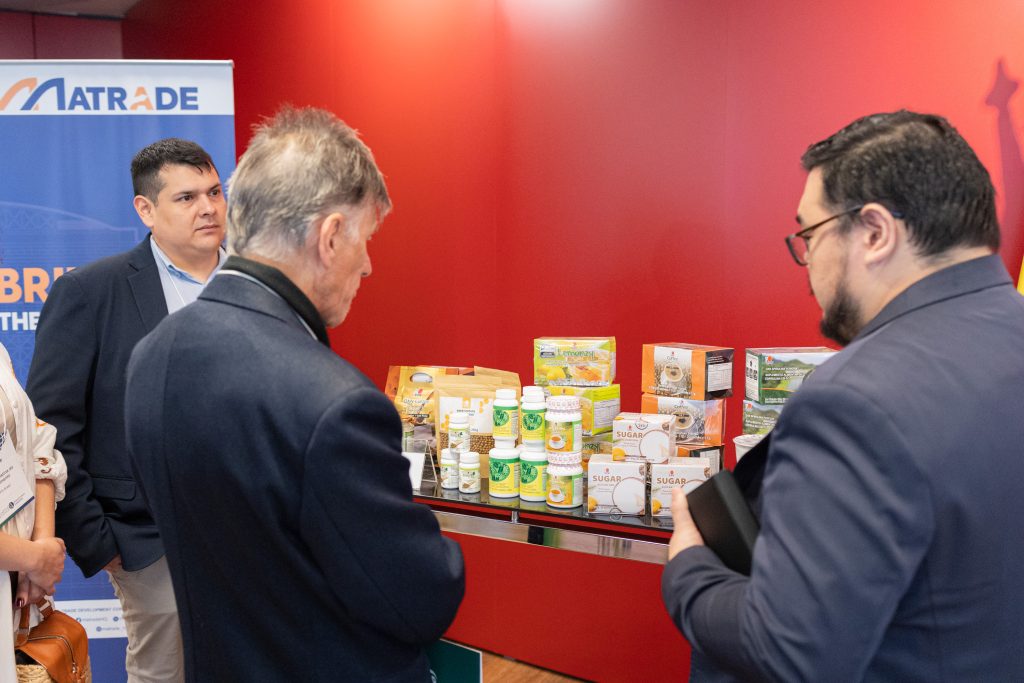
The event also featured demonstrations of products made in Malaysia and the signing of a memorandum of understanding between the Restu Foundation and CDIAL Halal certifier to promote Islamic and halal concepts in Brazil. The ABCC was also represented at the event by board member Arthur Jafet.
Translated by Guilherme Miranda
