



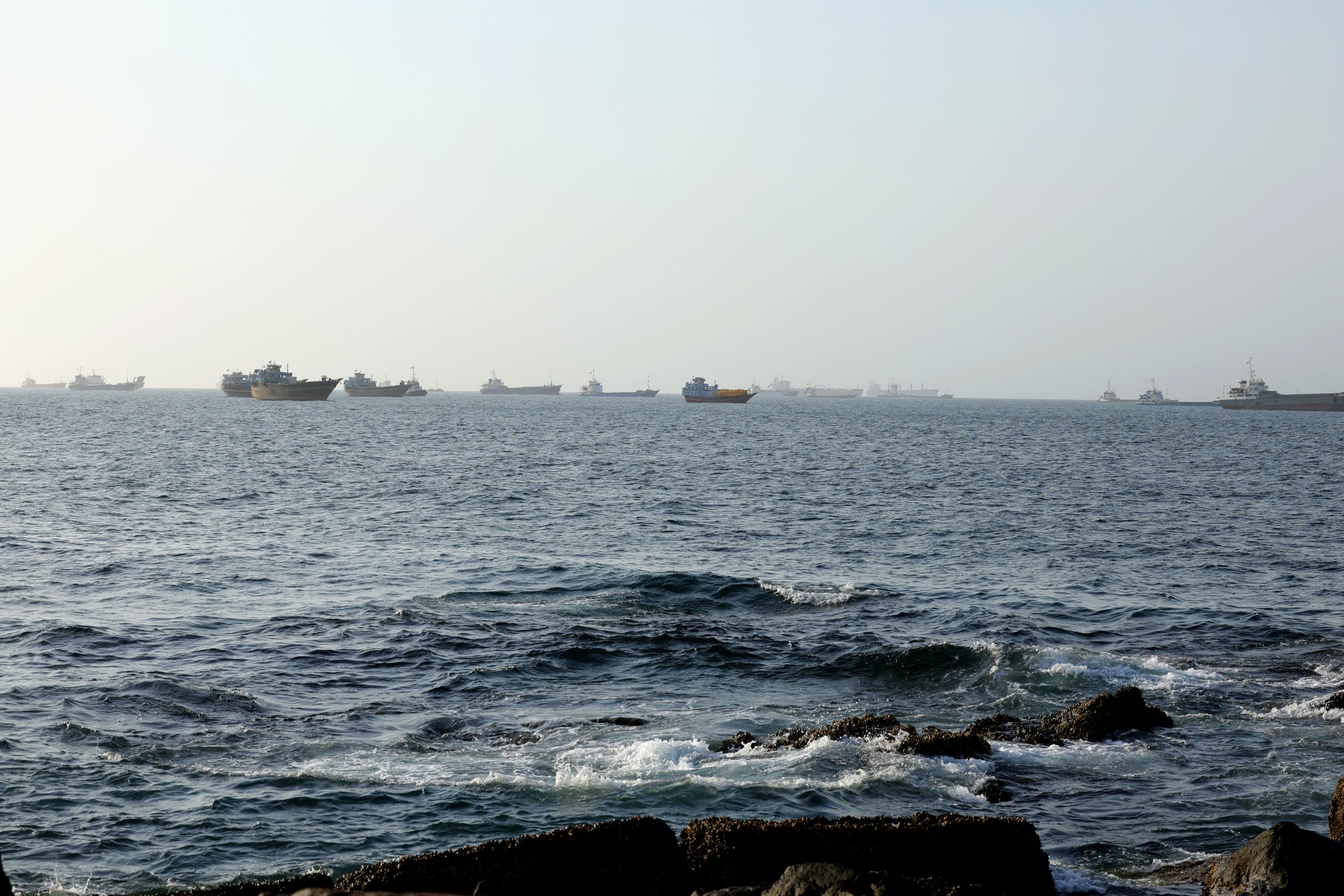
São Paulo – The resumption of hostilities in the Middle East pushed up prices for Brent crude, the global benchmark traded in London, and West Texas Intermediate (WTI), the United States benchmark. In both cases, prices rose by nearly 5%, sending WTI to USD 75.86 a barrel and Brent to USD 80.70 a barrel on Monday morning (13).
Among the factors driving oil prices higher were the renewed hostilities in the Middle East, including fresh U.S. strikes on Iran and Iranian attacks on U.S. bases in the Gulf. In addition, U.S. President Donald Trump said that the Strait of Hormuz is open and will remain open under U.S. control, with a complete blockade applying only to Iranian vessels.
In addition, as a way of charging for the region’s “protection,” Trump said he would impose a fee on any goods transported through the strait.
“The U.S.A. will be, from this point forward, known as ‘THE GUARDIAN OF THE HORMUZ STRAIT,’ but as such, and as a matter of FAIRNESS, will be reimbursed, at the rate of 20% on all cargo shipped, for any and all costs necessary to do the job of providing safety and security to this very volatile section of the World,” Trump added.
Approximately 20% of the world’s oil and natural gas production passes through the Strait of Hormuz, as it serves as the main export route for major Gulf producers. The conflict began on February 28, when the United States and Israel launched attacks on Iran. After months of fighting across the region, a ceasefire agreement was reached in June, but hostilities resumed last week.
Analysts interviewed by AFP said the latest rise in oil prices does not yet signal a new crisis but could rekindle concerns about inflation and interest rates. Such concerns tend to trigger volatility in equity and sovereign bond markets.
Read also:
Algeria opens bidding round for oil exploration
Translated by Guilherme Miranda

