



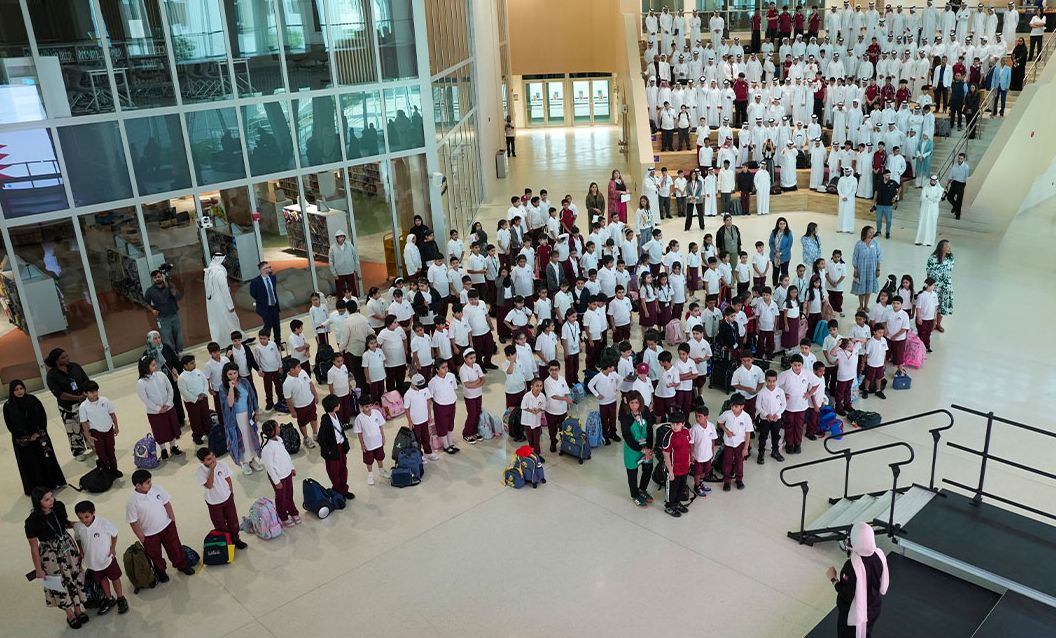
São Paulo – Qatar was the country that made the greatest progress in education between 2006 and 2025, according to an assessment of local students’ performance in Reading, Science and Mathematics conducted by the Organisation for Economic Co-operation and Development (OECD). Brazil also ranks high in the ranking, coming seventh in the world for student gains in Reading and Mathematics and eighth in Science.
In Reading, after Qatar, the countries that made the greatest gains were, in descending order, Kyrgyzstan, Montenegro, Türkiye and Azerbaijan. In Science, Qatar is followed by Türkiye, Kyrgyzstan, Macao and Colombia. In Mathematics, Kyrgyzstan, Türkiye, Macao and Montenegro rank from second place onward.
A total of 760,000 15-year-old students in 91 countries and economies were assessed in the 2025 Programme for International Student Assessment (PISA). The information was released by the Anísio Teixeira National Institute for Educational Studies and Research (Inep), together with Brazil’s Ministry of Education.
Qatar’s Reading score rose from 312 points in 2006 to 418 in 2025, an increase of 106 points, well above the second-ranked country, which gained 60 points. In Science, the Arab country gained 85 points, rising from 349 to 434. In Mathematics, its 2025 score was 416, compared with 318 in 2006 — an increase of 98 points and nearly twice the gain recorded by the second-ranked country, which improved by 53 points. In Qatar, 6,674 students from 246 schools were assessed.
Around the world
Despite the comparison between 2006 and 2025 released by Inep, the OECD reported that, when comparing 2022 and 2025, the overall performance of students — considering all countries surveyed together — declined in Reading and Mathematics, reaching the lowest scores ever recorded by PISA in these areas. In Science, performance remained stable between the two years compared, following a downward trend from 2009 to 2022.
The OECD says that artificial intelligence and digital tools should be used by students with caution, for clearly defined purposes and in moderation. Students tended to perform worse when use became excessive or when devices were used for leisure at school. Digital distraction also affects the classroom as a whole, according to the organization.

