



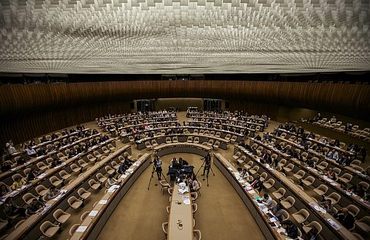
São Paulo – The United Nations Conference on Trade and Development (Unctad) champions the strengthening of domestic markets and increased autonomy for countries in adopting commercial and industrial policies as avenues to stronger, more sustainable growth of the global economy. The recommendations are included in the Trade and Development Report 2014 (TDR) released this Wednesday (10th) by the UN agency.
The organization projects global growth of 2.5% to 3% this year, a sign that the process of recovery from the 2008 international financial crisis remains weak. In Unctad’s assessment, the policies adopted are “inadequate” or inconsistent.” From 2015 to 2019, average annual growth is expected to be 3.4%. “Getting back to business as usual has failed to address the root causes of the crisis,” according to a press release from Unctad.
To the organization, this “new normal” has worrisome parallels with the conditions that led to the global financial crisis six years ago, especially “rising inequalities and asset bubbles.” According to the report, the policies of developed economies are thwarting domestic demand through a combination of fiscal austerity, wage containment and monetary expansion.
“Breaking from a protracted period of low economic growth requires strengthening aggregate demand through real wage growth and more equal income distribution rather than new financial bubbles, the Unctad press release reads. “. The continuing dominance of finance over the real economy and the persistent decline in the wage share are symbolic of the inability to come to grips with the causes of the crisis and its abnormal recovery,” it adds.
Unctad notes that akin to the global economy, “international trade remains lacklustre.” In this respect, the Unctad advises a shift in paradigm, with less emphasis on exports and more on domestic demand. “[Trade’s] slow growth is the result of weak global demand. Therefore, efforts to spur exports through wage reductions and ‘internal devaluation’ are self-defeating and counterproductive, especially if several trade partners pursue such a strategy simultaneously. The global expansion of trade will be achieved through a robust output recovery led by domestic demand – not the other way round,” the press release reads.
The UN Agency recommends the implementation of measures to fuel domestic demand, including income redistribution policies and higher levels of public and private direct investment.
The rationale, according to the Unctad, is that countries need greater autonomy to adopt policies well-suited to their own realities, a key factor in implementing a post-2015 development agenda. According to the organization, multilateral, regional or bilateral agreements “should not encourage or push developing countries to relinquish policies that support economic development.”
The report calls for attention to eventual loss of said autonomy on negotiating for trade and investment agreements. “Conventional wisdom suggests that accepting such stricter policy and regulatory commitments is necessary to attract foreign direct investment and to enable firms from developing countries to join global value chains,” Unctad stresses, but warns that “while these commitments may provide short-term trade and employment benefits, in the longer run they can trap producers into commodity enclaves or low-value niches of manufacturing.”
As a case in point, the organization names China. Despite having successfully integrated electronics goods value chains and increased exportation of said items, Chinese companies retain only 3% of worldwide profits in the industry. “The risk of being trapped in a low-level niche of the value chain may be too high for countries to forsake the use of instruments that have proved effective in supporting industrialization,” according to the press release.
Further, the Unctad claims that industrial policies need not be horizontal, i.e. across the board; they can be sector-specific. To the organization, the model implemented in the United States is more successful than Europe’s. The Brazilian government, for instance, has been criticized by economists for focusing on incentive to industry and certain sectors, which is not entirely condemnable from the Unctad’s perspective.
Provided that these and other strategies see widespread adoption by countries, the organization estimates that average growth of the global economy could soar to 4.7% per annum from 2015 to 2019 and pick up even further from 2020 to 2024.
*Translated by Gabriel Pomerancblum

