



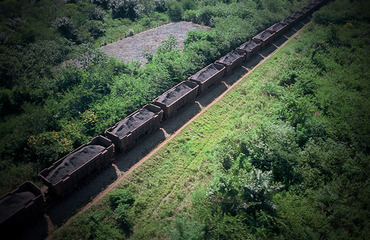
São Paulo – The Brazilian mining company Vale’s revenues from exports to the Middle East shrank from US$ 1.49 billion in 2013 to US$ 1.26 billion last year, according to the balance sheet released this Thursday (26th). Gross operating revenues were down 15% and the region accounted for 3.1% of export revenues in 2014, down from 3.3% in the preceding year.
In Q4 last year, from October through December, exports to the Middle East fetched US$ 288 million, a sharp 59% decline from US$ 458 million in Q4 2013, and a 20% reduction from US$ 359 million in Q3 2014 – i.e. from July to September.
Vale owns an ore pelletizing plant in Oman, an Arab country in the Middle East; the plant put out 8.6 million tons in 2014. According to information released by the company a week ago, this was the best performance ever since the plant went online in 2012. Production volume was up 4% from 2013.
Vale’s highest export revenues last year came from Asia, at US$ 19.5 billion, and the leading Asian buyer was China. However, sales to the continent declined significantly, by 26.2%. Other top buyers from Vale were South America, Europe and North America.
Going down
The mining company saw its operating revenues plummet last year, by 19.5% to US$ 38.2 billion. According to Vale, this was mostly due to lower iron ore and pellets’ prices. The company says the impact of lower costs was partly offset by higher sales volumes. Still, the company was unable to turn around its losses, which went from US$ 584 million in 2013 to US$ 657 million in 2014. The adjusted Ebitda dropped by 40.8% to US$ 13.3 billion.
The company’s balance sheet says 2014 was a year of solid performance, despite the challenges posed by commodity prices. “In 2014, Vale S.A. set several production records, reduced its spending even further by US$ 1.218 billion, completed eight capital projects, reduced investment by an additional US$ 2.254 billion, negotiated a strategic charcoal industry partnership in Mozambique, and paid US$ 4.2 billion worth of dividends, all the while preserving a healthy capital structure,” Vale reported.
*Translated by Gabriel Pomerancblum

