


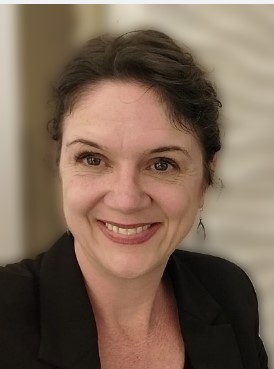
São Paulo – The Brazilian attorney Juliana Candido is closely familiar with the United Arab Emirates tax system. With a degree in Law from Rio de Janeiro State University, Juliana had an international career from the get-go and got invited to work in the UAE at a time when the country required professionals for its then-newly implemented tax policy. Now, she is a senior tax studies and reports expert with the Dubai Government’s Department of Finance.
During a trip to the city of São Paulo late last August, Juliana sat down with ANBA to discuss her career in Law, the meaning of taxation in different countries, and the latest industry developments around the world. “I am very grateful for my education. I learned by doing hands-on work, dealing with people in different countries, with different approaches. That enabled me to work in several countries,” said Juliana regarding her international experience.
She points out that when she started Law school, her plan was to go into diplomacy and international relations, but instead, she chose to explore opportunities abroad. While pursuing her graduate studies, she went to Paris, France on a student exchange program. Upon returning to Brazil, Juliana worked for a law firm before going to London, UK to pursue a master’s degree in International Tax Law. “I never looked back. One opportunity led to another,” she says.
Taxes are very much tied to a country’s context
Juliana Candido
Juliana Candido spent about seven years working at the Organisation for Economic Co-operation and Development (OECD), in France, as a tax policy advisor up until mid-2023. “It was a really cool job that allowed me to work with different countries, different governments, advising on tax policy. The work consisted of assisting countries whenever changes to tax law were required in order to comply with international standards,” she explains.
She says this experience led to an invitation from the UAE government as the country, which once had a zero-tax policy, rolled out taxes. At first, Juliana worked at the Federal Tax Authority as a Tax Policy and International Relations Expert. About a year ago, she joined the emirate of Dubai government team, where she advises the administration as well as different government entities on tax policy reviews.
Her work in different realities throughout her career gave her a practical understanding of the different meanings that taxation can have. “Taxes are very much tied to a country’s context, to a country’s situation,” she argues. As such, nations that require more in the way of public services tend to have higher taxation, whereas countries with great wealth or plentiful natural resources implement minimal taxation, often primarily to meet international standards.
The expert believes that while taxes weigh on businesses’ decisions whether or not to enter a country, they are not the sole factor. “Companies do consider taxes, but they also factor in legal certainty. They want to be in a country where the rules are enforced. Taxes are one factor, but a major company with a long-term vision will not look at that alone. It’s important to be in a country where the rules are clear, where there is safety, where a good infrastructure is in place,” she says.
Regarding the future of taxation, Juliana is curious to see how the Global Minimum Tax will work in practice. The initiative was created within the OECD, and multiple countries, including Brazil and the UAE, are currently rolling it out. it consists of a minimum 15% tax on multinational corporations with global annual revenues exceeding EUR 750 million, to be levied in the country of operation. In case a company pays a lower percentage in a given country, another country may levy additional taxes to meet the minimum level.
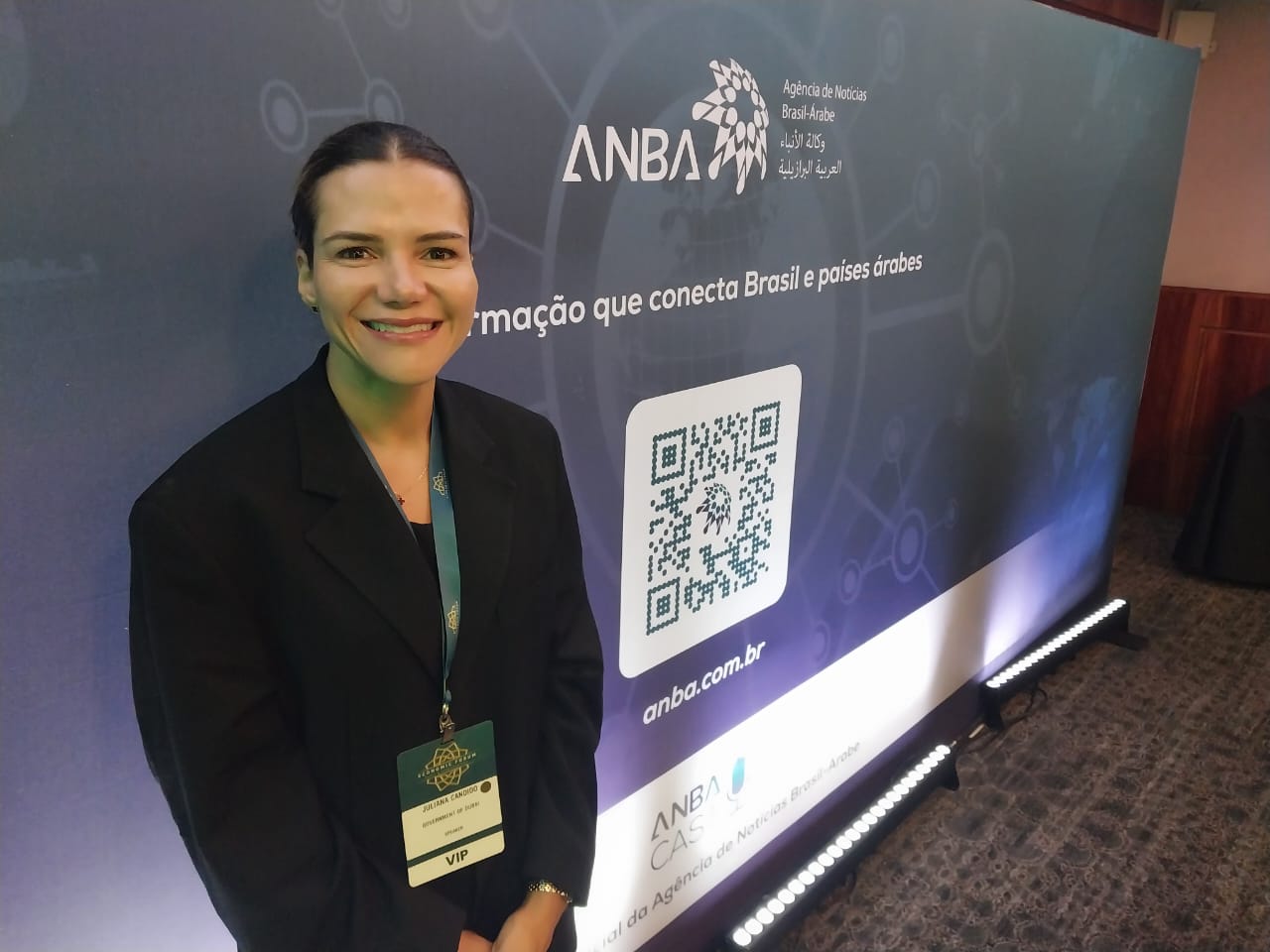
Juliana Candido traveled to São Paulo to speak at the Brazil & Arab Countries Economic Forum, hosted by the Arab-Brazilian Chamber of Commerce on August 25. She sat on the panel “Energy, geopolitics and industrial opportunity,” featuring speakers from Brazil and abroad. She spoke with ANBA as a tax expert, and not as a spokesperson or an official representative of the Dubai government.
Read more:
UAE: New strategic hub for investments
Translated by Gabriel Pomerancblum
