



São Paulo – Brazilian exports to Arab countries rose 3.1% to USD 1.33 billion in April compared to the same month in 2025, according to data from the Ministry of Development, Industry, Trade and Services compiled by the Arab-Brazilian Chamber of Commerce (ABCC). Imports fell 10.1% to USD 731.1 million in the same comparison.
Year-to-date exports to the region are up 2.9%, totaling USD 6.41 billion. Imports also increased, rising 9.3% to USD 3.22 billion. Brazil’s trade surplus reached USD 3.19 billion, down 2.8%, while total trade flow grew 5% compared to 2025, reaching USD 9.64 billion.
Mohamad Orra Mourad, International Relations Vice President and Secretary-General of the ABCC, told ANBA that despite the conflict affecting Gulf countries—major trading partners of Brazil—alternative export and import routes are gaining ground. The conflict involving the United States, Israel, and Iran began on February 28 and triggered retaliatory Iranian attacks on Arab Gulf countries, as well as the closure of the Strait of Hormuz.
Arab Gulf countries
“Although we still have no clear expectations regarding the actual outcome of the conflict or how long it will last, alternative routes have been gaining ground in Brazil’s trade with Arab countries. Clear evidence of this is that Brazilian exports to GCC member states, despite posting a 24% decline in April, showed a smaller drop than in March. Meanwhile, Brazilian exports to all Arab countries increased 3% in April, compared to an 8% decline in March,” he said. GCC stands for Gulf Cooperation Council, made up of Saudi Arabia, the United Arab Emirates, Qatar, Bahrain, Kuwait, and Oman.
“Year to date, our exports are still showing growth compared to last year, even with the naval blockade imposed on the Strait of Hormuz, which accounts for a significant share of both our meat exports to the Gulf region and our fertilizer imports from there,” Mourad said.
He also noted that imports have increased year to date, both from Gulf countries and from Arab countries overall. “Once again, this shows the resilience and adaptability of the region’s key players in keeping foreign trade flows as close to normal as possible,” he said.
Taken as a bloc, Arab countries remain the third-largest destination for Brazilian exports, behind China and the U.S., and the seventh-largest supplier to Brazil, in a ranking led by China and followed by the U.S., South Korea, Germany, Argentina, and Russia. Among Arab countries, the main destinations for Brazilian exports are the UAE, Egypt, Saudi Arabia, Algeria, Iraq, and Oman. The leading Arab suppliers to Brazil this year are Saudi Arabia, Morocco, Egypt, the UAE, and Algeria.
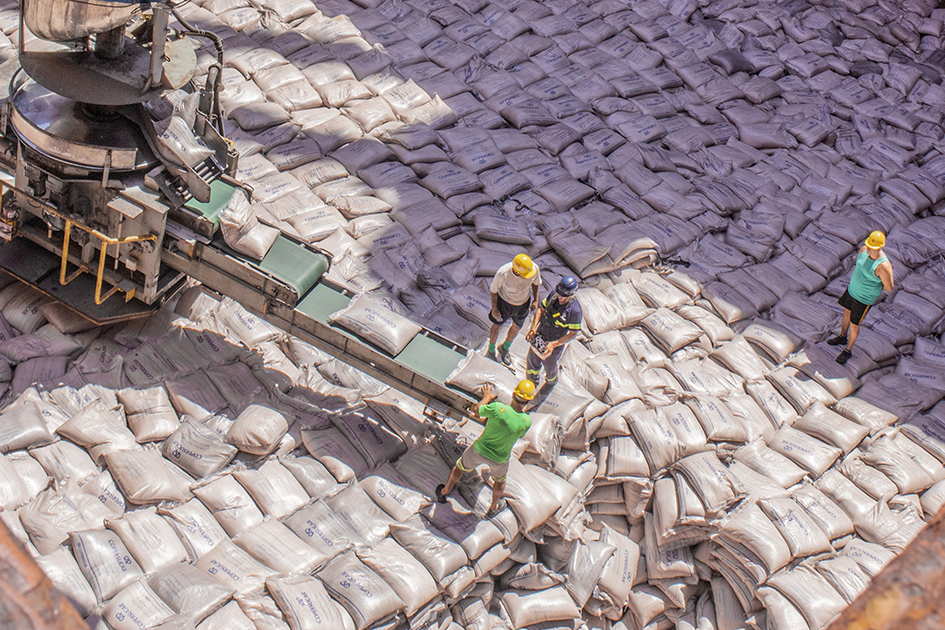
Brazil’s main exports to Arab countries through April were sugar, chicken meat, corn, iron ore, and soybeans. The main products Brazil imported from Arab countries between January and April were refined petroleum, crude oil, phosphate, mixed, and nitrogen fertilizers.
Read also:
MBRF creates Sadia Halal with Saudis, plans IPO
Brazil’s Embraer sells up to 20 aircraft to UAE
Translated by Guilherme Miranda
