


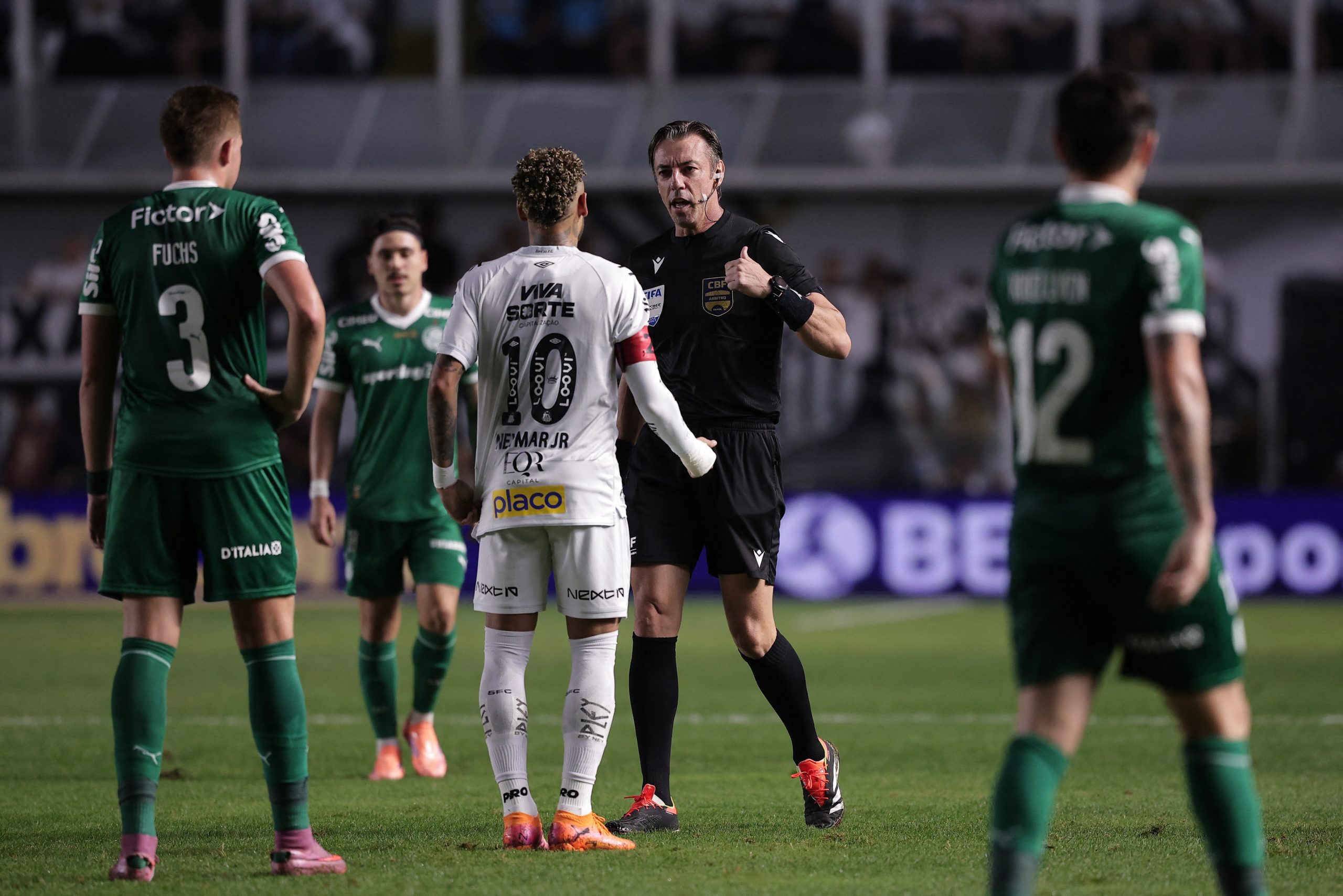
São Paulo – The final of the UAE President’s Cup, held on May 22 in capital Abu Dhabi, featured Brazilians on the field. Not only players representing the two teams in a match that saw Al Ain defeat Al Jazira 4–1, but also the officiating crew: referee Raphael Claus was joined by fellow Brazilians Fabrini Bevilaqua and Nailton Oliveira as assistant referees. Their participation marked another step in Brazil’s growing exchange with the Arab world.
In an interview with ANBA, Brazilian Football Confederation (CBF) Refereeing Committee Chairman Rodrigo Cintra said that Brazilian referees and assistant referees have received six appointments to officiate matches in the Arab world over the past 12 months. Such assignments are most common with the United Arab Emirates, but in 2023, for example, Anderson Daronco officiated in the Saudi Pro League, which has also featured Raphael Claus as a referee.
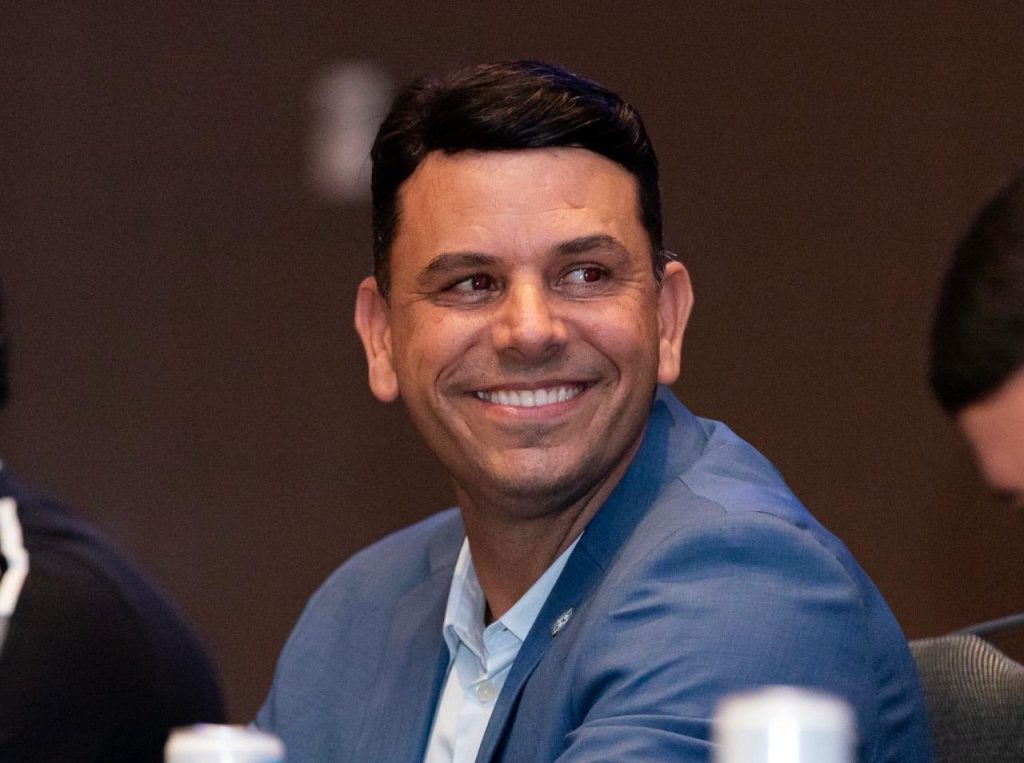
“Based on what they told us before the appointment, the President’s Cup is one of the most important competitions in the entire Middle East. We were very pleased to be able to assign this officiating team,” Cintra said.
“This demonstrates the trust, relevance, and credibility of our refereeing. And this latest appointment was, in my view, the most significant of all, because it was the President’s Cup final,” he added.
“Soon, perhaps, we may also bring referees from there to officiate here. That is something we are interested in,” he said.
According to Cintra, the exchange program has become so significant that Brazilian VAR referee Igor Benevenuto ended up moving to the UAE.
“On one of those trips, he decided to stay there. He worked last season and has now renewed for a second one. He was a FIFA referee here in Brazil. In the first year, I made an exception so he could keep his FIFA badge while deciding whether he would stay there or not. After that, he chose to remain permanently,” Cintra said.
The FIFA badge is linked to the referee’s home refereeing association.
“He signed a new contract. He gave up his FIFA badge, and we remain in frequent contact. We talk a lot. In fact, today he is a reference point for them in the video assistant referee (VAR) environment,” said the president of the CBF Refereeing Committee.
To officiate in another country and referee international matches, both referees and assistant referees must be on FIFA’s official list. These exchanges are arranged directly between football confederations and do not require FIFA’s involvement. The host confederation is responsible for covering transportation, accommodation, meals, and officiating fees for the match.
The pressure of a football match
The rules of the game do not change, but there are differences between officiating a match in Brazil and abroad.
“Here, even a third-division match in Brazil’s Série C has a level of competitiveness that is hard to find in other countries. There’s a lot of gamesmanship, a lot of grit, a lot of physicality. And technique as well. The technical level is also very high. We believe that today a Brazilian referee can officiate anywhere in the world,” Cintra said.
He explained that football in Brazil generates enormous expectations and pressure, which naturally extend to referees. He also believes that players in Arab countries tend to show greater discipline on the field.
“We have reached a point where referees must be prepared not only technically and physically, but also psychologically. The importance of the mental aspect has become so great that I would say it is now a third pillar of concern, just as important as physical and technical preparation,” he said.
“We can tell whether a referee is truly good not when conditions are normal, but when things move outside the norm. It is in unexpected situations, under extreme circumstances and intense pressure, that a referee’s quality really becomes apparent,” he said.
Also speaking to ANBA, Claus recalled that his first assignment in the UAE came in 2021. He described officiating abroad as a “privilege.”
Claus will be one of three Brazilian referees at the FIFA World Cup, which begins next Thursday (11) and will be held in Mexico, Canada, and the United States. The other Brazilian referees selected are Ramon Abatti Abel and Wilton Pereira Sampaio.
With a total of nine referees and assistant referees, Brazil will have the largest officiating contingent at the tournament, tied with Argentina.
“It is a privilege to receive an appointment like this. It reflects a very positive exchange between the CBF’s National Refereeing Committee and their federation. The local federation could have chosen referees from anywhere in the world, yet they looked at the work being done here in Brazil. It is especially rewarding because it was such an important final, the UAE President’s Cup,” said Claus, who noted that invitations to officiate “important matches” have become more frequent since 2021.
At the World Cup, support for Brazil’s team—and its referees
Now, both Claus and Cintra have their full attention focused on the World Cup.
“Expectations for the World Cup couldn’t be higher. We’ve put in a tremendous amount of work, with numerous seminars and both theoretical and practical training sessions alongside FIFA and the CBF. The goal is to improve every day and arrive fully prepared to represent Brazil at this tournament. We don’t choose matches, because every game has its own story. The important thing is to be ready and prepared. And we are,” said Claus.
“Of course I support the Brazilian national team. My first choice is the national team, my second choice is the national team, and my third choice is the national team. But as a fourth possibility, we believe that one way or another there will be Brazilians in the World Cup final,” Cintra said.
Brazil’s national team has not reached a World Cup semifinal since 2014, but Brazilian referees have. Sampaio officiated the 2022 World Cup quarterfinal in which France defeated England 2–1 to advance to the semifinals before eventually reaching the final against Argentina, which went on to win the tournament.
Read more:
Brazilian referee to officiate match in UAE
Translated by Guilherme Miranda
