


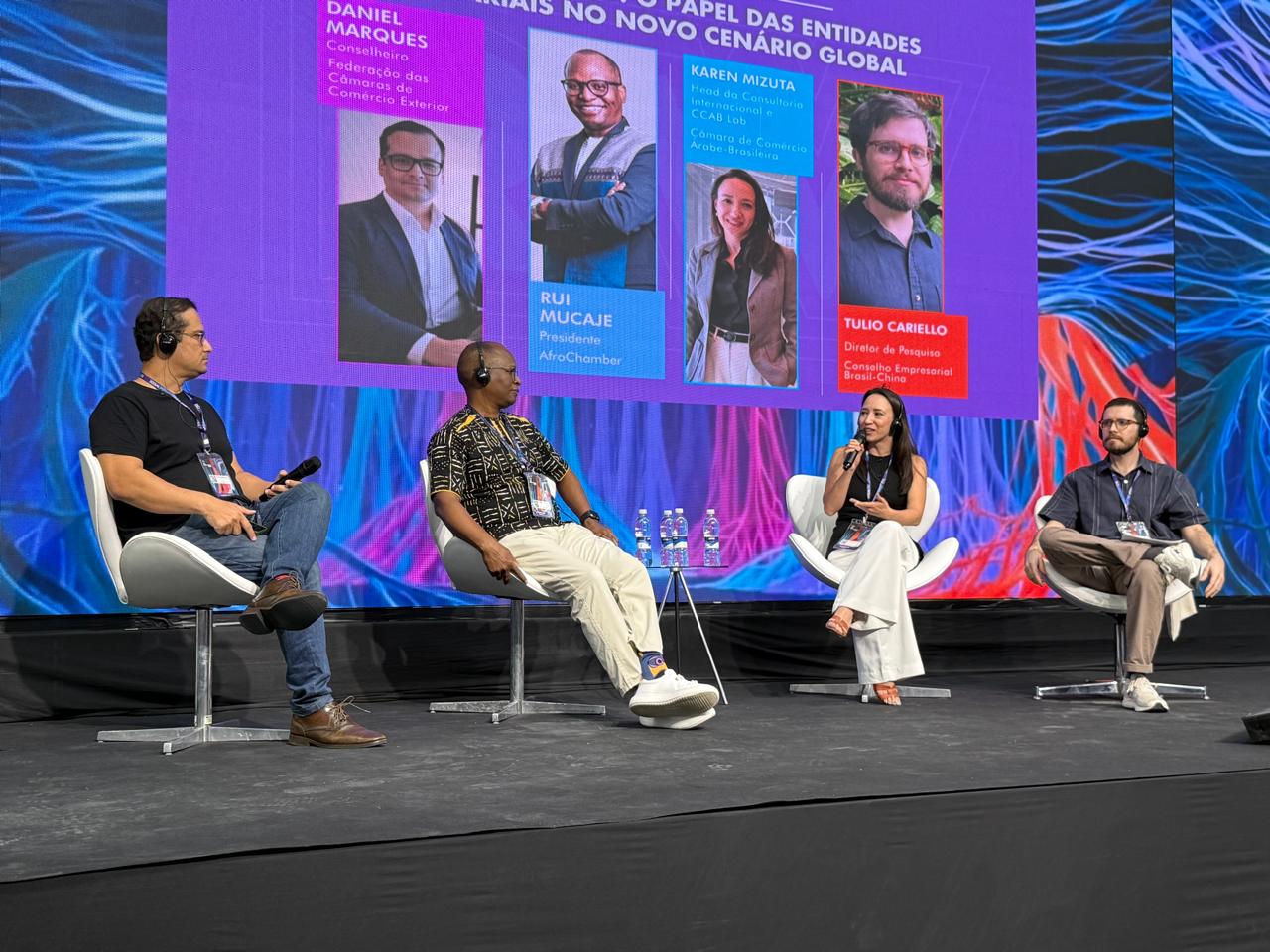
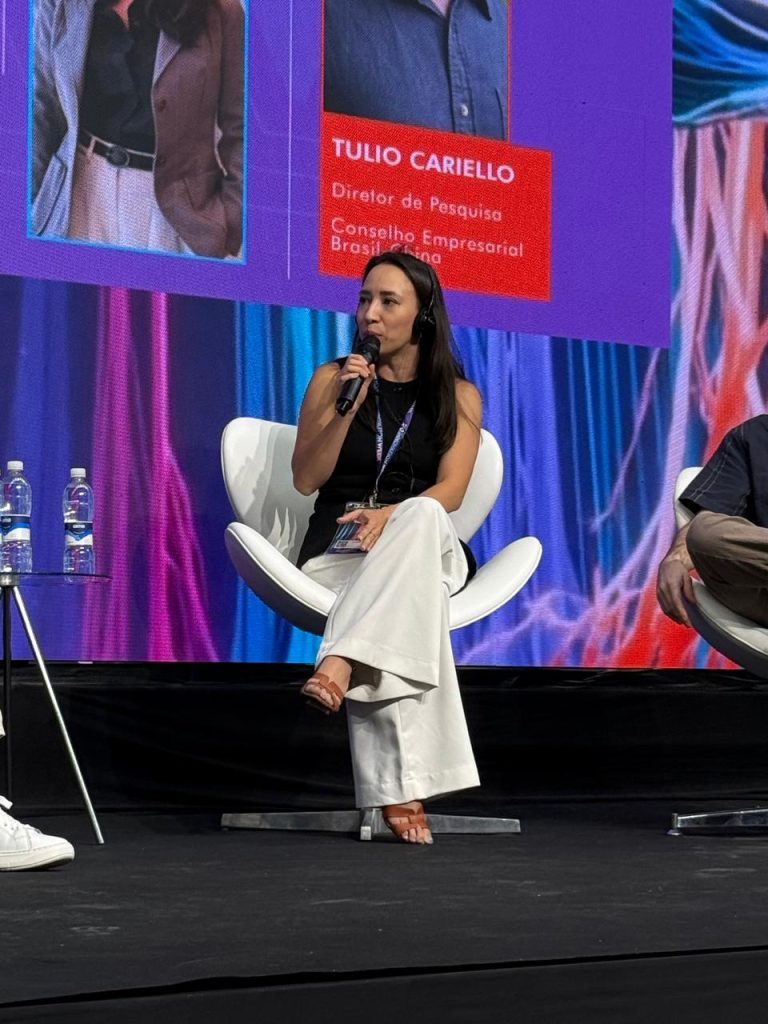
São Paulo – With ongoing economic transformation in Arab countries as one of its drivers, the Arab-Brazilian Chamber of Commerce’s work is extending beyond the fostering of traditional commerce between Brazil and the Arab market. So said Arab Chamber International Consulting and ABCC Lab Head Karen Mizuta this Wednesday (5) as a panelist at Rio Innovation Week, a global conference on tech and innovation taking place from Tuesday (4) to Friday (7) in Rio de Janeiro.
The panel Karen Mizuta sat on, “Connection Routes: The role of business entities on the new world stage,” addressed the mission of chambers of commerce and global organizations as connectors of governments, businesses, investors, universities, startups, and innovation ecosystems in different countries amid the emergence of new international trade routes and geopolitical and technological transformation.
“Connecting countries in terms of traditional trade in goods is one of our missions, but we are seeing a demand for internationalization in services, in technology, in tech-driven companies, so much so that we have created ABCC Lab”, Mizuta told ANBA, reiterating what she had said during the panel. The Arab Chamber’s ABCC Lab arm is designed to pull together Brazilian and Arab innovation ecosystems, spreading knowledge both ways and broadening the work of said ecosystems.
According to Mizuta, ongoing economic diversification in Arab countries, fueled by long-term national strategies such as Saudi Arabia’s Vision 2030 and the United Arab Emirates’ We the UAE 2031, with innovation and tech as pillars, has been driving demand for new connections and opportunities. As such, she says work is evolving beyond the realm of business and into rapport-building and the fostering of dialogue among universities, the tech sector, and other players. “We are able to bring and apply the knowledge they are generating,” she says, adding that this goes both ways.
Other panelists besides Karen Mizuta included the president of the Afro-Brazilian Chamber of Commerce, Rui Mucaje, the director of Research at the Brazil-China Business Council, Tulio Cariello and the advisor to the Federation of Foreign Trade Chambers, Daniel Marques, as moderator. Speakers also included the consul general of Angola in Rio de Janeiro, Mateus de Sá Miranda Neto.
Rio Innovation Week is approaching tech and innovation from multiple perspectives, featuring simultaneous activities in 40 different stages, 3,000-plus speakers from 20 different countries, 60 conferences, 2,200 startups, and 430 featured exhibitors. The event is designed to offer interactive and immersive content and experiences, brand activations, networking, dealmaking, and connections. Nobel Peace Prize winner Malala Yousafzai joined a conversation on education, innovation, and Brazil’s future role.
