



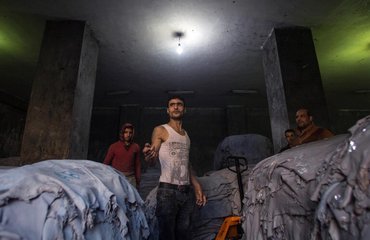
São Paulo – Egypt is investing in its tannery industry, in a drive to go from USD 200 million worth of leather exports a year to USD 1 billion by 2020, Gulf News reported this Thursday (24) quoting information from Reuters. The target was set by the Egyptian Ministry of Trade and Industry.
A dedicated industrial zone, the Robbiki Leather City, is currently under construction near the Suez Canal and east of Cairo, the national capital, in Badr. By mid-next year, the area will be home to the industry’s entire supply chain, from animal slaughter to the making of the finished product.
According to the chairman and CEO of company Cairo for Investment and Development, Mohamed El Gohary, non-Egyptian investors will be allowed to purchase space in Robbiki in 2018. The company will handle land sales, and El Gohary says Italian enterprises have expressed keen interest.
Roughly 220 tanneries across Egypt will be moved into Robbiki. The government will meet the costs of machinery relocation, as well as provide housing construction subsidies for workers and low-interest loans for businesses to expand. Al-Rowad, one of the nation’s biggest tanneries, will have completed its move by next month. It’s aiming for a three-fold increase in its exports.
According to the website of the Ministry of Trade and Industry, by the end of July, over 20 manufacturing units had been allocated in Robbiki Leather City, half of which were slated to be up and running by late August. The Ministry reported that all tanning companies in the Magra Al-Oyoun area of Old Cairo, will be transferred to the industrial zone by the start of next year.
Projects such as the leather city are part of a wider government strategy to bring back foreign investment. The country saw USD 8.7 billion worth of foreign direct investment in the twelve months through June 2017, up from USD 6.9 billion in the 12 months through June 2016. The goal is to reach USD 10 billion in the ongoing fiscal year, which began in July.
The Arab country saw foreign investment wane in the wake of the 2011 political uprisings. After an agreement reached with the International Monetary Fund (IMF) late last year, it floated its currency in a bid to attract more foreign capital.
*Translated by Gabriel Pomerancblum

