



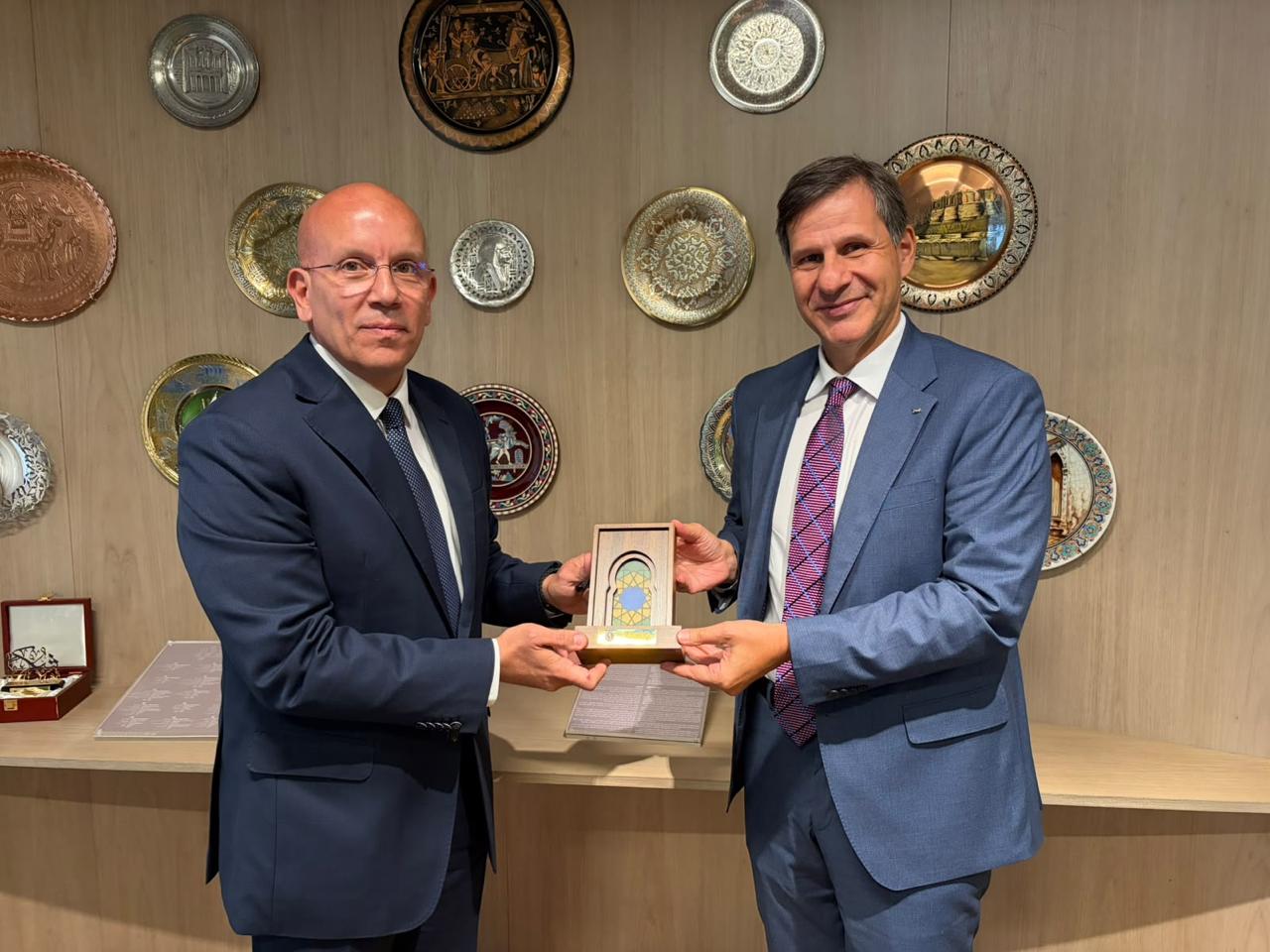
São Paulo – Representatives of Egypt’s Suez Canal Economic Zone (SC Zone) presented opportunities on Monday morning (14) for Brazilian companies to establish operations in industrial and port zones along the Suez Canal, a maritime route providing access to Africa, the Middle East and Europe. SC Zone executives began a series of meetings in Brazil with a meeting with Mohamad Orra Mourad, vice president of International Relations and secretary-general of the Arab Brazilian Chamber of Commerce, at the institution’s headquarters in São Paulo.
The SC Zone delegation included Mohamed Ibrahim Hassan, vice chairman of the Northern Region; Mohamed Abo Eldahab, director general of Green Economy; Omar Choukry, chargé d’affaires at the Embassy of Egypt in Brasília; and Islam Taha, Egypt’s commercial consul in São Paulo. Representing the Arab Chamber at the meeting were Mourad, Institutional Relations Director Fernanda Baltazar, and Institutional Relations Adviser Bassel Abou Latif.
“We are here to promote the Suez Canal Economic Zone, as we are a special economic zone with many logistics and industrial areas, and we are here to showcase what we have and the opportunities available in the port, logistics and industrial sectors,” Hassan told ANBA. “Brazil has great potential in the grain sector. We are looking to promote distribution centers for Brazilian products so they can reach the entire region, from the Gulf to Europe and African countries.”
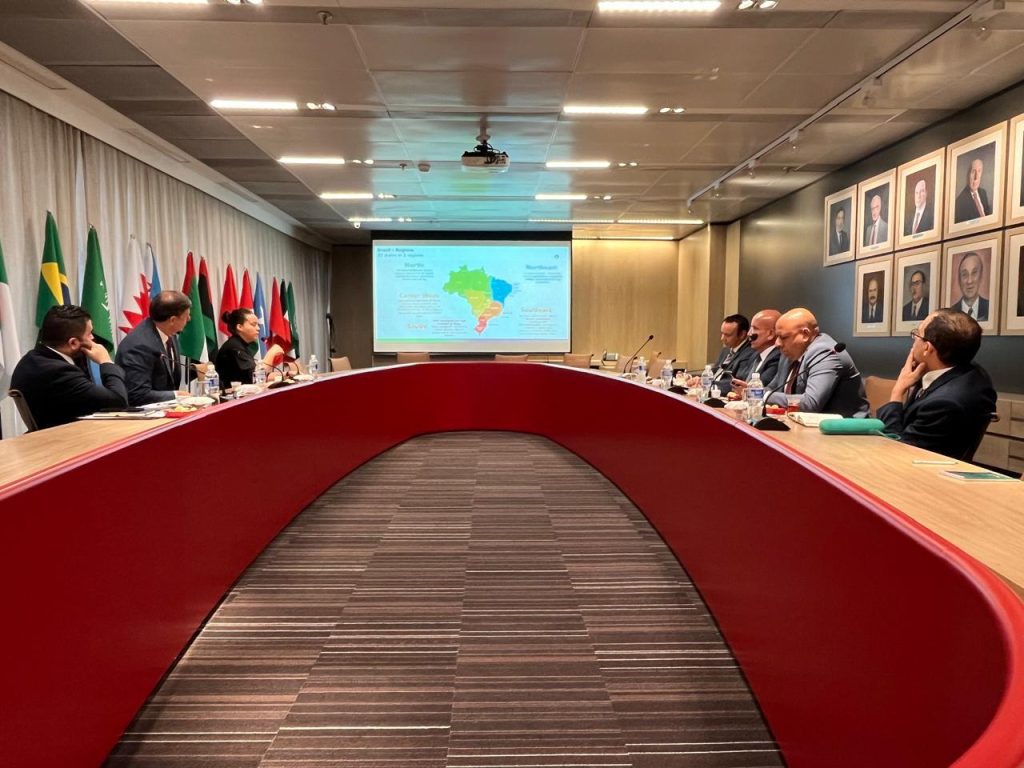
Eldahab highlighted investments being made in the construction of terminals in the industrial zones located throughout the SC Zone, some of which are exclusively dedicated to grain handling. The SC Zone has six ports and four industrial zones within its perimeter, hosting a range of industrial sectors, including food, vehicles, data centers and chemicals.
Eldahab emphasized the SC Zone’s strategic location, from which products can reach Europe in less than a week, whereas a ship departing from Brazil may take a month to reach countries bordering the Mediterranean Sea. He also noted that Egypt is a major grain-consuming market, which creates additional opportunities for Brazilian companies operating there.
Mourad recalled that Egypt has a free trade agreement with Mercosur, the bloc comprising Brazil, Argentina, Paraguay and Uruguay, and that trade between Brazil and Egypt has been growing steadily year after year.
The Arab Chamber’s secretary-general said Brazilian companies invest abroad in long-term projects that require knowledge of and confidence in foreign markets.
Mourad said a Brazilian trade mission will travel to Egypt in December this year and received an invitation for the delegation to visit the SC Zone during the trip. During their visit to Brazil, SC Zone executives will hold meetings in São Paulo and will also travel to Paraná, where they will meet with the Federation of Industries of the State of Paraná and visit the Port of Paranaguá, one of Brazil’s major export hubs for grains produced in the country.
At the meeting at the Arab Chamber, Fernanda Baltazar presented data on bilateral relations between Brazil and Egypt, as well as the initiatives and projects carried out by the Arab Chamber.
Translated by A.I.
Read also:
Oil gains on Middle East supply fear
