


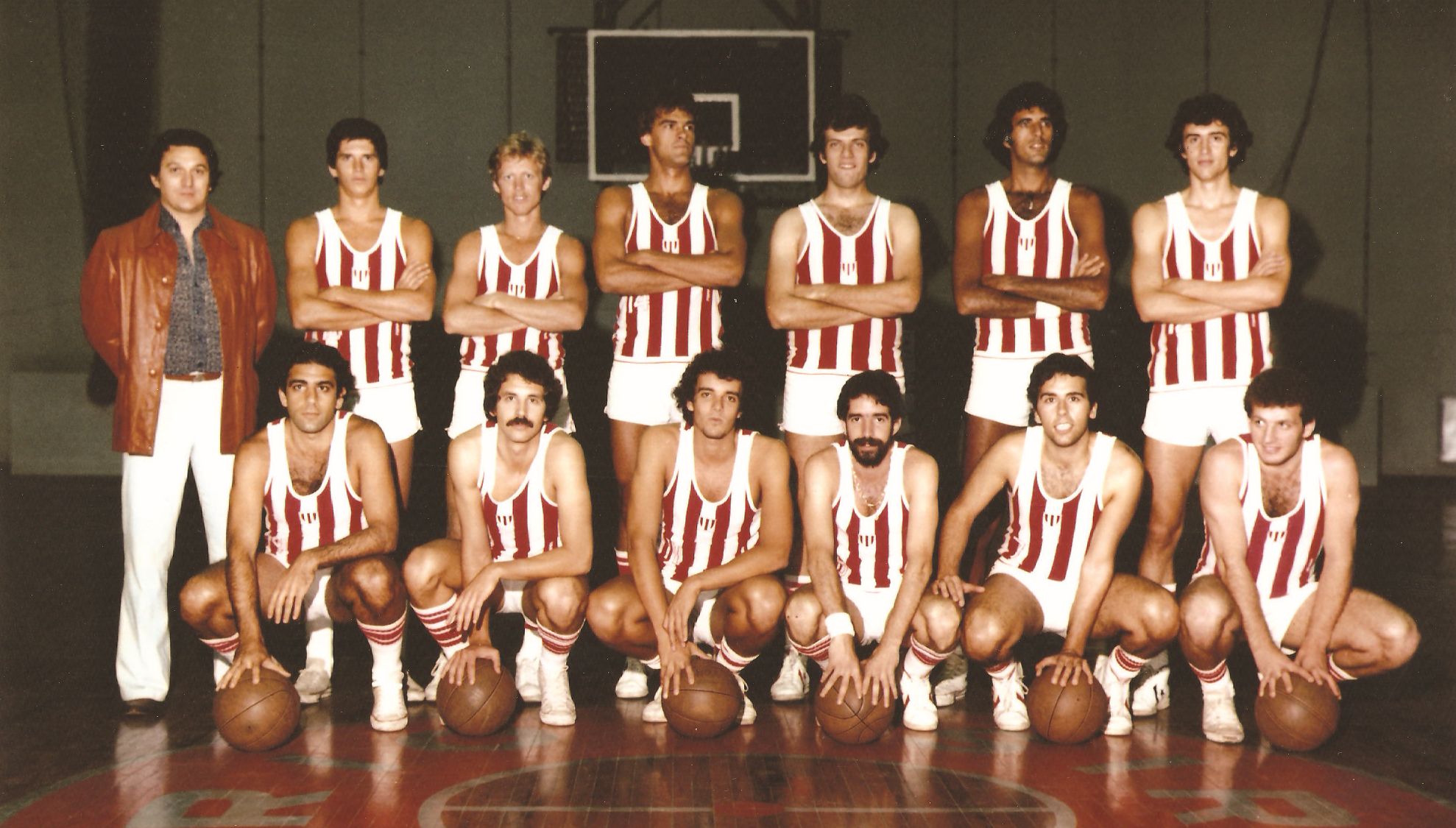
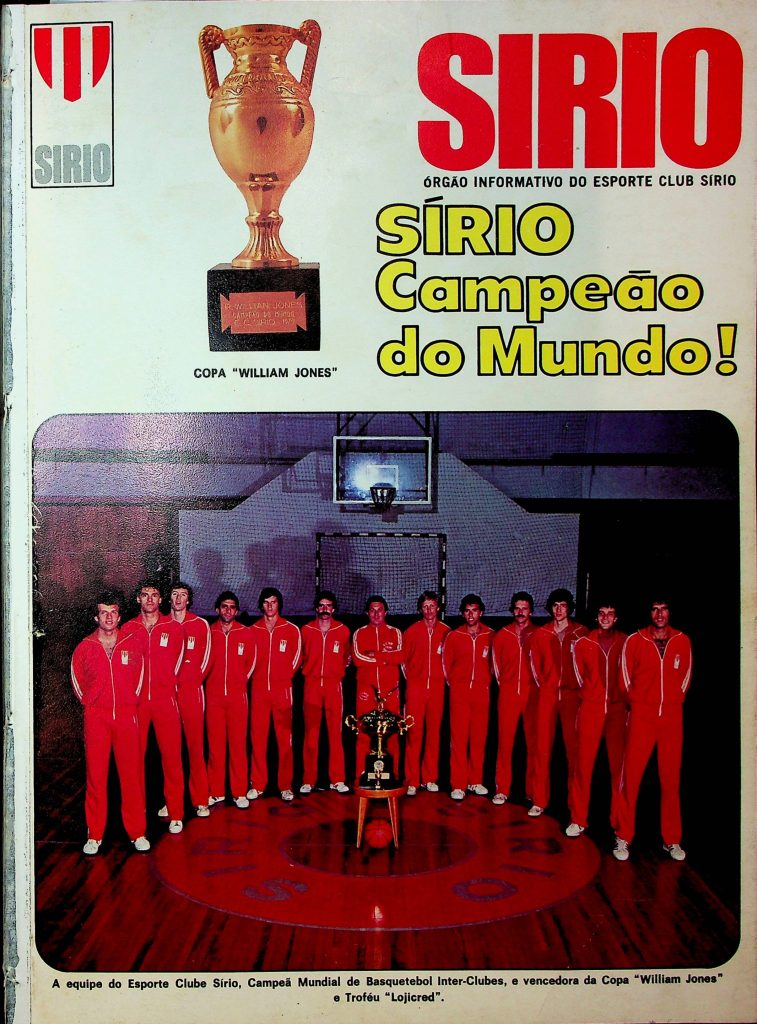
São Paulo – In the early 1930s, as football turned professional, São Paulo clubs lacking resources began investing in other sports. In this context, Esporte Clube Sírio, a multisport club founded by Arab immigrants, shifted its focus to basketball. About 50 years later, the club won the Intercontinental Club Championship, an unprecedented achievement for a Brazilian team.
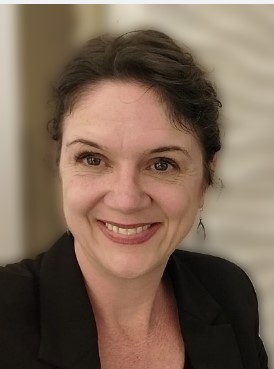
These two milestones—along with a range of events and figures in between—will be featured in a documentary miniseries aiming to portray a golden era of Brazilian basketball, closely tied to the club founded by young people of Syrian descent in Brazil. “The basketball team toured Syria after winning the world title to take the trophy there,” said Rafael Kalil Crespo, owner, producer, and head of content at Valete de Copas Filmes, the production company behind the project.
With the script already completed, Crespo is now seeking sponsors for the miniseries, initially titled Quando Fomos Gigantes [When We Were Giants]. The project has been approved by national cinema agency Ancine to raise funds through tax incentives, meaning companies can deduct their contributions from taxes. “The approval came two months ago, and since then we’ve been working to bring in partner companies—at no cost to them,” Crespo said.
The project’s creator, Crespo, was never a basketball fan but has always been involved with Esporte Clube Sírio, where he even held board positions. “As the 45th anniversary of the world title approached, two years ago, I realized many people from the younger generation don’t know this story or its significance,” he said, explaining what inspired the project.
With degrees in Journalism from the Pontifical Catholic University (PUC) and in Film from Fundação Armando Alvares Penteado (FAAP), Crespo and his production company began the project by researching texts, photos, and videos on the subject. They then started developing the miniseries, which will have four episodes and is set to be completed in 2029, when the world title marks its 50th anniversary.
In an interview with ANBA, Crespo shared some insights into what will shape the production and his views on how the story unfolded. “The club (Esporte Clube Sírio) became a powerhouse that could go head-to-head with Corinthians, Palmeiras, and Franca—a city entirely devoted to basketball—while having fewer than three thousand members at the time,” he said, referring to its golden era.
The miniseries traces the period from when Esporte Clube Sírio was based in Ponte Pequena—then a hub of sports in the city, where the club invested in basketball—to the team’s trajectory at its current headquarters on Indianópolis Avenue, in São Paulo’s south zone. “Sírio chose basketball because it couldn’t afford to maintain a professional football team,” Crespo said, referring to a time when football began requiring salaries and other obligations.”
A few years later, as 1950 approached, construction of the city’s marginal roads forced sports clubs out of the Tietê river area, where Sírio was based. “Among the clubs that played basketball and didn’t have professional football, Sírio was the only one able to relocate,” Crespo said. The club moved closer to Clube Atlético Monte Líbano, also founded by the Arab community and already established in the south zone. “And the basketball scene kind of followed Sírio,” he added.
The miniseries will tell the story of Paulo and Alberto Narchi, who in those early days brought basketball enthusiasts from the riverbanks to play in the south zone. “They managed to recruit a lot of talented players from clubs that would be affected by the marginal roads,” Crespo said. “They started bringing in top players as early as the 1950s, and Sírio began to compete with major clubs.”
… many people from the younger generation don’t know this story or its significance
Rafael Kalil Crespo
The miniseries will cover Sírio’s defeats in the Intercontinental Club Championships in 1969, 1973, and 1978, as well as its role in national team victories. “Brazil won the Basketball World Championship in 1959 and 1963. In 1963, four of the five players on the court were from Sírio. So in both World Cups Brazil won, Sírio played a central role,” Crespo said.
Over the 30 years covered by the miniseries, Sírio was home to many of Brazil’s top basketball players, such as Amaury Pasos, Oscar Schmidt, and Marquinhos Abdalla—all now deceased, with the latter two passing earlier this year. “The few exceptions were Sírio’s main rivals at the time, but they’re part of the story too. The key figures of Brazilian basketball up to the late 1970s are all part of this history,” Crespo said.
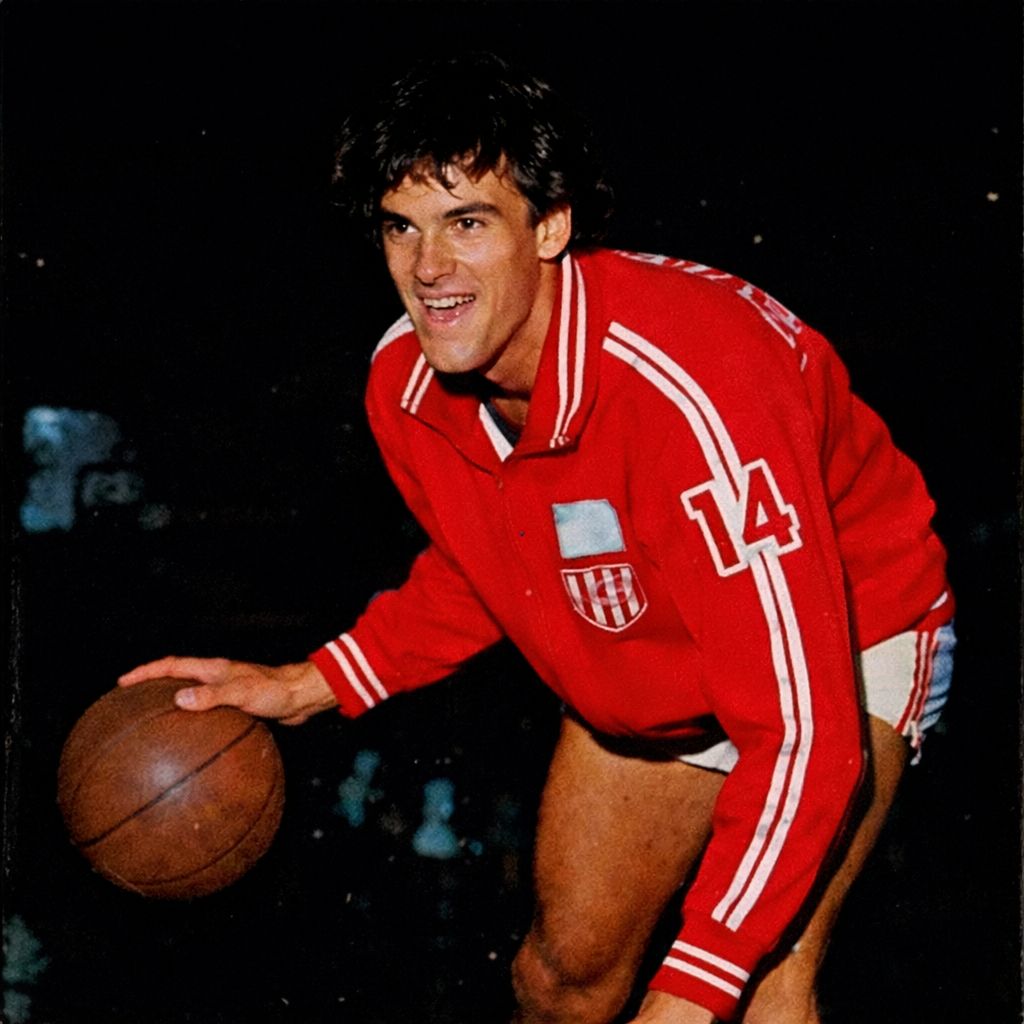
The protagonist will be Washington Joseph, known as Dodi, captain of the team that won the 1979 Intercontinental Club Championship. Of Arab descent and a club member, Dodi began playing basketball at Esporte Clube Sírio as a boy and remained throughout the period portrayed in the miniseries. “The team nearly folded after the 1973 world defeat, and he was practically the only one left,” Crespo said. Much of the series is told from the perspective of the prodigy and loyal Dodi.
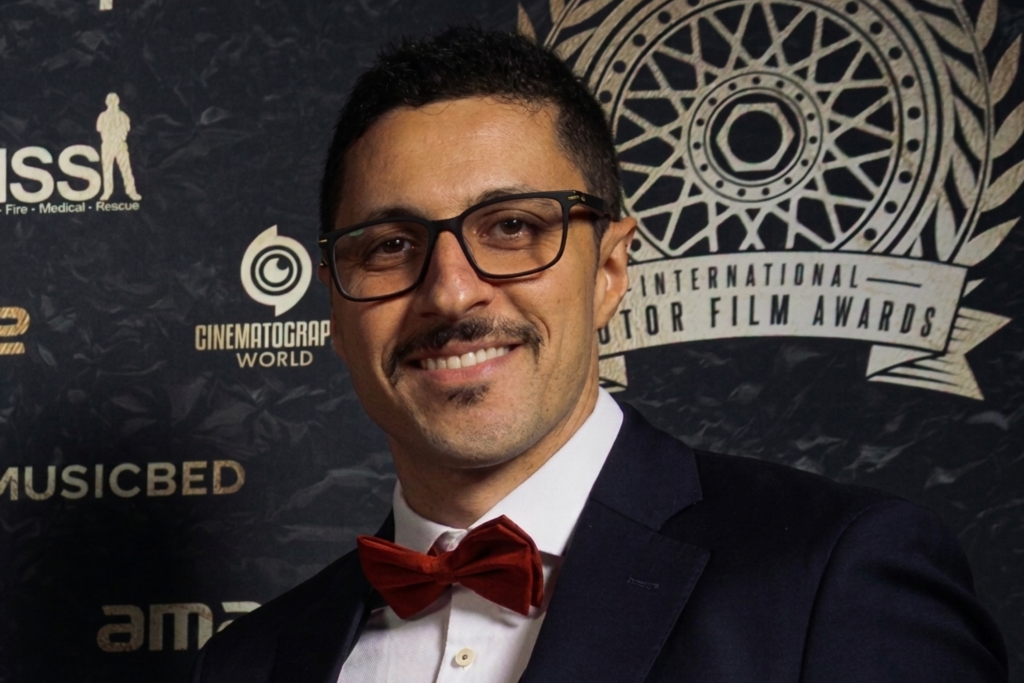
The fact that Esporte Clube Sírio was founded by Arab immigrants is reflected in the miniseries through stories of how the club supported its athletes. As basketball was not a professional sport, players received all kinds of support from club members. “Sírio mobilized as a community, and that’s something we want to explore deeply in the miniseries—it’s what makes this story so special. The club fully embraced its basketball team,” Crespo said.
The historical narrative will be blended with accounts exploring the personal side of each event. The miniseries will also feature previously unseen footage from Brazilian basketball history, filmed by Esporte Clube Sírio board member Wilson Ford, now deceased. “He had a Super 8 camera and filmed the team’s trips and behind-the-scenes moments. His nephew preserved those images,” Crespo said.
The owner of Valete de Copas Filmes is already in talks for the miniseries’ distribution and says negotiations are well advanced with major industry players. The goal is for “When We Were Giants” to be released in Brazil and abroad. While focusing on Brazilian basketball through the lens of Esporte Clube Sírio, the series will also feature major figures and events from international basketball, according to Crespo.
Contact:
Valete de Copas Filmes
Website – Email
WhatsApp: +55 (11) 5081-6680
Read also:
São Paulo’s Syrian Sports Club celebrates 105th anniversary
Translated by Guilherme Miranda
