


São Paulo – Brazil’s Arab Community Day was celebrated on Wednesday evening (25) at the headquarters of the Arab-Brazilian Chamber of Commerce (ABCC) in São Paulo with the launch of the book O mascate [The peddler] (Tabla) by Salem Nasser, with illustrations by Ana Cartaxo. On the occasion, the institution also launched the Map of the Legacy of Arab Immigration in São Paulo, which pinpoints across the city the institutions created and maintained by the community.
A law professor at São Paulo university FGV, Salem Nasser wrote O mascate as a way to show his children and other kids the story of many Arab immigrants who sought a new home in Brazil. The inspiration came from home: he drew on his own father, a Lebanese immigrant, to build the narrative.
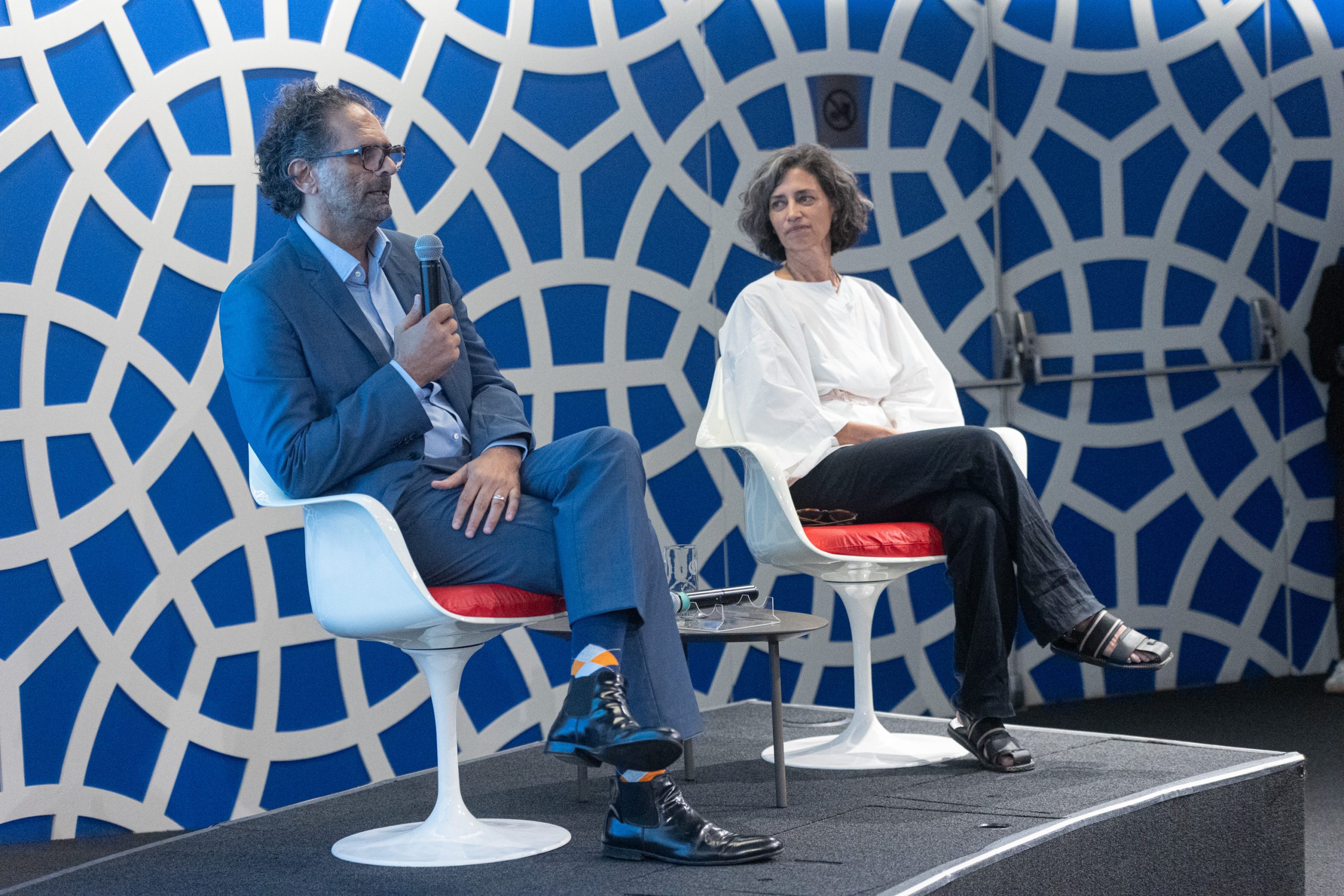
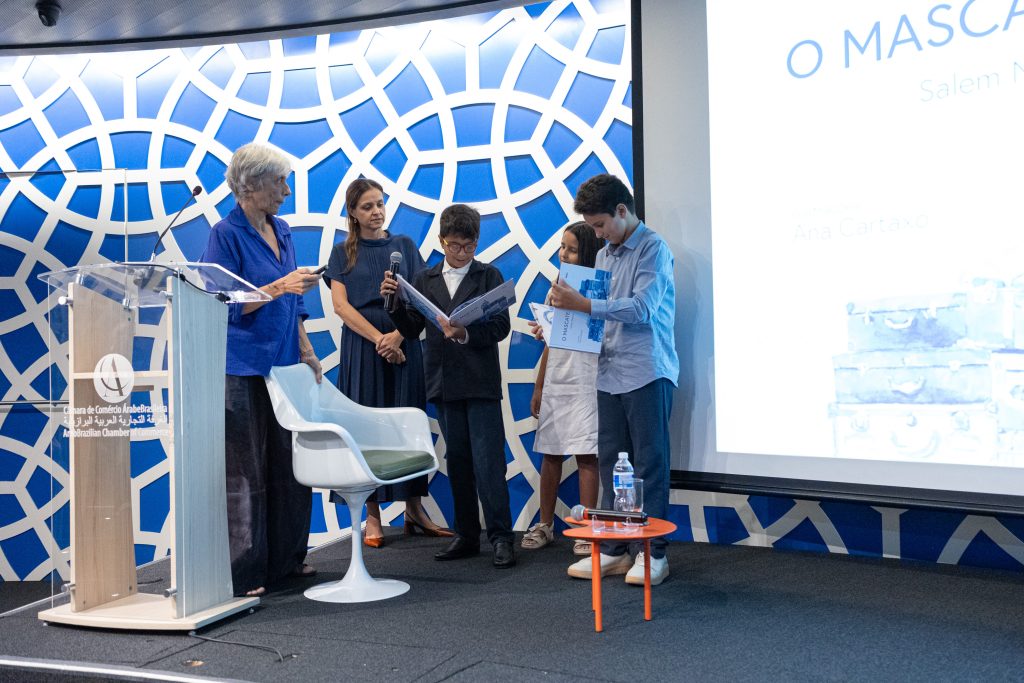
During the book launch, the illustrator and Tabla art director, Ana Cartaxo, and he took part in a talk with the publisher’s editorial director, Laura Di Pietro. The author’s three children read the book to an audience of around one hundred people before the signing session began. In his remarks, Nasser said he believes many people will identify with the story he tells.
To ANBA, he said the release of the book on Immigration Day is a “happy coincidence.” “I think it’s the story of many in the community—almost inevitable. It’s a recurring theme: that we all have a story of venturing into the unknown,” he said.
Ana Cartaxo recalled the process of creating the book’s illustrations. “I wanted the [visual language of the book] to emerge from my interaction with Nasser. He sent photographs, told stories about the characters. I really like memory [as a working theme], and I moved closer to watercolor, to dilution, to the [relationship between] memory and time, and to photography that gradually fades,” she said.
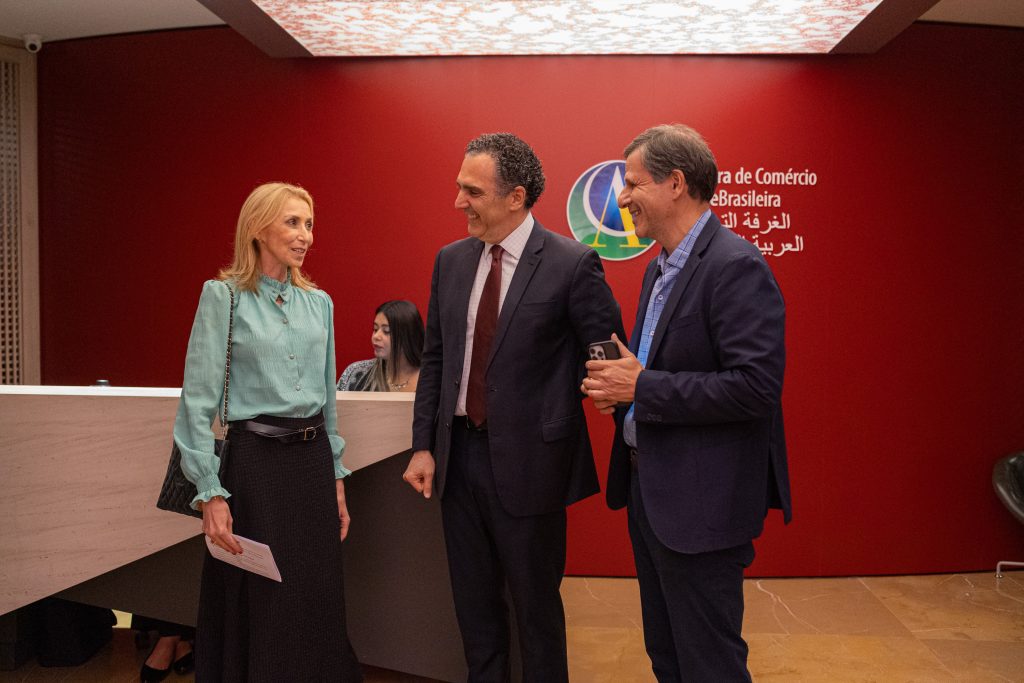
São Paulo’s Secretary for International Relations, Angela Vidal Gandra Martins, attended the event and highlighted that São Paulo is a city built by the hands of immigrants. She said city hall is strengthening ties with the chambers of commerce operating in the city.
“The Secretariat for International Relations seeks to promote a win-win so we can strengthen companies and traders, what we can bring and take. We want everyone to have jobs and be able to support their families, as in the immigrants’ struggle, and we want to work with the Arab community,” she said.
The president of the ABCC, William Adib Dib Jr., said in his speech that the ABCC itself is part of the legacy the community leaves to São Paulo and to the country. “Throughout its more than seven decades of history, [the ABCC] has played a strategic role in strengthening economic relations between Brazil and the Arab countries, which now stand out as key foreign partners,” he said.
The date that celebrates Arab immigration is also the date of Brazil’s first Constitution, enacted in 1824, which São Paulo’s famous popular shopping street is named after. That same street hosted a large community of Arab immigrants from the 19th century onward. They initially worked as peddlers, selling a variety of household goods door to door. Over time, they opened their own businesses and settled in the area. Years later, the Chamber of Deputies designated March 25 as the date to celebrate Arab immigration to Brazil.
To ANBA, Dib said it is “gratifying” to once again be on March 25 alongside the community. “It is a date celebrating Arab immigration to Brazil, and it’s gratifying to have the launch of a book that brings exactly this narrative. And to showcase a country so prosperous and open to new experiences like these, to show the openness the country offers immigrants to build their story, grow and prosper.”
In his presentation of the book, Nasser summed up his admiration for those who chose to leave their homelands in search of an opportunity in the unknown and outlined the paths through which the peddler built his story. He expressed admiration for those who ventured to cross the ocean in search of a home and recalled that, in Brazil, many people are descendants of immigrants—of “people of great courage.”
Map shows the legacy of the Arab community
After the book launch, the ABCC Vice President of Communication & Marketing, Silvia Antibas, presented the Map of the Legacy of Arab Immigration in São Paulo, an initiative showcasing the nonprofit institutions created and maintained by the community in the city.
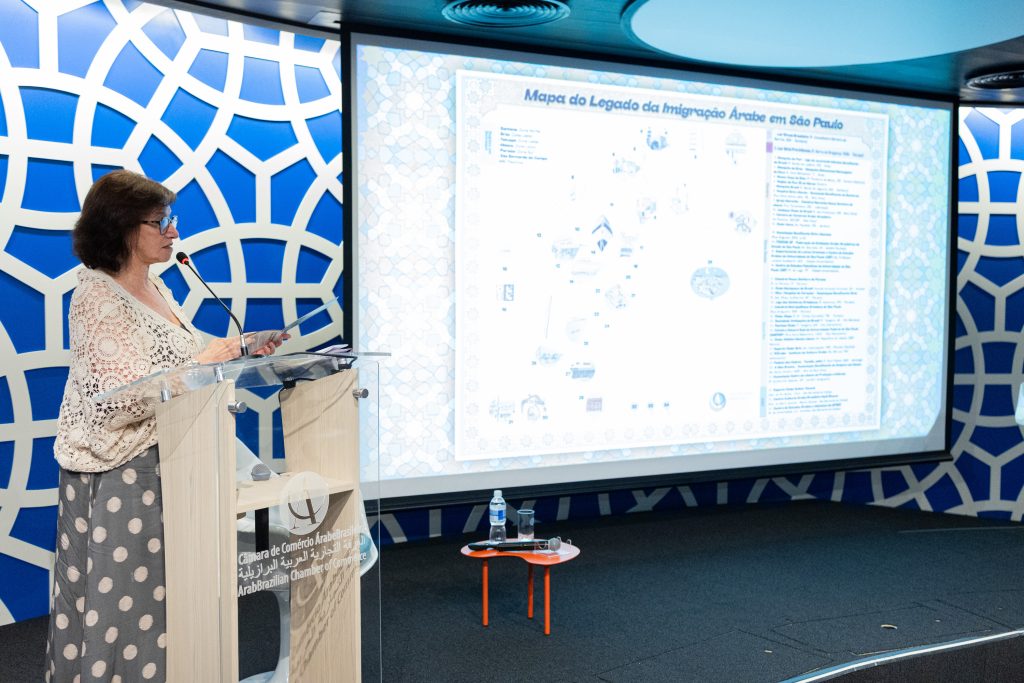
The map features, for example, Lar Sírio Pró-Infância in Tatuapé, in the East Zone; Mesquita Brasil in Cambuci, in the central region; the University of São Paulo’s Center for Palestinian Studies in Cidade Universitária, in the West Zone; the Cathedral of Our Lady of Paradise in the South Zone; and Lar Druzo Brasileiro in Santana, in the North Zone. The publication, available in print and online, also includes some addresses in the São Paulo metropolitan area.
The idea, Antibas said, came after meetings at the Immigration Museum and with the city’s Secretary for International Relations. “We want to show in this map everything we are giving back,” she said.
The ABCC was represented at the event by its Vice President of International Relations & Secretary-General, Mohamad Orra Mourad, Treasurer Mohamad Abdouni Neto, board members and former presidents Osmar Chohfi and Rubens Hannun, and director William Atui.
Read more:
Memories of Arabs persisting in 25 de Março Street
Translated by Guilherme Miranda
