


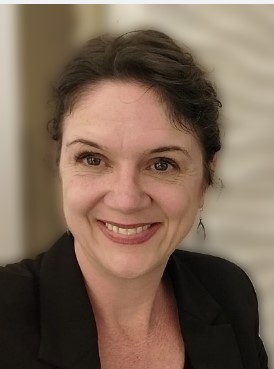
São Paulo – The emirate of Ras Al Khaimah established a foundation in 2009 to promote research to inform its public policies and development plans, particularly in education. From the outset, the initiative benefited from the vision of an Australian who combines deep expertise in education with an interest in the Middle East.
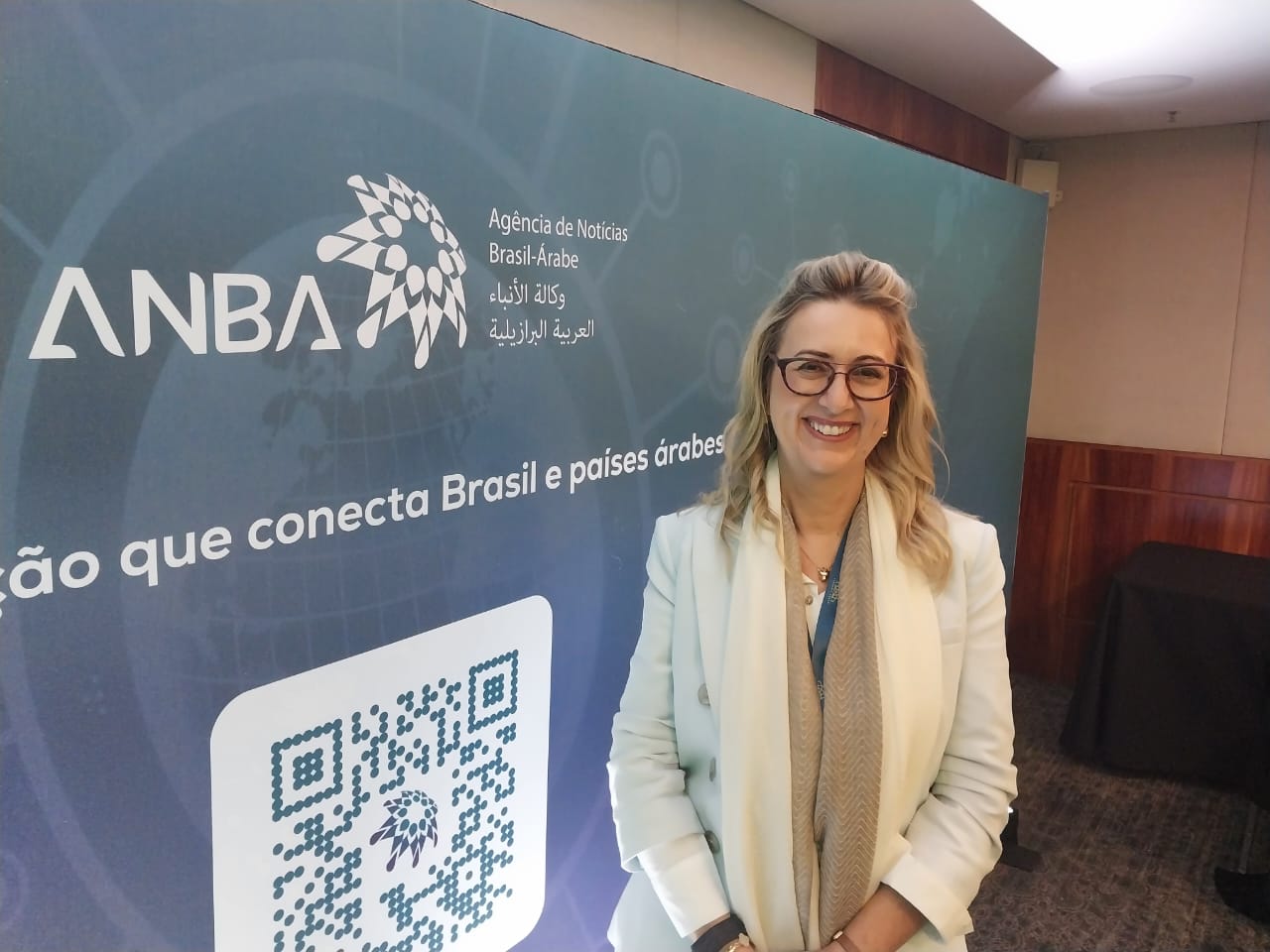
Founding Executive Director of the Sheikh Saud bin Saqr Al Qasimi Foundation for Policy Research Natasha Ridge spoke to ANBA during her visit to Brazil in late August about the foundation’s work and the main research projects of her career.
“Our aim is to try to influence policy in any area where we see there is a need, but where we have done research,” she said of the foundation.
Born in Australia, Natasha holds a Bachelor of Economics in Economics and Middle Eastern Studies from The Australian National University. She began her career as a teacher in Singapore, but other opportunities eventually took her to the United Arab Emirates.
“From there, I went to work at a school in the Emirate of Ras Al Khaimah for His Highness Sheikh Saud bin Saqr Al Qasimi, the ruler of Ras Al Khaimah,” she said.
Living in the Middle East was a dream.
“It was always in my heart,” she said.
At age 12, Ridge had a stopover in Doha, Qatar, where she saw people wearing the kandora, the long traditional Arab garment, in the streets.
“I remember seeing all the men wearing the kandora and walking around, and I was very interested. Since then, I have had a very strong interest in the region,” she said.
To pave the way, the Australian learned Arabic and continued her studies on the region.
She then pursued a master’s degree in international and community development.
“I enjoyed teaching very much, but I felt that I wanted to do more at the policy level, in the policy arena,” Ridge said.
She was accepted into a doctorate in Education, specializing in International Education Policy, at Teachers College, Columbia University in New York, marking a career shift from teaching to public policy and education research.
Ridge went on to mentor other young teachers, particularly women, who were interested in changing careers but did not know how.
“After that, I went back to Ras Al Khaimah and worked with His Highness to set up a philanthropic foundation,” she said, referring to the Al Qasimi Foundation.
What began as an effort to identify pathways for action in the emirate grew into work that also became a basis for national public policy in the UAE.
The foundation began its work with research on education.
“Research on education was very important because the emirate wanted to develop, but we didn’t have any local research on which to base the emirate’s development plans, especially for education and other sectors. Part of our mission in setting up the foundation was to provide an evidence base for the government to make policies, rather than just using research from other Arab countries,” Ridge said.
From education, the scope of subjects expanded to include not only gathering information but also preparing public policy documents for governments and developing interventions or programs.
“Sometimes our research leads to policy interventions in the emirate of Ras Al Khaimah, but sometimes it also leads to policy changes at the national level,” Ridge said.
The foundation’s research covers animal welfare, historical heritage, urban development, health and other areas.
“One area of research is people in prison. We looked at what kind of people were in prison, where they had come from, and what their educational and family backgrounds were. Based on that research, we set up a program for Emirati inmates to help them improve their education levels, find work when they leave prison and avoid returning to prison,” Ridge said.
What challenges education?
With a keen and sensitive eye on education, the Australian believes technology is the field’s biggest current challenge. She has observed how online learning and the use of electronic devices became widespread during the pandemic.
“But what we’ve seen is a loss in learning since then, as people have stayed on devices. We’re seeing a lot of countries now, including Sweden, taking technology out of schools and reverting to paper and pen, handwriting and reading from books rather than online, because we’ve found that the brain develops very differently when you read something on paper versus when you read it on a screen,” Ridge said.
Ridge sees helping teachers return to teaching with pen and paper, while keeping the attention of students who spend a lot of time scrolling through Instagram and often can no longer concentrate for more than three minutes, as a challenge for governments.
“It also remains a challenge for every education system: how to get good people to become teachers and how to keep good professionals in the teaching profession,” she said.
Education in the UAE
Speaking about the UAE’s advances in education, the scholar says the country has helped its citizens compete on a global stage by introducing reforms in science and mathematics and making them fluent in English.
“This alone has brought a huge improvement in the number of Emiratis who now graduate bilingual from government schools. When I first arrived 20 years ago, this wasn’t the case. A lot of Emiratis couldn’t speak English, and that limited their ability to work outside the government sector. Now they’re much more competitive. They can go overseas to study, and they can work for international companies,” Ridge said.
Boys falling behind
One of the projects that stands out in Ridge’s career is research into boys’ education and the reasons for their poor performance.
“Recent research from [United Nations agency] UNESCO, with which we worked on this issue, shows that boys have fallen behind across the world in mathematics, English, reading and science. This was never the case in the past. Boys used to be ahead. And at that time, I think people around the world rightly addressed issues affecting girls, and that was important. But now we have seen a big shift, and we’re seeing a lot of young men who are very lost. They’re performing very badly. They’re not engaged in education, and this has implications for women just as much as for men,” Ridge said.
“We find that when girls get access to education, they do very well. For girls, the issue is access, but for boys, the issue is retention. Boys having access to education doesn’t mean that they will stay. There are two different challenges that governments need to think about. We see a lot of crime in Australia these days, and a lot of it is driven by young men who are not well educated and have dropped out of school. A lack of education is at the root of a lot of the antisocial behavior we see among young men.”
Charter schools
Based on her research and experience, Ridge has become a strong advocate for quality public education. She says she sees wealthier people around the world increasingly sending their children to private schools, sometimes exclusively.
“We’re also seeing public schools becoming more and more commercialized, perhaps becoming charter schools, perhaps becoming schools where the government pays someone else, a corporation, to run them,” Ridge said.
According to the researcher, schools are losing their public nature.
“Schools are increasingly seen simply as places to acquire skills to get a job, rather than as places that help shape a nation,” Ridge said. “It is essential that people have access to high-quality public education. If you come from a poor community, the education you receive should not be inferior to that of someone from a wealthy community.”
In Brazil
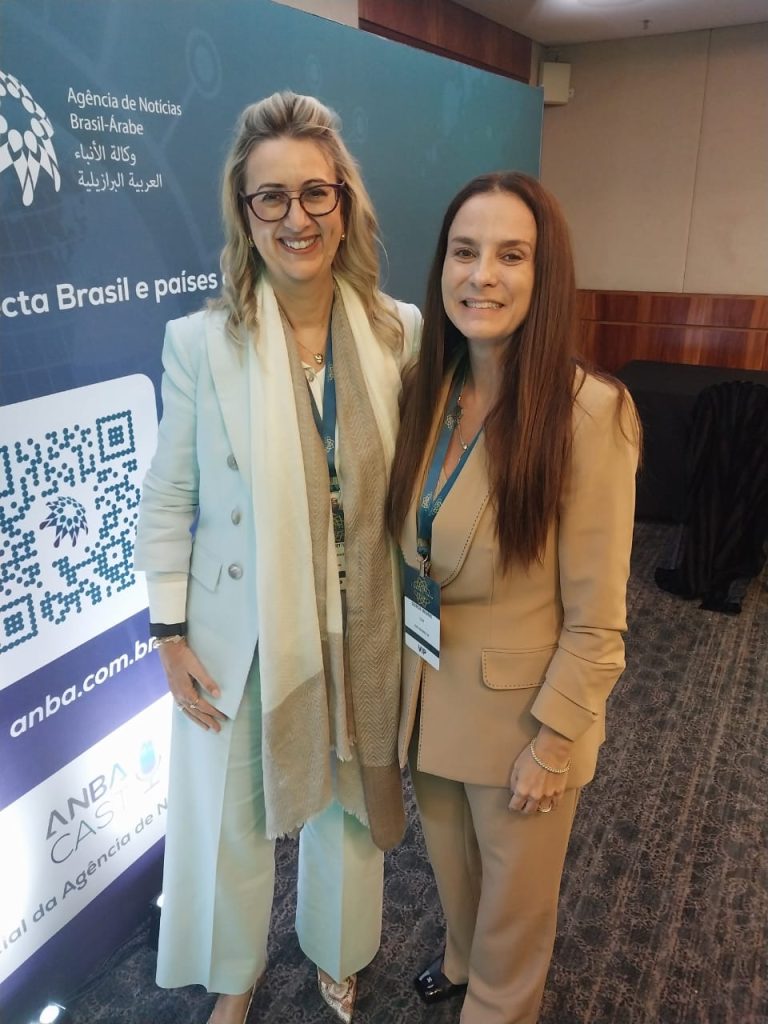
Ridge was in Brazil for a series of engagements, including as a panelist at the Brazil & Arab Countries Economic Forum held by the Arab-Brazilian Chamber of Commerce (ABCC) in São Paulo. She met with Brazilian institutions, particularly cultural organizations, accompanied by businesswoman Georgia Mourad, and at some events, ABCC Vice President of Marketing Silvia Antibas.
Read also:
AI: Language challenge links Brazil and Arab world
Translated by Guilherme Miranda
