



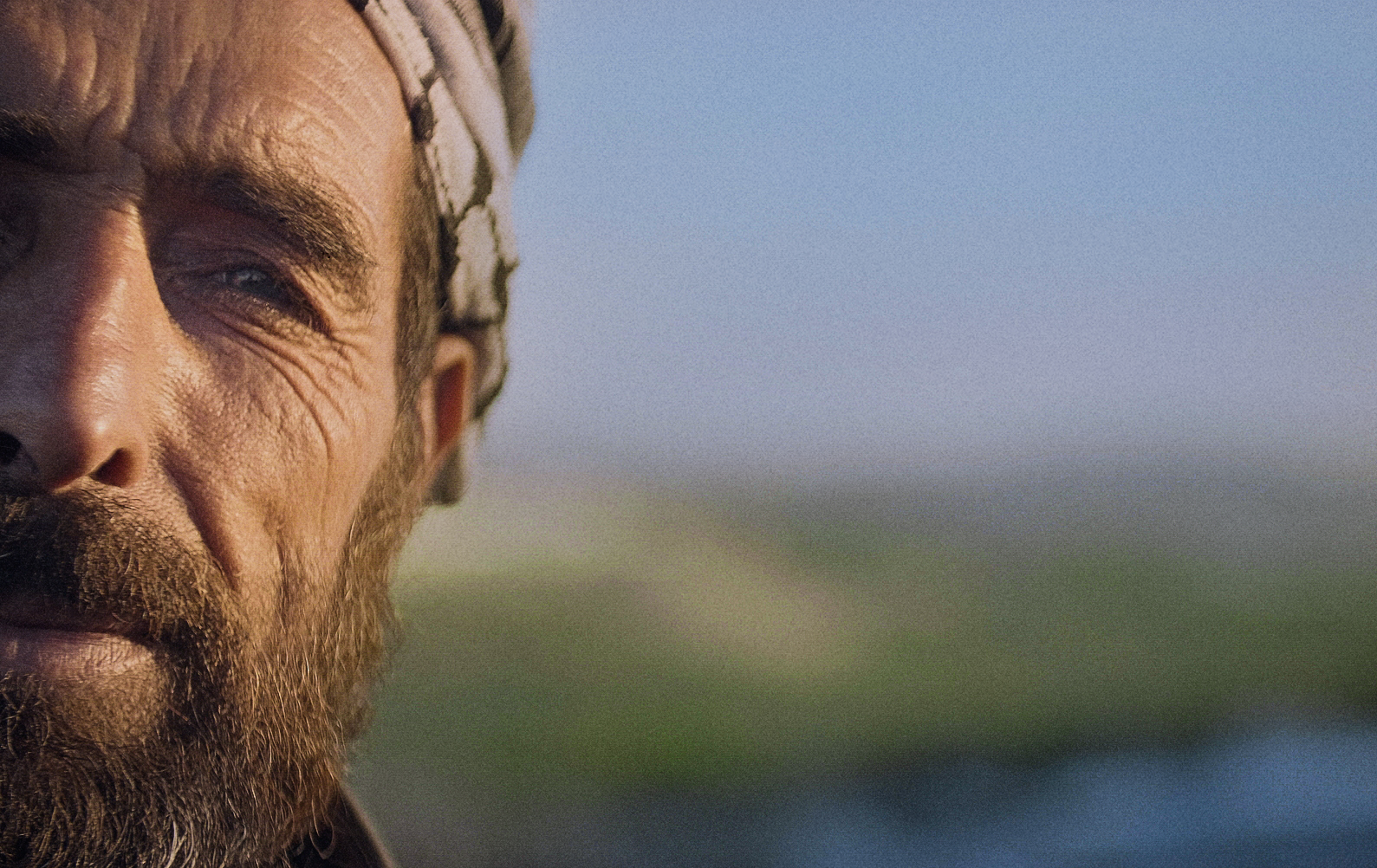
São Paulo – In 2018, filmmaker Gustavo Castro, from the Brazilian southern state of Paraná, traveled to Palestine, filmed footage, and gathered testimonies from residents as part of the first steps toward producing the documentary he envisioned, one portraying a diverse Palestine. In the second half of this year, the film directed by Castro will reach commercial theaters in Brazil, but not with its original approach, having been transformed by the events that have devastated Palestine since then.
Notes on an Exile is a documentary shaped by the perspective of a filmmaker who experienced that reality firsthand and later followed, from Brazil and through a new lens, the even darker period that unfolded in the region. “What was first supposed to be a film about possibilities became a brutal reflection on apartheid and the colonization of Palestine,” Castro said.
One of the foundations of the documentary’s analytical tone—an 80-minute feature film—is the director’s first-person narration. The film unfolds across three timelines: the journey itself, the historical context, and the present day. Castro’s perspective guides viewers through all these periods, from the occupied West Bank of 2018, marked by movement restrictions, Israeli occupation, and attempts at resistance, to historical archives and videos shared on social media by Palestinian victims of the attacks that followed October 2023.
A documentary filmmaker with 20 years of experience, Castro already had an established career in cinema when he became interested in the subject of Palestine around 14 years ago, through his connection with the current president of the Palestinian Arab Federation of Brazil (Fepal), Ualid Rabah, who lives in Paraná. “In today’s world, where does colonialism take place?” Castro asks. Palestine became a natural subject for someone addressing colonialism in his work. In 2017, the filmmaker had also directed a documentary about Arab immigration to Brazil.
The trip to Palestine was made possible through an invitation from a Holy Land travel agency for Castro to accompany a group and film there. It was the family of Ualid Rabah that welcomed him during the trip and shared their experience living in occupied Palestine. “The most striking testimony is from the mother-in-law of Rabah’s sister, a refugee from 1948, an elderly woman who received us in her home and told us about the exile, when they were sent to the Jordanian desert,” he said.
What was first supposed to be a film about possibilities became a brutal reflection on apartheid and the colonization of Palestine
Gustavo Castro
That period of exile appears both in the interviewee’s life story and in some of the earliest recorded images of Palestinian refugees in the desert in 1948. “Today’s images are, in some ways, very similar to what happened back then—people leaving their homes, moving elsewhere, living in tents,” the filmmaker explained, highlighting how this is a story repeated throughout the lives and generations of Palestinians.
Notes on an Exile was completed last year and premiered at the Olhar de Cinema—Curitiba International Film Festival. Since then, it has been screened at festivals in Brazil and abroad. In the Arab world, the film was shown in Jordan at the Karama Human Rights Film Festival. At the 19th Iran International Documentary Film Festival, it received the Special Jury Prize for Best Documentary. Castro said the recognition means a great deal because of Iran’s artistic tradition, especially in cinema. He also sees the film’s selection for several festivals as an important endorsement of the work.
After being selected in a public distribution grant from Brazil’s Ministry of Culture, the film’s next step is release in commercial theaters. Screenings are also being held at universities, unions, and similar venues in Brazil and abroad. “What we want is to reach the largest audience possible, for the film to find its audience, whether inside a movie theater or not,” Castro said.
Gustavo Castro
Notes on an Exile is Castro’s first feature-length film. The filmmaker from Paraná has directed 12 short documentary films and worked as cinematographer on several other projects, totaling around 30 productions, including his own and those of other directors. Graduated in Business Administration from the Federal University of Paraná (UFPR), he turned to cinema after traveling across Latin America during college, identifying with social and human rights causes that he first explored through photography and later through his own documentaries.
The film about Palestine was written by Gustavo Castro, Juliana Sanson, and Ticiano Monteiro. Cinematography is by Castro and Rafael Oliveira, while production is by Castro, Juliana Sanson, and Oliveira. Editing is by Monteiro, sound design by Ulisses Galetto, music by Grace Torres, and art direction by Jonas Sanson. The film was produced by Fabulário Filmes, a production company owned by Juliana Sanson and Castro.
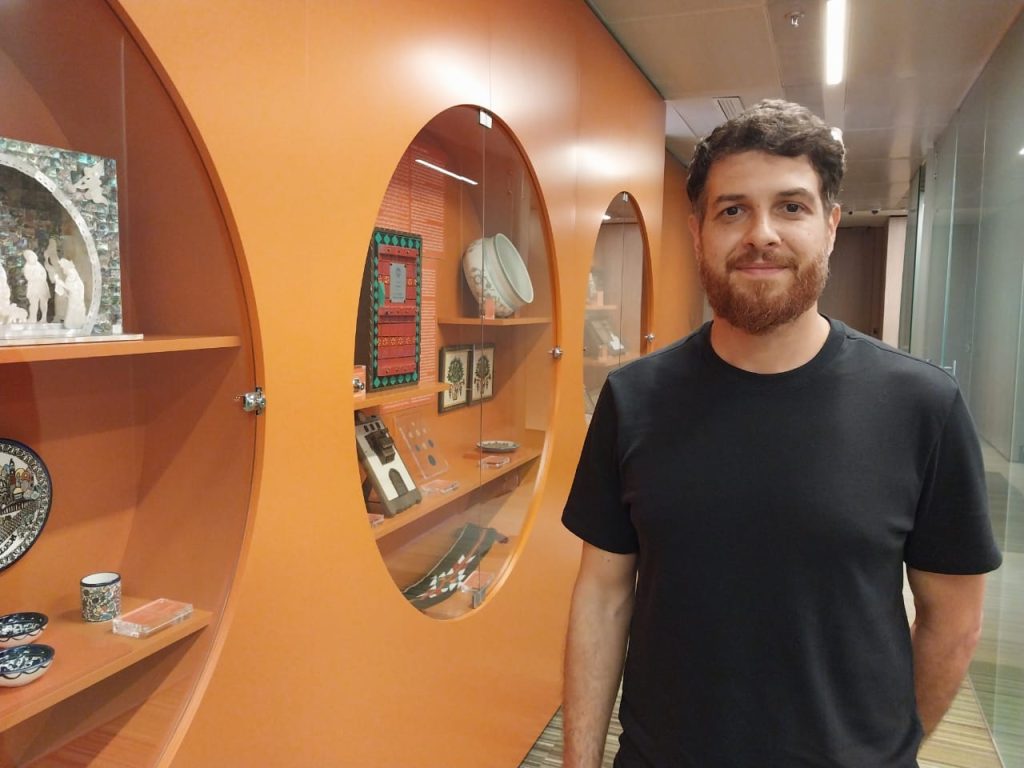
Last week, Gustavo Castro was received at the Arab-Brazilian Chamber of Commerce (ABCC) headquarters in São Paulo by Marketing Vice President Silvia Antibas and International Relations Vice President & Secretary-General Mohamad Orra Mourad.
Watch the trailer:
Read also:
Five Saudi films to watch
